The long-overdue retrospective of G C Chakravarty opens a window onto a body of work that has quietly shaped conversations about Indian modernism for decades. By assembling paintings, studies and archival material rarely shown in public, the exhibition forces a reassessment of his influence and explains why his absence from major institutional narratives has felt increasingly conspicuous.
Organized by a city gallery working with private lenders and family archives, the show covers a wide sweep of Chakravarty’s practice, from early figurative sketches to later experiments with texture and color. The curatorial aim is straightforward: to remove the artist from the margins and place his work back into the chronological and aesthetic debates that defined 20th-century art in the region.
Visitors immediately notice two things: the consistency of Chakravarty’s visual concerns and the range of media he pursued. While his canvases often employ a restrained palette, many of the preparatory drawings and prints reveal a restless eye for detail and formal invention. Reassembled together, these works make the case that Chakravarty was both an observer of everyday life and a careful formalist.
Hinduism gains ground in Africa: new communities reshape culture and commerce
Shah Rukh Khan used the name Abinav to ease in-law worries: Gauri adopted Ayesha during nikaah
Why this matters now: the exhibition arrives amid renewed interest in overlooked practitioners whose contributions reshaped local modernisms. Museums and collectors are reassessing their timelines; scholars are digging into archival gaps; and younger artists are looking for alternative lineages beyond the well-worn canon. This show could change how curators write the next generation of survey texts.
Highlights of the display, arranged by the curatorial team to emphasize chronological development rather than strict stylistic phases, include several recovery moments: framed sketches found in family holdings, a sequence of studies that trace one subject across decades, and a handful of late-career works that show a surprising turn toward collage and mixed media.
- Scope: Dozens of paintings, drawings and prints drawn from private collections and institutional loans.
- Archival material: Sketchbooks and correspondence that shed light on Chakravarty’s working methods and networks.
- Curatorial approach: The show favors juxtaposition—early studies against mature canvases—to reveal continuities rather than abrupt stylistic breaks.
- Public program: A short series of talks and a newly published essay collection accompany the exhibition, offering deeper context for readers and researchers.
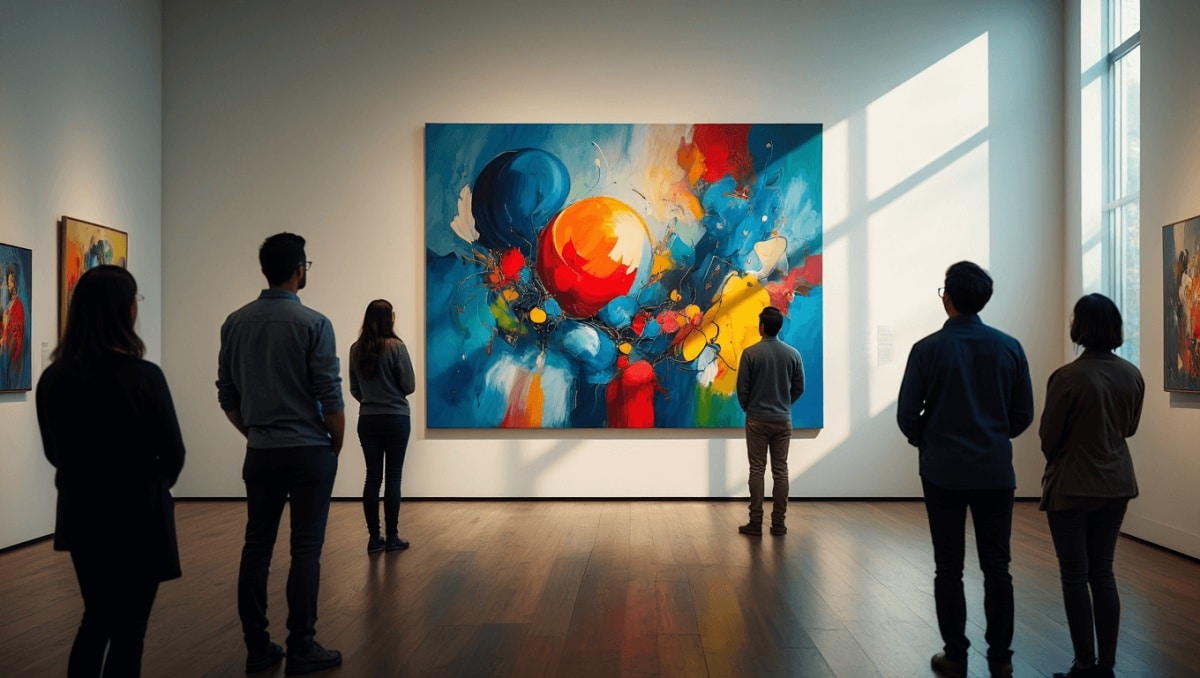
The gallery’s layout encourages a slow reading of the work. Small clusters of paintings permit intimate looking; more densely hung displays push the viewer to make connections across time. The exhibition text resists easy labels, instead inviting visitors to trace recurring motifs: interiors, urban peripheries, and a muted engagement with the figure. Those motifs, the catalogue argues, form the backbone of Chakravarty’s practice.
One curatorial decision that pays off is the inclusion of preparatory drawings next to finished canvases. These pairings reveal the artist’s persistent attention to composition and his habit of reworking ideas over years. In several cases, a modest pencil study illuminates compositional choices that make a later painting feel inevitable rather than improvised.
There are consequences beyond appreciation. Reintroducing Chakravarty to a wider audience recalibrates market interest and scholarly priorities. Institutions that have prioritized a narrow set of names may now face pressure to broaden acquisitions and revise educational material. For artists and students, the show models a different kind of modernism—one built on quiet observation and formal restraint rather than grand gestures.
Not every question is resolved. Gaps in documentation remain, and the catalogue acknowledges uncertainties about chronology and provenance. That openness is one of the exhibition’s strengths: it frames Chakravarty’s life and output as a subject still under study rather than a closed case, inviting further research rather than offering definitive judgments.
For readers and art lovers planning a visit, the experience rewards close looking rather than quick photo stops. The exhibition is paced to encourage lingering, with quieter galleries that allow individual works to breathe. Those who stay will come away with a clearer sense of how an artist operating outside the most visible circles nonetheless helped shape the contours of regional modernism.
The show is a timely corrective: it does not seek to rewrite art history overnight but to nudge the record toward greater complexity. By foregrounding archival finds and a carefully considered selection of paintings, the retrospective makes the simple claim that Chakravarty’s work deserves sustained attention—and that reassessing forgotten figures changes what we think we know about the past.