Show summary Hide summary
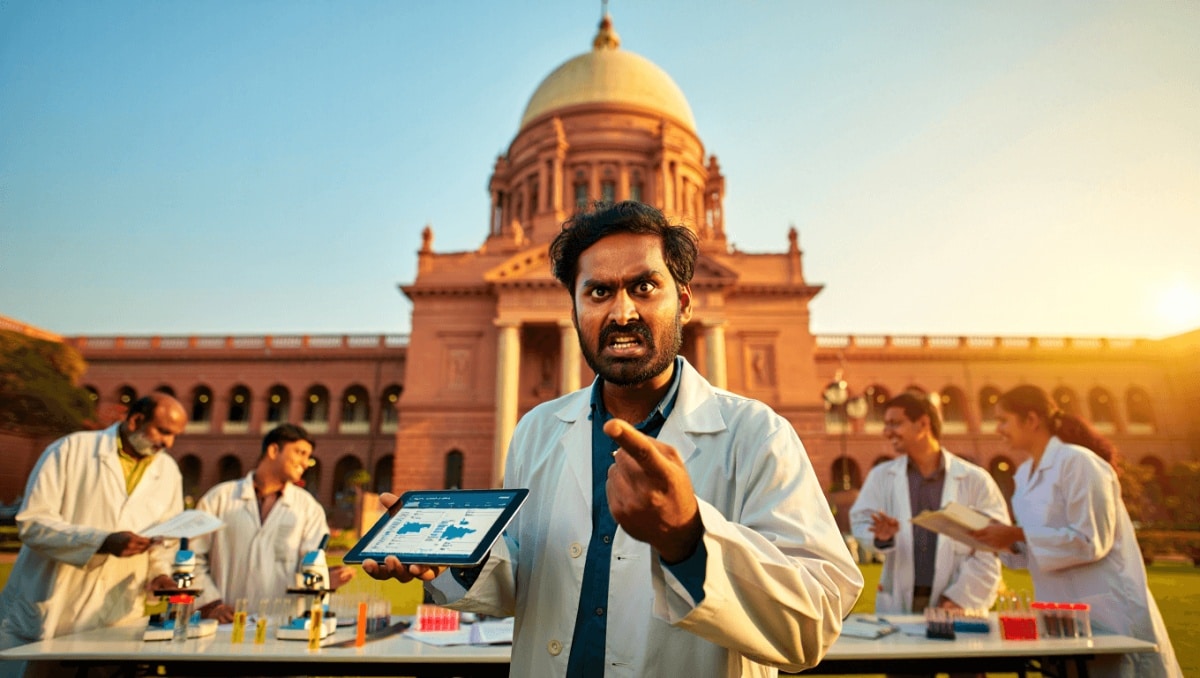
Two centuries of institutions, a string of pioneering scientists and a visible public face in a sprawling science centre explain why Kolkata is often called India’s “Science City.” As New Delhi and other metros ramp up research spending in 2026, Kolkata’s long-standing laboratories and schools still shape the nation’s scientific workforce and public understanding of science.
Roots in the 18th and 19th centuries
Kashi to Kedarnath costs revealed: how much a Sawan pilgrimage will set you back
Hinduism gains ground in Africa: new communities reshape culture and commerce
The city’s scientific pedigree dates to the late 1700s, when learned societies and botanical collections were established under colonial rule and quietly set the stage for indigenous research. Over the 19th century, medical colleges, universities and geological surveys mapped the region and trained early generations of Indian scientists.
Those early foundations mattered because they created a durable ecosystem: libraries, specimen collections and trained teachers that later generations could build on rather than start from scratch.
Institutions and individuals that defined Kolkata’s reputation
Kolkata’s status rests on a cluster of institutions and several internationally recognized researchers who worked here. Together they created a network of specialized centres across disciplines — from basic physics to statistics and biological research.
- Asiatic Society (founded 1784) — one of the earliest learned societies in South Asia, housing manuscripts and scholarly collections.
- Indian Botanic Garden (est. 1787) — a major living collection that supported botanical research and colonial trade interests.
- Calcutta Medical College (1835) — among the first modern medical schools in Asia, pivotal for medical education and public health.
- Geological Survey of India (est. 1851 in Calcutta) — central to mapping India’s mineral resources.
- Indian Association for the Cultivation of Science (IACS, 1876) — created to promote original scientific work in India.
- Bose Institute (1917) — founded by Jagadish Chandra Bose, one of India’s earliest modern research institutes for physics and biology.
- Indian Statistical Institute (ISI, 1931) — launched by P.C. Mahalanobis, it helped professionalize statistics and shaped national planning.
- Saha Institute of Nuclear Physics (1949) — born from the vision of Meghnad Saha to develop physics research after independence.
- Science City, Kolkata (opened 1997) — a public science centre that popularizes technology and hands-on learning for millions of visitors.
Why the people matter as much as the buildings
Institutions gave Kolkata infrastructure; individuals gave it ideas. Figures such as Jagadish Chandra Bose, Satyendra Nath Bose, P.C. Mahalanobis and Meghnad Saha produced work with global reach — from electromagnetic experiments and statistical theory to ionization physics — and their careers, often centered in Kolkata, drew students and collaborators.
That concentration of talent created informal networks: seminar series, cross-institute collaborations and a steady flow of trained graduates into universities and industry across India.
From legacy to present-day relevance
Today Kolkata’s laboratories continue to operate alongside newer centres and universities. The practical effect is tangible: a steady pipeline of science graduates, established research facilities that can host collaborations, and a science-literate public nurtured by museums and outreach programmes.
As national priorities shift toward innovation and applied research, the city’s older institutions offer comparative advantages — archival collections, long-running datasets and mentorship traditions that cannot be copied quickly.
Opportunities and constraints
Preserving that heritage while staying current is the immediate challenge. Many of Kolkata’s historic institutions require modernization of equipment, renewed funding pathways and stronger industry links to translate basic research into commercial outcomes.
At the same time, there is momentum: partnerships with newer research clusters, increased national science budgets and growing interest in regional centres of excellence create openings for renewal without erasing the city’s historical strengths.
What this means for readers
For students, scientists and science-curious citizens, Kolkata remains a place where history and active research meet. Prospective researchers will find venerable institutes with deep archives and teaching traditions; visitors encounter interactive exhibits at Science City that make contemporary science accessible.
For policy makers and funders, Kolkata’s story underlines a broader point: long-term investment in institutions builds durable knowledge ecosystems that continue to pay dividends decades later.
In short, Kolkata’s label as a “Science City” is not a marketing claim but a reflection of persistent institutions, high-profile scientists and a public-facing culture of science that together have shaped India’s scientific landscape for well over a century.