Show summary Hide summary
The Travancore Devaswom Board told the Supreme Court on Wednesday that long-standing communal faith should in some cases outweigh an individual’s religious claim, invoking the 2019 Ram Janmabhoomi judgment to buttress its position. The submission, voiced alongside arguments from the Centre, puts the balance between personal religious freedom and collective belief back at the center of India’s legal debate.
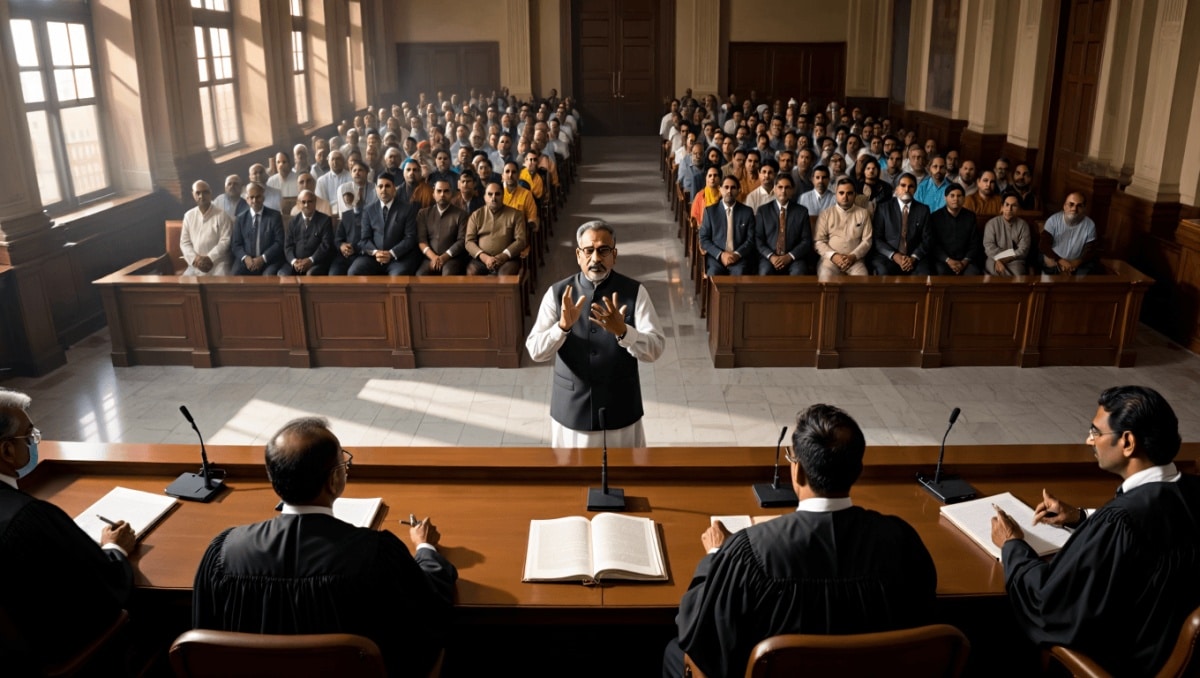
The intervention was made before a nine-judge bench led by Chief Justice Surya Kant and including Justices M. M. Sundresh, B. V. Nagarathna, Ahsanuddin Amanullah, Aravind Kumar, A. G. Masih, P. B. Varale, R. Mahadevan and Joymalya Bagchi. Senior advocate Abhishek Manu Singhvi appeared for the Travancore Devaswom Board; Solicitor General Tushar Mehta presented the Centre’s aligned submissions.
What the Board asked the court to recognize
At the heart of the argument was a plea for judicial restraint when dealing with religious customs. Counsel argued the validity of long-standing practices should be assessed primarily through the lens of the community that follows them, rather than by external judicial standards.
Kashi to Kedarnath costs revealed: how much a Sawan pilgrimage will set you back
Hinduism gains ground in Africa: new communities reshape culture and commerce
- Deference to community belief: The Board urged the court to accept the community’s own understanding of its rites and traditions as decisive in disputes over custom.
- Limits to judicial inquiry: It said the court’s role should be narrowly focused on issues of public order, health and morality, not doctrinal correctness.
- Article 25 invoked: Counsel maintained that the individual right to practise and propagate religion under Article 25 cannot be exercised in a way that infringes the collective rights of followers of that faith.
- Reliance on precedent: The 2019 Ram Janmabhoomi ruling was cited to warn against courts interpreting religious doctrine in ways that would undermine worshippers’ faith.
Singhvi warned against selective readings of sacred texts that could be used to challenge worship practices. He urged the bench to avoid substituting legal judgment for a faith community’s internal assessments.
Why this matters now
These arguments carry practical consequences. If the court accepts a higher threshold for intervening in religious customs, fewer practices may be open to judicial revision—even where individual rights claim a conflict. That will affect ongoing and future litigation over disputed rituals, places of worship and community traditions.
Legal scholars and rights advocates will watch closely because the decision could recalibrate how courts weigh individual liberties against collective religious interests in India, potentially narrowing the scope for challenges based on personal conscience or differing interpretations of faith.
The bench has heard opening arguments; further hearings are expected as parties develop evidence and legal frameworks. Observers anticipate a careful, case-by-case approach from the court rather than a sweeping doctrinal pronouncement.
For readers, the immediate takeaway is clear: the Supreme Court is again confronting where to draw the line between personal religious freedom and the protection of entrenched communal beliefs—a question with real implications for worship, civil liberties and social cohesion across the country.