Show summary Hide summary
- Trade and technology: upgrading ties beyond cars and chips
- Why maritime security and the Strait of Hormuz matter now
- Defence industrialisation: from K9s to co-development
- Critical minerals and shipbuilding: practical steps to reduce dependence
- Shoring up a rules-based order in a changing strategic landscape
- Culture, language and the business of soft power
- Obstacles remain — and the fixes are institutional
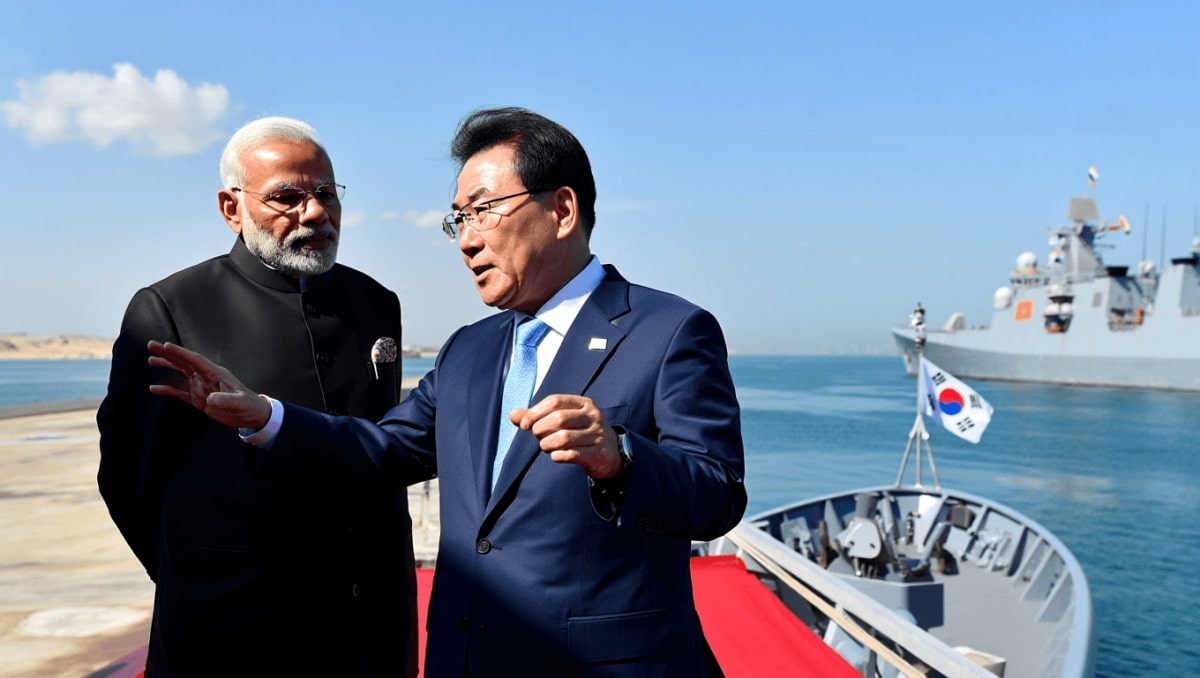
South Korea’s president arrived in New Delhi this week promising a deeper, practical partnership with India that touches trade, technology, defence and critical supply chains. The pitch is immediate: with global geopolitics in flux, Seoul sees India as a partner to secure energy routes, diversify resources and accelerate industrial cooperation that could reshape regional multilateralism.
Trade and technology: upgrading ties beyond cars and chips
President Lee Jae Myung told The Times of India that Seoul wants to move the Korea–India relationship into new sectors as talks continue to upgrade the Comprehensive Economic Partnership Agreement. Negotiators are expected to prioritise faster market access and collaboration in areas where both countries hold complementary strengths — notably shipbuilding, finance, defence production and emerging digital technologies.
Kashi to Kedarnath costs revealed: how much a Sawan pilgrimage will set you back
Hinduism gains ground in Africa: new communities reshape culture and commerce
Korea brings large-scale manufacturing and AI infrastructure; India contributes scale, software talent and a fast-growing market. Officials in both capitals are now looking for projects that produce tangible industrial outcomes rather than only high-level declarations.
Why maritime security and the Strait of Hormuz matter now
Both Seoul and New Delhi rely heavily on energy shipments that transit critical sea lanes. In his interview, Lee emphasised that keeping the Strait of Hormuz open and secure is not a peripheral issue but one tied directly to national well-being and economic stability.
The two countries plan closer coordination on maritime safety and to press for continued freedom of navigation through diplomatic channels and multilateral forums.
Defence industrialisation: from K9s to co-development
The K9 Vajra howitzer programme is cited by Seoul as a template for industrial cooperation: the second phase of the contract requires a majority of manufacturing to take place in India, underlining a shift from exporter–importer dynamics toward joint production.
Seoul says it will back India’s Atmanirbhar Bharat push by supporting independent production, offering technology partnerships, and exploring co-development, operations and maintenance links across defence supply chains.
Critical minerals and shipbuilding: practical steps to reduce dependence
Reducing reliance on any single supplier for essential inputs has risen from economic preference to strategic necessity. Korea and India see complementary roles: India’s resource base and Korea’s downstream manufacturing could be integrated to build secure battery, EV and electronics supply chains.
Seoul has also proposed leveraging its world-class shipbuilding know-how to help India expand maritime transport and port capabilities — a move framed as essential if India aims to become a global logistics hub.
- Key deliverables expected during the visit:
- Acceleration of CEPA upgrade talks to widen market access
- MOUs in shipbuilding and port cooperation
- New Korea–India Industrial Cooperation Committee to coordinate projects
- MOU for joint research in digital technologies and AI
- Expanded defence co-production and technology-sharing frameworks
Shoring up a rules-based order in a changing strategic landscape
With major powers shifting priorities, Lee framed Korea’s role as a regional bridge-builder. He argued that countries in the Indo-Pacific have the capacity to strengthen multilateral rules and that Korea and India can jointly help set fresh standards for inclusive trade and security cooperation.
Participation in regional exercises and initiatives — including a willingness to engage with India-led maritime initiatives — are presented as steps toward a more resilient, rule-based regional architecture.
Culture, language and the business of soft power
Beyond industry and defence, cultural ties are being positioned as foundations for long-term engagement. Recent India–Korea co-productions, the establishment of Korean entertainment firms in Mumbai and growing interest in Korean language courses reflect a shifting social backdrop to bilateral ties.
Sejong Institutes and school programmes already teach Korean to thousands of Indian students. Seoul plans to expand teacher exchanges, provide textbooks and run more cultural immersion activities to deepen youth connections.
Obstacles remain — and the fixes are institutional
Lee acknowledged that regulatory complexity and unpredictable domestic procedures slow investment and project delivery. To attract sustained private capital, both governments will need to streamline approvals, increase transparency and harmonise standards so joint ventures can scale without bureaucratic friction.
To that end, officials will pursue policy-level cooperation: a dedicated industrial committee and ministry-to-ministry MOUs aimed at speeding joint R&D, harmonising industrial norms and improving investor confidence.
For readers tracking global supply chains, defence procurement or regional security, the visit signals a pivot from declarative diplomacy to targeted, sectoral partnerships. If implemented, the Korea–India agenda could influence energy security, technology supply lines and industrial jobs across the Indo-Pacific.