On April 14, 2026, singer Harshdeep Kaur spoke about how childhood pilgrimages to Majnu ka Tilla for Baisakhi shaped her sense of faith and family — and how those rituals now guide the way she introduces her son to their cultural roots. At the same time she reflected on a music industry that looks very different from the one that launched her career, with artists increasingly turning to independent music routes.
For Kaur, the festival remains first and foremost a family occasion: mornings spent at the gurdwara, shared meals, and the familiar rhythms of hymns and folk songs. She described those early experiences as the foundation for both her public work and private life, a space where devotion and music were inseparable.
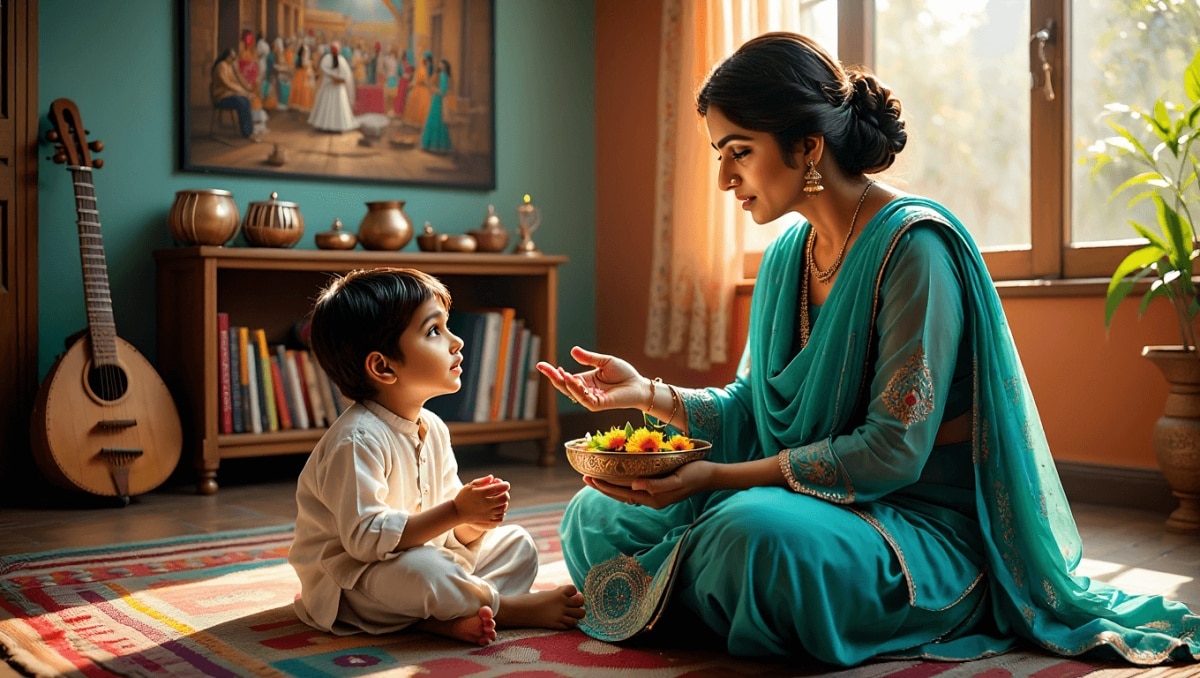
Becoming a parent has shifted how she approaches those memories. Rather than treating rituals as fixed performances, she now frames them as teaching moments — explaining why certain songs matter, what the prayers signify, and why the community gatherings endured across generations.
Kashi to Kedarnath costs revealed: how much a Sawan pilgrimage will set you back
Hinduism gains ground in Africa: new communities reshape culture and commerce
Her account also touched on the broader transformation of the Indian music scene. Where earlier in her career artists often relied on labels for distribution and visibility, Kaur noted that today’s creators can reach audiences directly through streaming platforms and social media. That change, she said, alters not just how music is released but how cultural traditions are preserved and shared.
- Family and faith: Baisakhi continues to serve as a key moment of transmission — language, ritual, and songs passed from parent to child.
- Pedagogy at home: Kaur emphasizes conversation and practice over ceremony for its own sake when teaching her son.
- Industry shift: Increased independence for artists brings more creative control but also new responsibilities in promotion and rights management.
- Audience impact: Direct-to-fan channels make regional and devotional music more discoverable beyond traditional gatekeepers.
The practical stakes are clear. When artists preserve traditions on their own terms, listeners gain access to authentic performances but also encounter a different economics: the power to self-publish comes with the need to build and sustain an audience without label infrastructure.
Observers say this dual change — personal custodianship of culture at home and decentralization of the music business — could reshape how festivals like Baisakhi are experienced in urban diasporas. For now, Kaur’s story is a reminder that public celebrations and private teaching are mutually reinforcing, and that the songs learned on childhood visits to local shrines continue to travel in new forms.