Show summary Hide summary
As scholars, activists and media outlets revive the label “settler colonialism” for India’s role in Jammu and Kashmir, the argument has moved from academic journals into international debate. That shift matters: how the conflict is framed shapes diplomatic responses, humanitarian attention, and the safety of religious minorities on the ground.
What the term means — and why it’s contested. Scholars use “settler colonialism” to describe a process in which an outside population seeks to replace an indigenous one and claim the land as its own. Applied to Kashmir, that label implies large-scale displacement driven by state-sponsored settlement. Some recent pieces have advanced this reading; others say it compresses a far more complicated past into a single template.
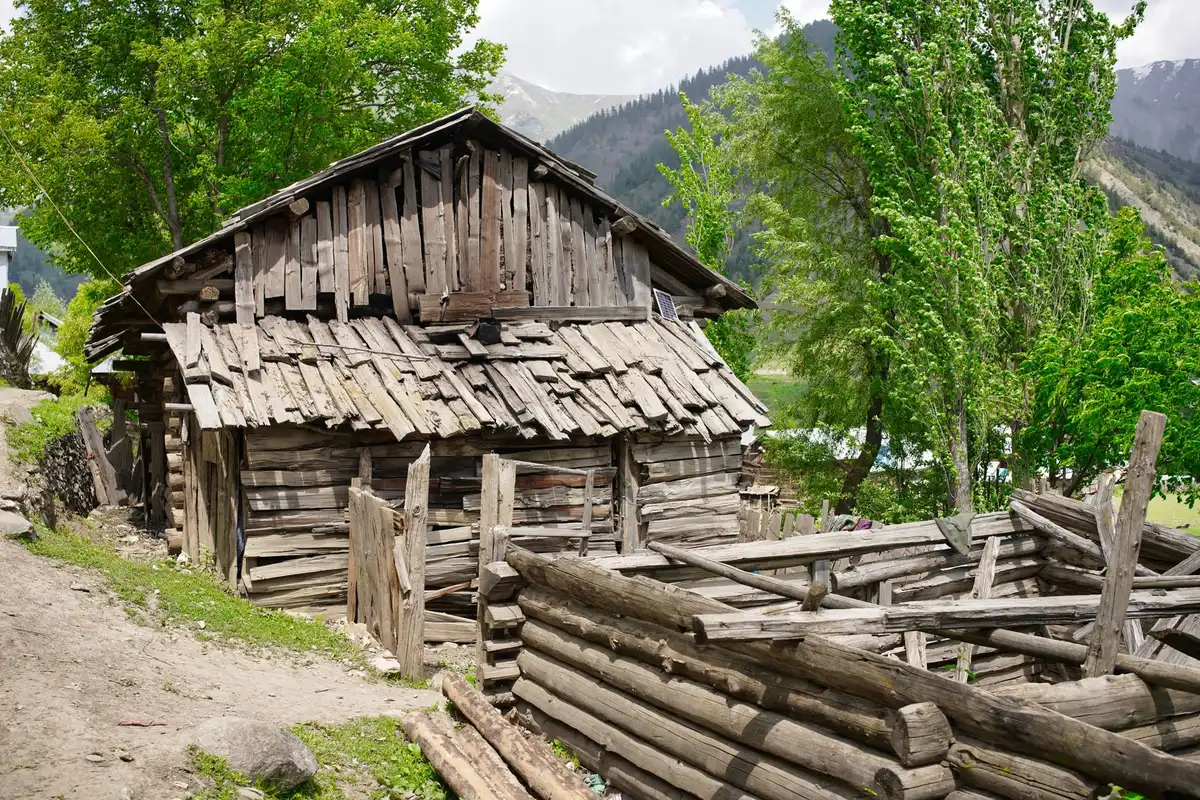
The history of Kashmir resists easy classification. Long before modern borders, the valley was home to Buddhist and Hindu communities and developed a distinct religious and cultural life over centuries. Over time, waves of rulers and religious change shifted the region’s demographics and institutions.
Annamalai applauds Bhagwat’s message on Muslim inclusion in India
Navratri in Times Square goes viral: social media splits over Indian celebrations abroad
Two episodes are central to any assessment of whether India’s presence in Kashmir can legitimately be called “settler colonial.” First, the events surrounding 1947: the Princely State’s accession to India, the invasion by irregular forces supported from across the new border, and the UN’s involvement. Second, the late 1980s and early 1990s, when insurgency, targeted violence and intimidation forced large numbers of Kashmiri Hindus to flee the valley.
Key moments and contested facts
Rather than take sides on a single label, a useful starting point is to map the facts that shape the debate.

- 1947 accession and UN mediation: The Maharaja of Jammu and Kashmir signed an Instrument of Accession to India in 1947, with the understanding that a plebiscite could later confirm the arrangement. The UN Security Council’s Resolution 47 called for a withdrawal of Pakistani forces as a precondition for such a vote; that withdrawal did not occur and the plebiscite never took place.
- Early population movements: In the chaotic months after partition, tens of thousands of Hindus and other civilians fled violence in parts of the subcontinent, including Kashmir.
- 1989–1990 exodus: A wave of insurgency accompanied by targeted threats, killings and intimidation led many Kashmiri Hindus—often called Kashmiri Pandits—to leave the valley; estimates of those displaced run into the hundreds of thousands depending on the source.
- Prolonged conflict and cross-border dynamics: Since 1947, militancy supported by groups and networks from across the Line of Control has been a central feature of the conflict; the violence has affected civilians of multiple communities and prompted sustained Indian security operations, including deployment under the Armed Forces (Jammu and Kashmir) Special Powers Act (AFSPA).
- Recent reframing: A 2021 law-school note and other commentaries renewed attention to the idea that Indian policy in Jammu and Kashmir constitutes settler colonialism; critics of that reading say it underplays the region’s earlier episodes of ethnic violence and displacement.
The diverging narratives matter because they determine which harms are foregrounded and which actors are held responsible. Describing India as an occupying settler state centers a critique of state policy; emphasizing ethnic cleansing by non-state militants highlights violence against minorities that preceded any state-led settlement program.
Consequences beyond academic debate
Language has consequences in diplomacy and advocacy. If international observers adopt a convertible framework without grappling with Kashmir’s layered history, two risks arise: first, the suffering of minorities driven from their homes can be marginalized or overlooked; second, calls for international intervention framed against India can be used by rival states or non-state actors to justify proxy campaigns or political pressure.

Recent developments underscore those stakes. After the Taliban regained control in Afghanistan in 2021, some militant voices invoked renewed solidarity with armed groups in Kashmir. That rhetoric coincided with fresh incidents of targeted killings and attacks on migrant workers and members of minority communities in the region—incidents that complicate any singular reading of the conflict.
At the same time, concerns about security measures and civil liberties in Jammu and Kashmir—detention laws, restrictions on movement, and the prolonged use of special powers—remain live, legitimate subjects for scrutiny. Those issues deserve independent attention rather than being subsumed under a single classificatory banner.
What readers should take away
Reducing Kashmir to a single theoretical label risks flattening a long, contested history and obscuring immediate humanitarian priorities. Policy-makers, scholars and media who weigh in should do so with attention to nuance and the concrete consequences of their language.
- Labels like “settler colonialism” can clarify some features of state policy—but they are not a substitute for careful, evidence-based accounting of who has been harmed and how.
- Protecting vulnerable communities in Kashmir—Hindus, Sikhs, migrants and others—requires focused human-rights work and security measures that respect the rule of law.
- International debate should be informed by documented events: displacement episodes, UN resolutions and the patterns of cross-border interference.
Framing matters. So do facts. Nuanced, historically informed reporting and policy analysis is essential if international engagement is to improve human security on the ground rather than deepen rivalries or obscure victims’ experiences.