Show summary Hide summary
Across Japan and Australia this weekend, communities from Odisha and wider Indian diasporas staged colourful Rath Yatra processions that blended ritual, music and local participation. These events — from a joint mikoshi–rath procession in Aichi prefecture to large public yatras in Sydney and Melbourne — underline how a centuries-old festival is being reinterpreted abroad and drawing thousands into civic and cultural life.
Kasugai, Japan: when mikoshi and rath travel together
In Kasugai, Aichi prefecture, organisers created an uncommon scene: Japanese festival shrines known as mikoshi joined the traditional Jagannath rath as it moved across a golf-course venue at Fukushi No Sato Rainbow Plaza. The wooden chariot was conceived and made by two local craftsmen, Norihiro Kawasaki (84) and Kochi Kawachi (75), and the ceremony bridged Shinto and Hindu processionary practices.
Annamalai applauds Bhagwat’s message on Muslim inclusion in India
Navratri in Times Square goes viral: social media splits over Indian celebrations abroad
The symbolic ritual of chhera pahanra — a ceremonial sweeping of the chariot — was performed jointly by Kasugai councillor Masanao Kajita and Odissi guru Gajendra Panda before community members pulled the vehicle. A cultural programme followed, mixing Indian classical and folk dance forms with a sacred Japanese music ensemble.
Organisers said roughly 500 people attended, including residents from the UK, Serbia and Nepal; diplomatic and prefectural representatives were also present, among them Umesh Nautiyal, first secretary (education, culture and community welfare) at the Embassy of India in Tokyo, and Aichi vice‑governor Kaoru Kawahara.
Sydney: a large community yatra built on volunteer labour
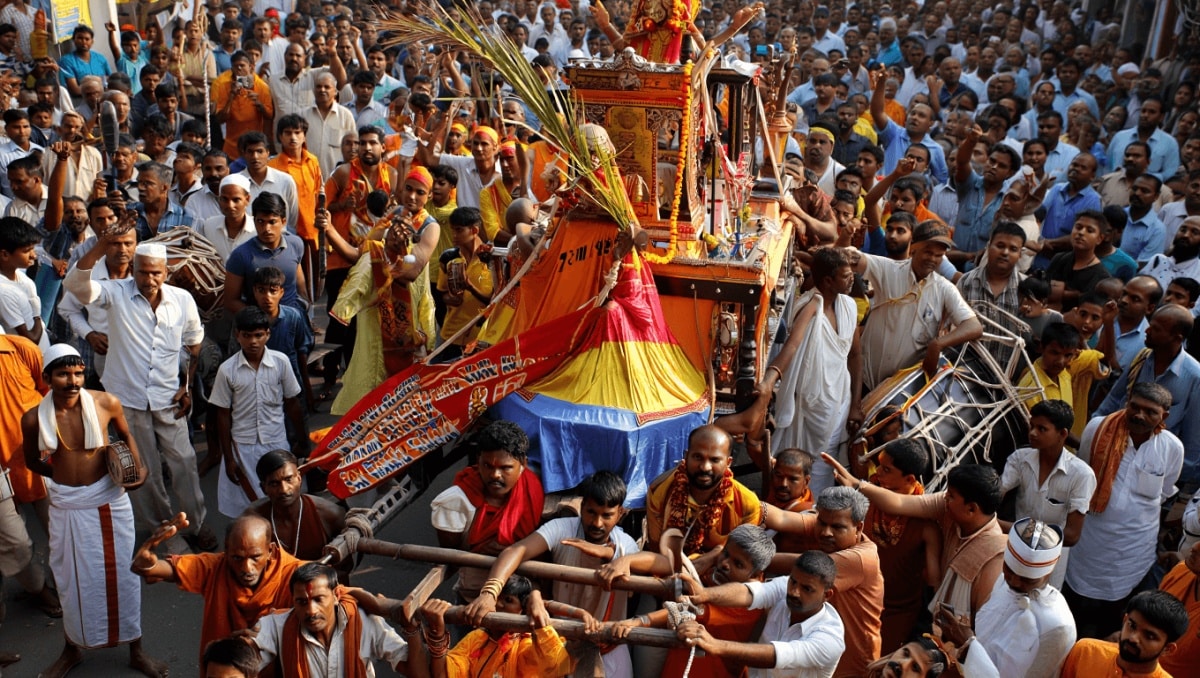
The Sydney Rath Yatra drew one of the largest crowds this weekend, with organisers reporting about 2,000 attendees at Blacktown Showground. The procession followed rituals aligned with the Jagannath tradition of Puri and was led by priests from the Sydney temple together with visiting clergy from other local Hindu temples.
The chariot — constructed by community volunteers and routinely dismantled and rebuilt each year — measures roughly 4.2 metres tall and 2.4 metres wide. Preparations began early in the year: the community started Ratha Katha Anukula in January and began ceremonial construction on Akshaya Tritiya in April. Elected representative Warren Kirby attended the event.
Devotees were offered a range of traditional prasad items such as arna, dalma, khiri and other sweets prepared by volunteers. Temple organisers emphasised that the festival functions as both religious observance and a broad community effort, bringing together Odia families, the wider Indian diaspora and local Australian volunteers.
Melbourne: encouraging children with mini chariots
At Keysborough, the Jagannatha Sanskruti & Bhakti Association staged a colourful procession centred on a large, volunteer-built main chariot and several smaller ones for children. The main rath, approximately 4 metres high and 4.5 metres wide, was adapted for local safety standards and assembled in a volunteer’s backyard.
About 800 people attended. The initiative to create smaller chariots came from community member Tulika Dash and a local woodworking association to give younger devotees a hands-on role. Ten-year-old Romir Mohapatra pulled his own mini rath during the parade and described the experience as deeply meaningful.
Rituals at the Melbourne event were conducted by priests Govinda Mishra and Rajshekar Acharya, with deities cared for year‑round at the home of a devotee, Satya Dash, because the community does not yet have a permanent temple.
- Kasugai, Japan — ~500 attendees; mikoshi joined rath; joint chhera pahanra; cultural exchange between Japanese and Indian performers.
- Sydney, Australia — ~2,000 attendees; volunteer-built chariot (4.2m × 2.4m); prasad served; civic approvals and political attendance noted.
- Melbourne, Australia — ~800 attendees; main chariot 4m × 4.5m; mini chariots to involve children; rituals led by experienced priests.
- Canberra — local temple event featured classical and devotional music and dance, with community leaders stressing unity and inclusion.
Performances at the weekend events ranged from Odissi and Bharatanatyam to regional folk dances and Japanese sacred music, reflecting diverse local talent and the diasporic urge to transmit ritual knowledge across generations. In several cities, preparation timelines followed the traditional ritual calendar — community readings and ceremonial starts took place months earlier, underscoring the festivals’ continuity even in far‑flung settings.
Why this matters: these processions are more than pageantry. They operate as informal cultural diplomacy, knit diasporic networks, and create civic rituals in which volunteers, elected officials and local residents participate. For host cities, the yatras offer opportunities for cross-cultural exchange and public celebration; for communities from Odisha, they are a way to maintain ritual practice and pass it to younger generations.
As Rath Yatra events continue to expand globally, observers say the balance between preserving traditional rites and adapting to local regulations and audiences will shape how the festival evolves outside India. For now, the weekend’s gatherings showed a living tradition finding new collaborators and new spectators far from its original temple streets.