Show summary Hide summary
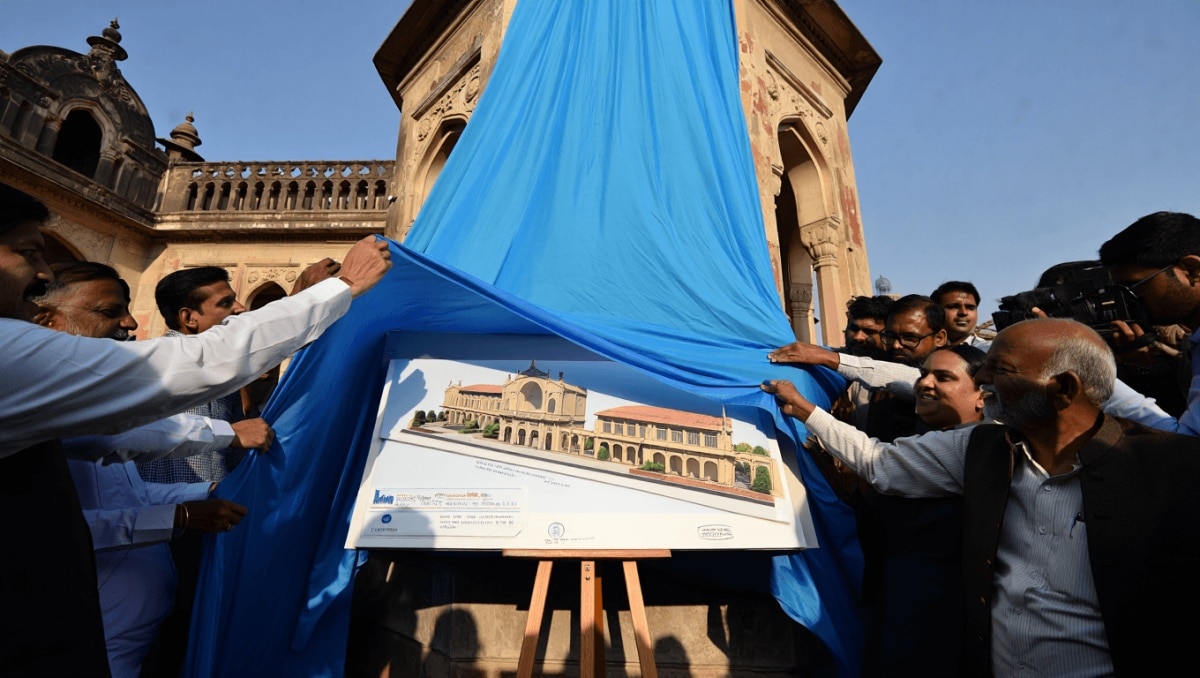
A conservation partnership has been announced to revive Lucknow’s 19th-century Rifa-e-Aam Club, converting the landmark into a research and training centre for heritage preservation. Backed by the Indian National Trust for Art and Cultural Heritage and the Lucknow Development Authority, the project carries an estimated budget of Rs 10 crore and aims to marry restoration with hands‑on scientific study.
The agreement allocates one of the club’s halls for LDA use while the remainder will house laboratories, classrooms and workspace for conservation specialists. Restoration will follow the Butler Palace model, an approach that preserves historic fabric while adapting interiors for contemporary functions.
Planned facilities include a modern archaeological conservation laboratory and a building‑materials testing lab where experts will analyse and attempt to recreate traditional mortars and pigments. Researchers will examine materials such as lime mortar, surkhi and red lead—substances commonly found in older Awadhi structures—to inform accurate repairs both at this site and across the state.
Annamalai applauds Bhagwat’s message on Muslim inclusion in India
Navratri in Times Square goes viral: social media splits over Indian celebrations abroad
- Partners: Indian National Trust for Art and Cultural Heritage (INTACH) and Lucknow Development Authority (LDA)
- Estimated cost: Rs 10 crore
- Use: LDA space + conservation, research and training facilities
- Technical focus: Materials analysis, conservation lab, building‑materials testing
- Education: Practical training for history and architecture students
Why this matters now
Beyond saving a single building, the scheme aims to build local capacity for heritage upkeep. Training programmes and laboratory results can help craftsmen, conservators and municipal teams apply period-accurate techniques elsewhere, reducing reliance on unsuitable modern repairs that accelerate decay.
Prathamesh Kumar, vice‑chairperson of the LDA, described the initiative as a way to give the structure renewed civic purpose while safeguarding it for the long term. Officials say the research outputs will be available to teams working on other heritage projects across Lucknow and neighbouring districts.
From a social club to a public resource
Constructed in the 1830s during the rule of the Awadh nawabs, the Rifa-e-Aam Club originally served as a venue for gatherings and cultural life centered on everyday citizens’ welfare. Later stewardship by the Raja of Mahmudabad opened the club to Indian members at a time when many colonial-era institutions restricted access.
Conservators see symbolic value in turning a once-public social institution into a public conservation laboratory: the building’s history of civic use dovetails with its new role as a centre for knowledge and skills that benefit the wider community.
Officials have outlined the project scope and facilities; a precise timeline for the work and the phased schedule for restoration and lab commissioning have not been released. When completed, the complex is expected to serve both as a model for sympathetic adaptive reuse and as a technical resource for protecting Lucknow’s built heritage.