Show summary Hide summary
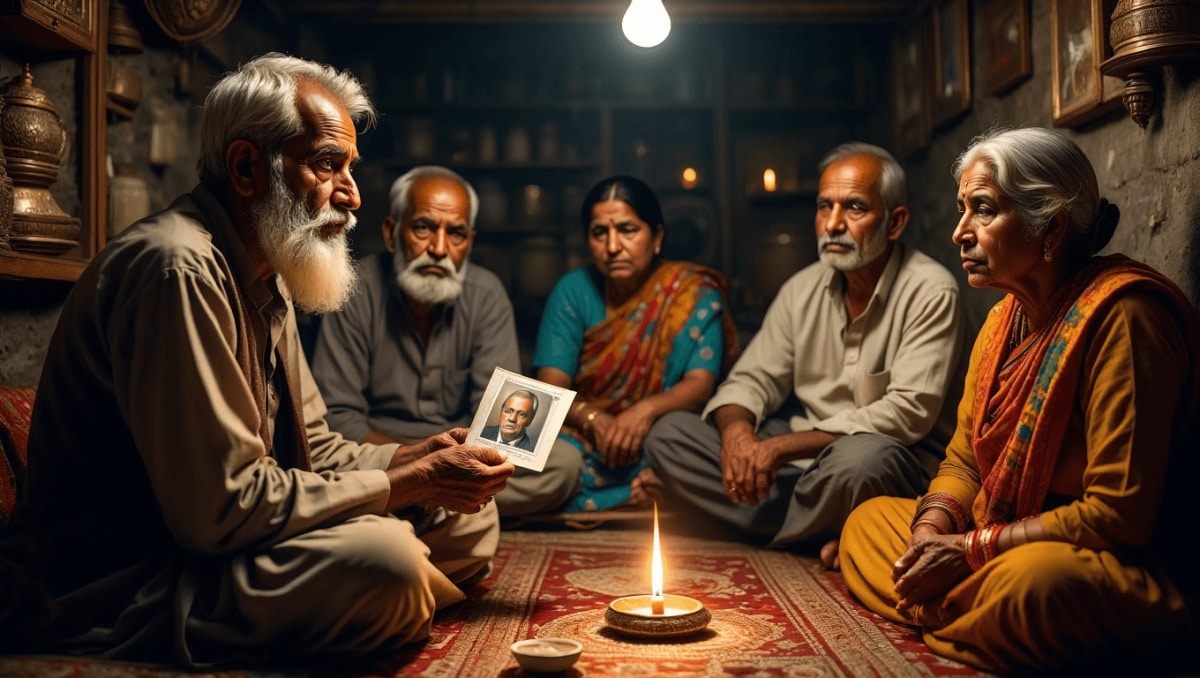
This year’s renewed debate over Kashmir’s recent past has thrust one uncomfortable question into the open: whose testimony is heard — and whose is dismissed — when a community recounts trauma? For Kashmiri Hindus, the struggle has not only been physical displacement but also a long fight over credibility and recognition.
Silencing as a form of harm
Philosophers who study knowledge and power call one aspect of this problem epistemic injustice: when social biases reduce the trust given to certain speakers or leave communities without the concepts needed to explain their own experiences. One strand of that, known as testimonial injustice, happens when a claimant’s account is discounted because of prejudice against who they are rather than judged on its merits.
Annamalai applauds Bhagwat’s message on Muslim inclusion in India
Navratri in Times Square goes viral: social media splits over Indian celebrations abroad
In the Kashmir context, survivors and displaced families say this dynamic has repeatedly weakened public understanding of what they endured — and shaped how the wider public, media and policymakers respond.
Triggering a public reckoning
The 2022 release of a film depicting the flight of Kashmiri Hindus brought these disagreements into sharp relief. For many viewers it reopened a conversation about targeted killings, assaults on religious sites and a mass exodus from the Valley. For others, the depiction prompted accusations that focusing on Hindu suffering risks polarising communities or reinforcing hostile stereotypes.
That back-and-forth is not merely academic. When victim accounts become contested as politically charged narratives, two outcomes follow: survivors feel re-traumatised by disbelief, and meaningful redress — legal, social and political — becomes harder to achieve.
What scholars and survivors report
Independent historians, journalists and community groups document a pattern of intimidation and violence against Kashmiri Hindus that intensified in the late 1980s. Accounts point to organised campaigns of threats, destruction of property and pressure that forced large numbers of families to flee.
- Scale of displacement: Estimates commonly cited put the number of displaced Kashmiri Hindus in the hundreds of thousands after 1989–1990, though figures vary between sources.
- Damage to religious and civic life: Reports list scores to several hundred temples and religious sites damaged or desecrated, alongside destruction of businesses and homes.
- Social consequences: Entire communities lived for decades in makeshift camps or host cities, with long-term effects on education, employment and cultural life.
Survivor testimony describes threats circulated by notices, public sermons and intimidation campaigns that demanded non-Muslims leave the Valley. Journalistic investigations and human-rights reporting from the period document episodes of killings, targeted attacks and the erosion of day-to-day safety that preceded the mass departures.
Why recognition matters now
Accepting survivors’ accounts is a necessary step toward accountability and reconciliation. When allegations of violence are dismissed as mere political performance, opportunities to address grievances — from reconstruction of places of worship to restitution and return — narrow considerably.
In recent years the conversation has moved into policy: new domicile rules and rehabilitation measures have been introduced with the stated aim of addressing displacement. Yet community leaders and advocates argue that legislative changes alone do not repair social exclusion or restore what was lost; meaningful rehabilitation requires credible recognition, community dialogue and sustained investment.
Implications for social cohesion
Denying or deflecting trauma claims creates practical and moral risks. It undermines trust across communities, stalls legal or administrative remedies, and leaves younger generations with contested histories. Conversely, listening to testimony — even when it complicates national narratives — can be the first step toward rebuilding civic solidarity.
As Kashmir’s past remains a live political subject, the stakes are immediate: credible acknowledgement affects resettlement programs, heritage protection, education curricula and the ability of different communities to coexist.
Moving from testimony to repair
Policy and public debate should aim for three parallel tracks: listen to survivors without immediately disbelieving their accounts; ground policy in verifiable facts and transparent processes; and support cultural and material restoration that enables displaced people to rebuild lives.
For Kashmiri Hindus who remain internally displaced, that means more than new administrative categories — it means practical housing solutions, protection of religious sites, mental-health support and institutional mechanisms that record and preserve testimonies for the historical record.
Recognition is not a substitute for justice, but it is a precondition for it. Until victims’ voices are treated with impartial attention, attempts at reconciliation will remain incomplete and fragile.
Key sources and reporting used to assemble this overview include contemporary journalistic investigations, survivor collections and scholarly work on epistemic injustice and Kashmir’s displacement. Estimates and specific counts differ across reports; where possible, officials’ figures and independent surveys have been noted in public records.