Show summary Hide summary
As yoga permeates gyms, apps and corporate wellness programmes around the globe, most practitioners never stop to ask where many postures come from. Recognising those origins matters now: it deepens cultural literacy and reframes a widely practiced form of exercise as part of a living spiritual tradition.
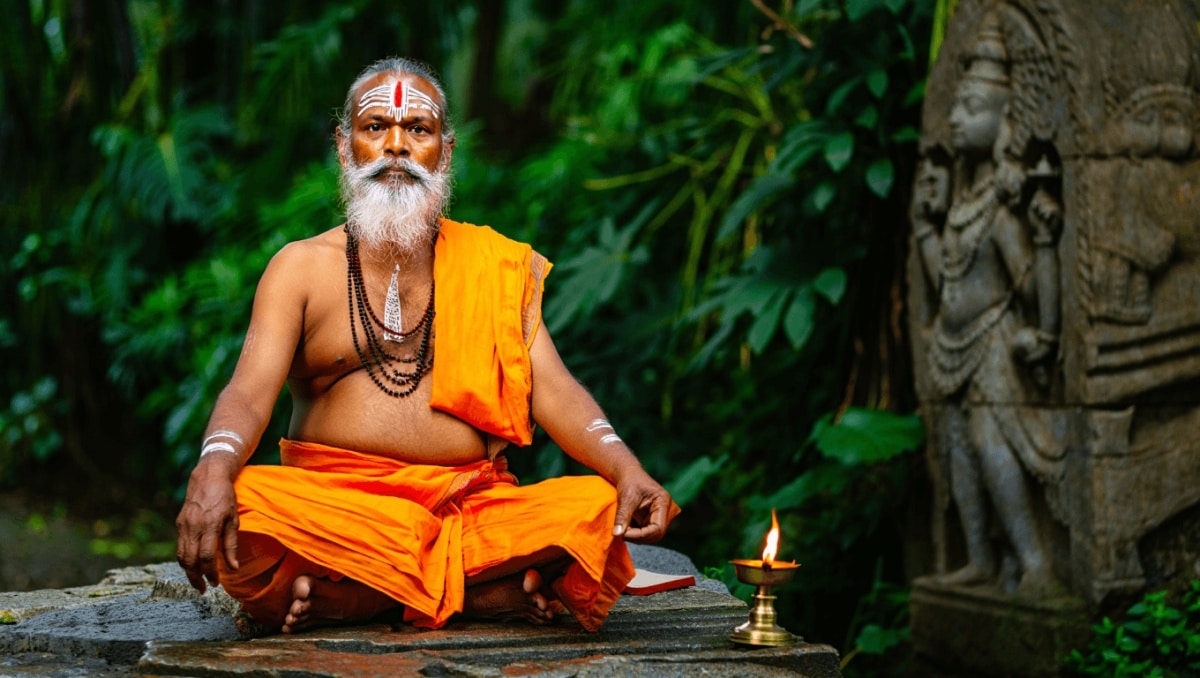
A 2021 survey by Pew found Shiva to be the deity Hindus in India most commonly identify with, reflecting his broad significance among roughly 1.2 billion Hindus worldwide. Long before yoga became a multi‑billion‑dollar industry practiced by hundreds of millions, many of its canonical postures were taught within a religious framework that credits Shiva—often called Adiyogi—as a foundational teacher.
Yoga, from the Sanskrit for “union,” was originally intended to quiet the mind and open inward attention to a deeper reality. Even when people pursue yoga for strength or flexibility alone, the shapes they move through carry stories and symbolic meanings that trace back to these older teachings.
Annamalai applauds Bhagwat’s message on Muslim inclusion in India
Navratri in Times Square goes viral: social media splits over Indian celebrations abroad
Natarajasana
One of the most striking images of Shiva is as the cosmic dancer, Nataraja, whose movements represent the cycles of creation, preservation and destruction. The mythic dance imagines the universe as rhythmic, not simply chaotic—a sequence of endings that clear the way for new beginnings.
The posture inspired by that icon—standing on one leg while reaching back to hold the opposite foot—demanding steady balance and an outward‑lifted chest. Physically it tests coordination and back flexibility; symbolically it invites a letting go of resentments and a steadiness of spirit amid change.
Bhairavasana
Another strand of Shiva lore focuses on the deity’s fearsome aspect, created to confront pride and ego. In one telling, Shiva manifests a fierce form to correct a cosmic imbalance caused by the creator god’s arrogance. The episode underlines a central ethical point in many Hindu tales: spiritual power must be tempered by humility and service.
The pose associated with this form—an intense side‑plank variation with one leg threaded behind the head—requires concentrated focus, core strength and extreme flexibility. Beyond its physical difficulty, the posture is presented traditionally as a practice in restraint and humility: the body’s limits become a classroom for tempering the self.
Virabhadrasana
Shiva’s warrior manifestation, named Virabhadra, arises in the story of Sati and her father, a conflict that culminates in a dramatic act meant to restore dignity and teach compassion. The episode ends with transformation: rage gives way to reconciliation, and the humbled antagonist seeks forgiveness.
The three warrior postures that bear this name—commonly called Warrior I, II and III—translate that narrative into movement. Each variation emphasizes groundedness, intent and clarity of gaze: a lunge with lifted arms; an open‑armed stance focusing over the front shoulder; and a balancing, airplane‑like pose that aligns the torso, arms and lifted leg. Together they cultivate alertness against ego, ignorance and distraction.
| Pose | Mythic origin | Physical focus | Spiritual emphasis |
|---|---|---|---|
| Natarajasana | Shiva as the cosmic dancer (Nataraja) | Balance, back flexibility, chest opening | Equanimity amid change; release of negative patterns |
| Bhairavasana | Shiva’s fierce form that humbles pride | Core strength, extreme flexibility, balance | Humility, control of ego, disciplined focus |
| Virabhadrasana | Warrior born from Shiva’s transformative grief | Leg strength, stability, coordination | Alertness, moral courage, dissolution of delusion |
Whether you are a studio regular or drop into yoga for stress relief, a few modest practices can help honour these connections:
- Learn the traditional names and stories behind postures when possible.
- Credit the lineage: teachers and studios can acknowledge yoga’s religious and cultural roots in class descriptions.
- Approach symbolic aspects with curiosity rather than appropriation—read reputable sources or ask knowledgeable teachers.
Understanding these narratives doesn’t require religious belief. It does, however, offer a richer frame for a practice that millions now adopt for health and wellbeing. In a moment when wellness culture is global and fast‑moving, taking a few minutes to recognise the deeper origins of familiar movements can shift yoga from mere exercise to informed, respectful engagement with a centuries‑old tradition.