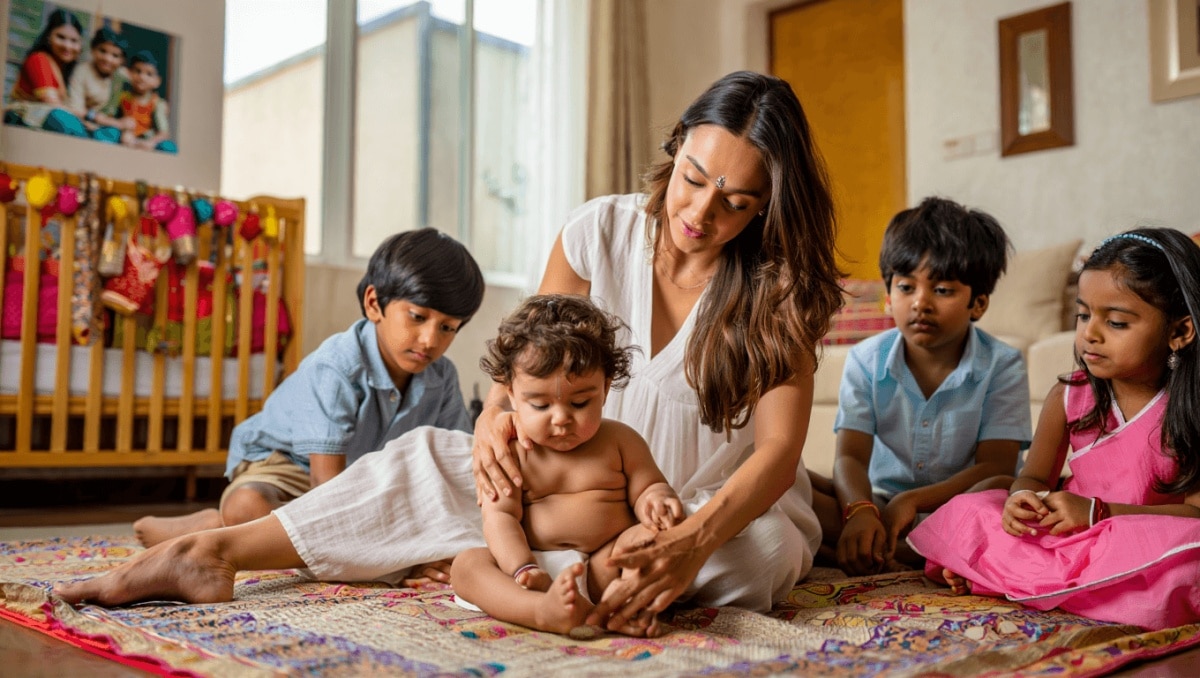
When a European mother of four started borrowing daily routines from Indian caregivers, the shift quickly reshaped her household. The change — from nighttime sleeping arrangements to baby-care rituals and cultural celebrations — offers a snapshot of how parenting traditions are crossing borders and influencing family life today.
Ksenia Kala, who lives in Europe and raises four children, says she began integrating practices she admired during extended visits with Indian friends. What began as curiosity has become a set of deliberate choices she describes as “practical and calming” for both parents and children. Those small habits now play a central role in how her family eats, sleeps and marks milestones.
- Co-sleeping: Kala moved away from a strict nursery routine and now shares a sleeping space with her youngest children at night, reporting fewer wake-ups and quicker nighttime soothing.
- Oil massages: A short, daily infant massage using warm oil is done before bath time; Kala credits it with relaxed babies and a more predictable bedtime routine.
- Names and rituals: The family has chosen Indian names for some children and adopted ceremonial touches — like simple, cultural dress for birthday gatherings — to link celebrations with shared traditions.
- Food and feeding patterns: Meals include more plant-based, home-prepared dishes inspired by Indian cooking, which Kala says brought new flavors and more family dining time.
- Community caregiving: She emphasizes the informal network of extended-family-style support she observed — an approach she tries to mimic by involving close friends in childcare.
Annamalai applauds Bhagwat’s message on Muslim inclusion in India
Navratri in Times Square goes viral: social media splits over Indian celebrations abroad
These moves reflect practical choices as much as cultural appreciation. Kala highlights tangible effects: calmer bedtimes, stronger sibling bonds and a household atmosphere that values ritual and rhythm. At the same time, she is attentive to context — adjusting routines to meet safety guidelines and local pediatric advice.
What this means for other parents
Cross-cultural parenting exchanges are not new, but they are easier to replicate today thanks to travel and social media. For parents exploring practices from another culture, three considerations matter most:
- Safety and evidence: Verify practices against current pediatric guidance.
- Respect and understanding: Adopt traditions with attention to their meaning, rather than as mere trend-based décor.
- Practical fit: Test small changes and keep what helps your family’s sleep, nutrition and emotional well-being.
Experts who study child development say that rituals and consistent caregiving routines often support attachment and regulation in young children. Appropriating elements from different parenting traditions can widen the toolkit available to families — but the benefits depend on thoughtful adaptation rather than wholesale copying.
Kala’s story underscores a broader point: parenting ideas travel, and when families borrow with care, those exchanges can foster closeness and new perspectives. For parents curious about similar shifts, the path forward is usually incremental — try one change, observe the effects, and build from there.