Show summary Hide summary
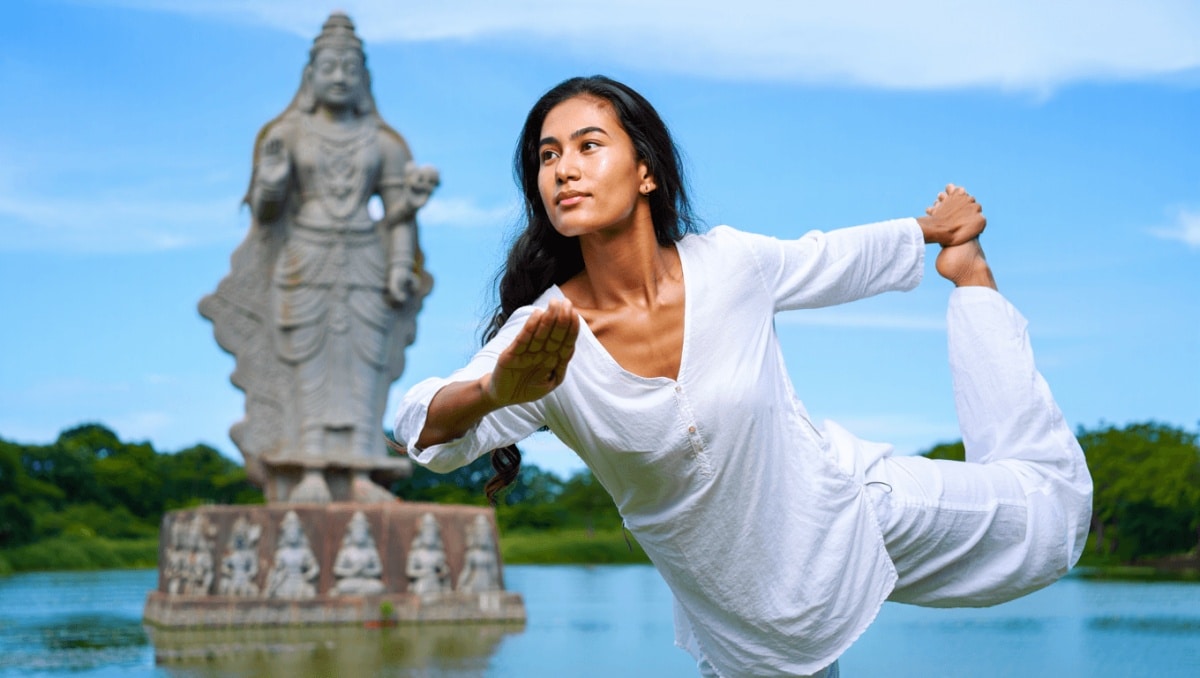
As yoga classes and online tutorials keep growing in popularity, the stories behind familiar postures are getting renewed attention — not as folklore, but as frameworks for resilience and ethical practice. Understanding four of Vishnu’s classical avatars illuminates why certain poses persist in teaching balance, focus and emotional regulation today.
Matsya: the fish that prepared a new world
In several Hindu traditions, the first of Vishnu’s incarnations appears as a fish during cycles of great upheaval. The most cited account describes a king who shelters a small fish that rapidly grows into a colossal being and warns of an impending flood. The fish-figure then guides the king to preserve seeds, sages and species, steering a vessel through the deluge until a renewed world can form.
Annamalai applauds Bhagwat’s message on Muslim inclusion in India
Navratri in Times Square goes viral: social media splits over Indian celebrations abroad
The posture inspired by this story, Matsyasana, is a reclining backbend that opens the chest and throat. Practitioners often use it to relieve tension in the front body and to encourage calm breathing — physical markers that meditation teachers link to emotional release and clarity.
Kurma: steady support beneath turmoil
When gods and demons joined to churn the cosmic ocean in search of immortality, the mountain they used began to sink. Vishnu took the form of a giant tortoise to support the mountain on his back so the work could continue. The image stresses steadiness and unseen support: vital but rarely celebrated.
Kurmasana, which culminates in a deep forward fold with the arms threaded beneath the legs, channels that idea of quiet stability. The pose is taught in stages and is said to calm the nervous system, encouraging practitioners to cultivate endurance and a composed inner field even amid external strain.
Narasimha: protection and fierce compassion
Some narratives present an incarnation that is part-man, part-lion, appearing to defend a young devotee from a tyrant. This fierce form of preservation intervenes not to punish indiscriminately but to safeguard devotion and the vulnerable.
The breath- and facial-focused variations of Simhasana — commonly called lion’s pose — use an exaggerated exhalation, an open mouth and a focused gaze to release trapped frustration. Teachers emphasize its cathartic qualities: the pose gives a structured outlet for intense emotions while redirecting energy into presence and articulation.
Vamana and Bali: humility that reorients power
Vishnu’s dwarf incarnation once asked a generous king for three paces of land. When granted that small gift, the deity expanded to span the cosmos in two strides and, finding no space for the third, received it on the king’s head. Rather than a simple triumph, the tale is often read as a lesson in measured strength, reciprocal duty and the limits of conquest.
Supta Trivikramasana — the reclining “three-step” variant — mimics the expansive reach and grounded surrender of that story. The pose opens the hips and stretches hamstrings while creating a sense of rooted power combined with ease, making it useful for calming anxiety about control and enabling steady, assertive focus.
- Matsyasana — heart-opening, eases chest tension, supports relaxed breathing.
- Kurmasana — forward-folding, soothes the nervous system and builds steady attention.
- Simhasana — expressive exhalation, releases held anger and improves vocal focus.
- Supta Trivikramasana — hip-opening recline, balances energetic power with grounded calm.
Why these myths matter now: as yoga moves from studio floors into workplace wellness programs and digital habits, the narratives behind poses remind practitioners that physical techniques come with moral and psychological frames. The four avatars examined here model different strategies for restoring balance — rescue and protection, silent endurance, righteous intervention, and humble stewardship — each with a corresponding physical practice that trains body and mind.
For readers, the takeaway is practical. These postures are not merely archetypal gestures; when taught with attention to breath and intention, they offer tools for stress management, ethical reflection and emotional regulation — skills increasingly relevant in a fast-changing world.