Show summary Hide summary
- Dates and the calendar split you must factor in
- Why this month is dedicated to Shiva
- The twelve Jyotirlingas at a glance
- Can you complete all twelve within one Shravan?
- Three realistic Shravan circuits you can finish in the month
- Two shrines that require special planning
- Practical checklist before you book
- Start with devotion, plan with prudence
Shravan — the month when monsoon renews the countryside and millions turn their devotion to Shiva — arrives in 2026 with dates that matter for anyone planning a pilgrimage. With two calendar traditions in use across India, the window for Shravan/Sawan shifts by region; if you intend to visit a Jyotirlinga this year, now is the time to pin down dates and bookings.
Dates and the calendar split you must factor in
India follows two lunar reckonings. Much of North and central India uses the Purnimanta cycle, while Maharashtra, Gujarat and many southern states use the Amavasyant cycle. The result: Shravan starts and ends on different Gregorian dates depending on where you are — rituals remain the same, the timing does not.
Annamalai applauds Bhagwat’s message on Muslim inclusion in India
Navratri in Times Square goes viral: social media splits over Indian celebrations abroad
Shravan / Sawan 2026 — North and many northern states
Shravan begins: Thursday, 30 July 2026
Key Somvar (Mondays) in Sawan: 3 Aug, 10 Aug, 17 Aug, 24 Aug 2026
Sawan ends (Purnima / Raksha Bandhan): Friday, 28 August 2026
Shravan 2026 — Maharashtra, Gujarat, South India
Shravan begins: Thursday, 13 August 2026
Key Somvar (Mondays): 17 Aug, 24 Aug, 31 Aug, 7 Sep 2026
Shravan ends: Friday, 11 September 2026
Notably, 17 and 24 August are Somvars that fall in both calendars — if you can travel on only two Mondays this year, those dates carry the sanctity of Shravan across regions.
Why this month is dedicated to Shiva
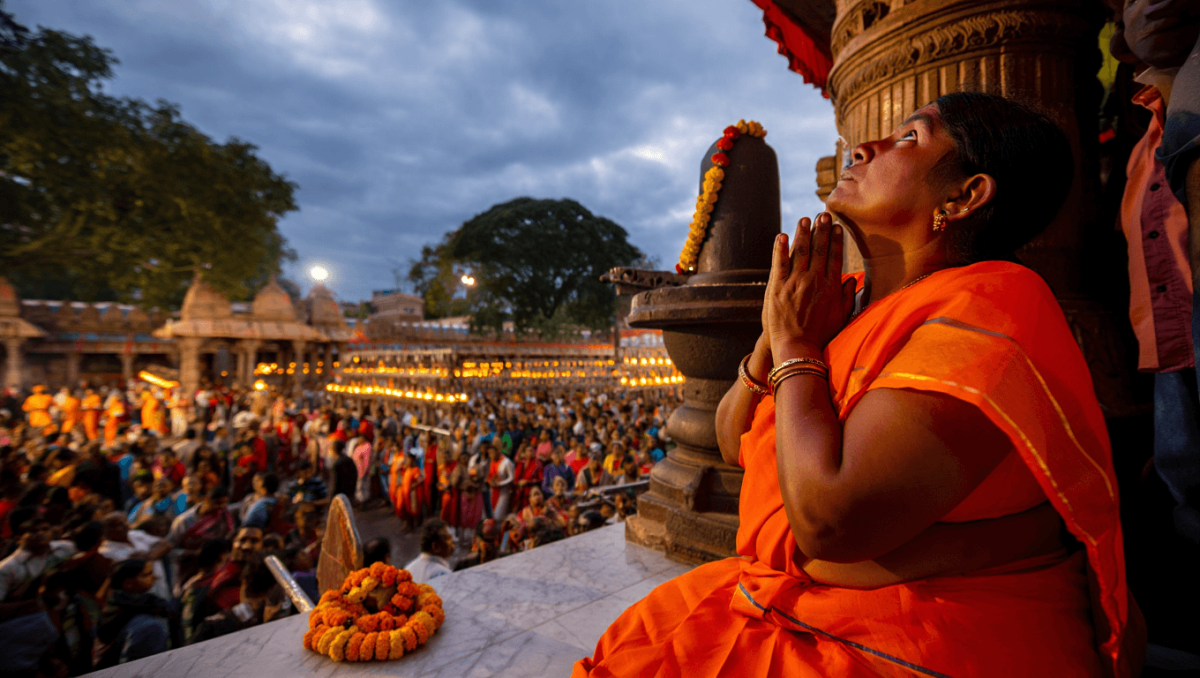
The traditions around Shravan trace back to the myth of the churning of the ocean, when Shiva is said to have consumed the deadly poison to save the world. That act — and the ritual cooling with water and Gangajal that follows — is re-enacted by millions through jalabhishek, offerings of milk, water and bel leaves, and the month-long fasts on Mondays.
Beyond ritual meaning, Shravan concentrates pilgrim movement: more processions, special aartis, and lengthy queues at major temples. That concentration affects travel logistics and safety, especially during the monsoon.
The twelve Jyotirlingas at a glance
A Jyotirlinga marks a site where Shiva is believed to have manifested as a column of light. They are scattered across the subcontinent — from high Himalayan shrines to coastal temples — and together form a spiritual map rather than a single travel route.
- Somnath — Prabhas Patan, Gujarat
- Mallikarjuna — Srisailam, Andhra Pradesh
- Mahakaleshwar — Ujjain, Madhya Pradesh
- Omkareshwar — Mandhata Island, Narmada, Madhya Pradesh
- Kedarnath — Rudraprayag, Uttarakhand
- Bhimashankar — Sahyadris near Pune, Maharashtra
- Kashi Vishwanath — Varanasi, Uttar Pradesh
- Trimbakeshwar — Nashik, Maharashtra
- Vaidyanath (Baidyanath Dham) — Deoghar, Jharkhand
- Nageshwar — near Dwarka, Gujarat
- Ramanathaswamy (Rameshwaram) — Tamil Nadu
- Grishneshwar — near Ellora, Maharashtra
Can you complete all twelve within one Shravan?
Short answer: for most travellers, no. A respectful, unhurried circuit across these twelve sites normally takes several weeks and crosses very different terrains — Himalayan treks, coastal stretches and busy urban ghats. Attempting the full set in a single monsoon month adds weather risk, extended queues on Somvars and major crowd events (notably the Shravani Mela at Deoghar).
Practical alternative: treat the Dwadasha (twelve) as a multi-season vow — begin this Shravan with a compact, meaningful circuit and spread the remainder across the next year.
Three realistic Shravan circuits you can finish in the month
Below is a compact table summarising three circuits that are achievable during Shravan/Sawan, with the obvious caveats about weather and crowding.
| Circuit | Jyotirlingas | Typical duration | Best for | Notes |
|---|---|---|---|---|
| Madhya Bharat | Mahakaleshwar, Omkareshwar (+ optional Kashi) | 3–6 days | First-timers, families, elders | Book Bhasma Aarti slots early; heavy Somvar crowds in Ujjain |
| Maharashtra Trio | Trimbakeshwar, Grishneshwar, Bhimashankar | 4–5 days | Monsoon travellers from Mumbai/Pune | Scenic Sahyadri drives; ghat roads can be slippery |
| Saurashtra Coast | Somnath, Nageshwar (+ Dwarka) | 3–4 days | Families seeking comfort, coastal experience | Flat roads, short queues relative to Ujjain/Kashi; good hotels |
Madhya Bharat circuit — why choose it
Mahakaleshwar in Ujjain offers a unique early-morning ritual — the Bhasma Aarti — and a Somvar procession tradition that draws intense crowds in Shravan. Combine Ujjain with Omkareshwar on the Narmada and, if time permits, a non-Monday visit to Kashi Vishwanath for a quieter experience.
- Day 1: Arrive Indore, transfer to Ujjain for evening darshan.
- Day 2 (aim for a Somvar): Bhasma Aarti and city temples.
- Day 3: Drive to Omkareshwar, island parikrama if river conditions allow.
- Optional: Train/flight to Varanasi for Kashi Vishwanath (avoid Somvar there unless prepared for long queues).
Honest caution: Bhasma Aarti slots sell out early; plan reservations well before Shravan begins.
Maharashtra Trio — three in one verdant circuit
The Sahyadris are at their most dramatic in monsoon. Trimbakeshwar sits at the Godavari’s source, Grishneshwar is quiet and close to Ellora, and Bhimashankar rewards those willing to navigate ghat roads.
- Day 1: Nashik arrival, evening at Panchavati.
- Day 2 (Somvar): Trimbakeshwar darshan early morning.
- Day 3: Travel toward Aurangabad for Grishneshwar and Ellora.
- Day 4–5: Head to Bhimashankar and return to Pune/Mumbai.
Honest caution: ghat roads may be affected by landslips; keep flexibility and a local, experienced driver.
Saurashtra Coast — Somnath, Nageshwar and Dwarka
Somnath’s seaside setting and reconstructed complex make evening aarti a memorable experience. Add Nageshwar and a visit to Dwarka for a coastal cluster that combines comfortable travel with deep symbolism.
- Day 1: Fly into Rajkot/Diu, reach Somnath for evening aarti.
- Day 2 (Somvar): Morning darshan at Somnath, local tirthas.
- Day 3: Coastal drive to Dwarka, evening darshan at Dwarkadhish.
- Day 4: Nageshwar darshan and Bet Dwarka by boat; depart via Jamnagar.
Honest caution: Gujarat follows Amavasyant dates; plan Somvar visits on overlapping Mondays (17/24 Aug) if you want your darshan to align with both calendars.
Two shrines that require special planning
Kedarnath: The shrine is open in the summer, and a Shravan visit is spiritually potent — but the 16–18 km approach involves exposed high-altitude trails that are risky in heavy rain. Helicopter services are often suspended during monsoon. If you have flexibility, schedule Kedarnath for post-monsoon months (September–October) or the next dry season.
Baidyanath (Deoghar): The Shravani Mela brings millions of kanwariyas and severe pressure on roads and darshan queues. Attend Deoghar during Shravan only if you intend to be part of that mass pilgrimage; otherwise, choose a less crowded time.
Practical checklist before you book
- Reserve darshan slots now. Special aarti and limited sugam/VIP darshan windows are released early and fill rapidly.
- Plan fasting logistics. If observing Somvar vrat while travelling, map out vrat-friendly meals and carry packeted phalahar for highway stretches.
- Build weather buffers. Add one extra day to any itinerary for delays from rain, slips or transport disruption.
- Pack light for temple interiors. Many inner sanctums limit phones, leather and large bags; lockers may have long lines on Somvars.
- Make elders a priority. Choose elder-friendly timings, reserve accessible darshan options and confirm medical support if needed.
Start with devotion, plan with prudence
Shravan 2026 offers a window to begin a Jyotirlinga parikrama with intention rather than haste. Whether you set out for a single circuit this month or plan a multi-season vow, prioritize safety, pre-bookings and weather-aware schedules. In the year ahead the twelve shrines will still be there — but the difference between a chaotic pilgrimage and a deeply moving one often comes down to planning.
If you are traveling this Shravan, consider the overlapping Somvar dates (17 and 24 August) as focal opportunities for cross-regional observance, and treat each day’s delay as part of the pilgrimage rather than a setback: the journey is itself part of the vow.