Show summary Hide summary
The Ambubachi Mela at Nilachal Hill in Guwahati — when the inner sanctum of Maa Kamakhya is ritually closed and then reopened — is scheduled this year from 22 to 26 June 2026. With the dates imminent, organizers and devotees face a familiar problem: demand vastly outstrips access, and many who feel called to participate have no realistic path to be there in person.
What sets Ambubachi apart
Ambubachi is not another crowded pilgrimage where the act of travel is the point; it marks a rare, seasonal observance of the Goddess’ creative power. The temple’s practice treats the annual closure as a period of the Devi’s menstrual cycle — a ritual emphasis that reframes biology as sacred, not marginal.
Annamalai applauds Bhagwat’s message on Muslim inclusion in India
Navratri in Times Square goes viral: social media splits over Indian celebrations abroad
Key features that distinguish the mela:
- Menstruation as a sacred principle. The sanctum’s unique pithasthana, nourished by an underground spring, is central to a theology that venerates the yoni as life-giving.
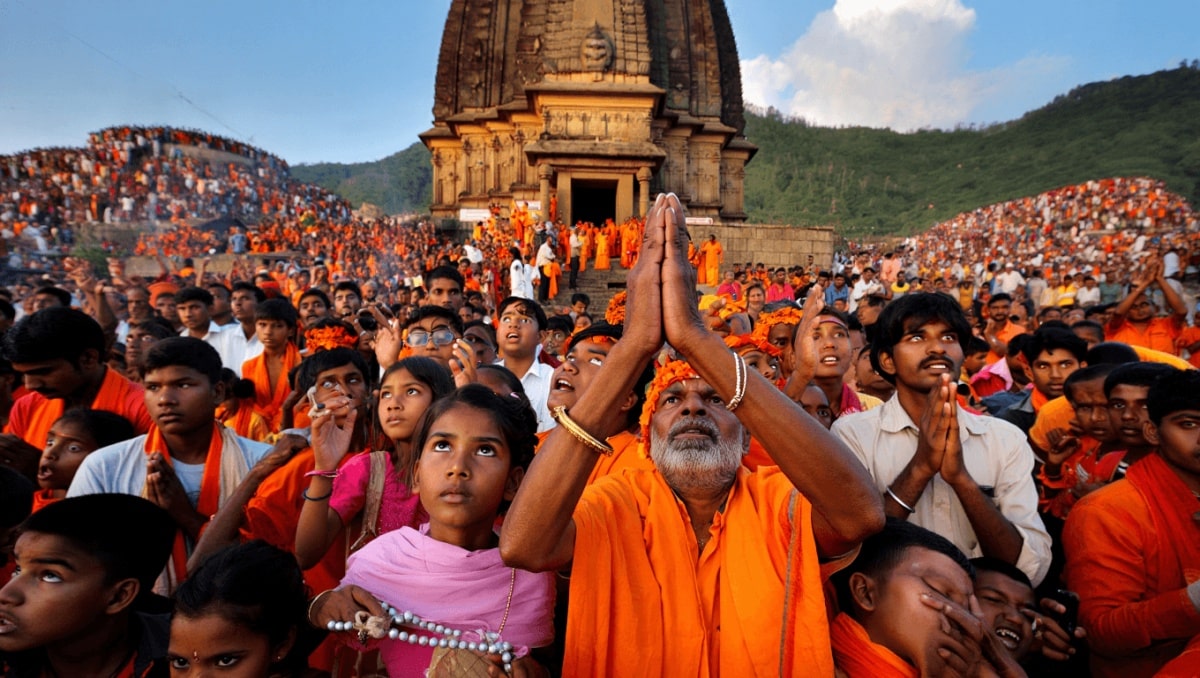
- A true congregation of rare sadhus. Naga ascetics, Aghoris, Bauls and tantric practitioners converge for a concentrated display of Shakta traditions that is seldom witnessed elsewhere.
- Rakta Vastra and other prasad. When the sanctum reopens a cloth known as the Rakta Vastra is distributed in fragments; along with water and cloths associated with the Devi, these items carry special religious significance for devotees.
- Complementary bhairava rites. A visit to the Umananda Temple on Peacock Island is traditionally considered the Bhairava completion of a Kamakhya pilgrimage.
Why many devotees are effectively excluded
The practical barriers to attending Ambubachi are immediate and predictable.
- Airfares to Guwahati commonly multiply in the weeks prior to the mela.
- Hotels and homestays near Nilachal Hill are typically sold out months in advance.
- Official darshan slots can disappear within hours when released online.
- Local transport becomes scarce and expensive; opening-day queues may last 8–12 hours in heavy monsoon humidity.
For elderly pilgrims, families with young children, NRIs and international seekers, these obstacles often turn devotion into stress or a missed opportunity. The result is not merely commercial friction; it is a gap in religious accessibility.
How one organiser is structuring a response
One dharmic platform has outlined a two-phase plan that balances immediate, remote participation with a longer-term effort to facilitate respectful, on-the-ground pilgrimages.
| Timeline | Primary focus | Core elements |
|---|---|---|
| 2026 (near-term) | Authentic remote participation | Sankalp-based poojan by verified pandits; sourced prasad (including Kamya Sindoor, vastra, holy water); digital sadhana companion; live darshan where permitted |
| 2027 and beyond | Curated, small-group ground experiences | Trusted homestay network; pandit lineage partnerships; guided micro-yatras (15–25 people); pre-yatra preparation; support for international devotees |
What the near-term offer would aim to deliver
Recognising that a full travel operation cannot be assembled in weeks, the immediate proposal focuses on faithful remote participation rather than mass tourism. Components under consideration include:
- Sankalp-based rituals — poojas performed in the name and gotra of devotees by locally verified priests, timed before the closure and after the reopening in accordance with scriptural norms.
- Respectfully sourced prasad — packaged items tied to Kamakhya’s traditions, such as the temple’s sindoor, small pieces of vastra where permitted, consecrated water, and compact home-ritual kits designed to align household practice with the temple’s cycle.
- Guided digital practice — an app-based companion with mantras, selected stotras, context about the ten Mahavidyas and daily suggestions for simple observances across the four-day period.
- Contextual live feeds — streamed darshan and aartis with translation and explanation so remote viewers receive liturgical context rather than an undecipherable live stream.
The organising team frames success in qualitative terms: a remote recipient should feel genuine spiritual presence, not a commercial fulfilment.
Longer-term ground work
Plans for subsequent years emphasise small scale, communal trust and cultural integrity. Proposals include a network of family-run homestays and dharamshalas, formal agreements with traditional priestly lineages, guided micro-yatras led by scholars of Shakta practice, and tailored arrangements for overseas devotees.
These are being presented as partnerships rather than packaged tours, with emphasis on ritual correctness and local stewardship.
Trade-offs and ethical guardrails
The organisers stress a boundary that is both practical and moral: Ambubachi cannot be reduced to a mass-market product. If offerings cannot be delivered with reverence and proper verification, they argue, they should not be offered at all.
That stance shapes choices about scale, pricing and the kinds of third-party relationships they will accept.
How local knowledge and community feedback matter
Any model that attempts to widen access depends on local trust. Verified pandits, long-term homestay hosts and community seva groups are central to legitimacy — not contractors chosen for lowest price. Equally important is listening to people who have tried and failed to attend: their logistical barriers reveal what to prioritise.
Organisers say they are compiling input and refining partnerships; specifics and capacity limits will be announced only once operational checks are in place.
Why this matters now
With the festival window opening in late June, the calendar creates urgency. From a broader perspective, Ambubachi raises questions about how modern logistics, technology and religious practice intersect: can digital and small-scale solutions broaden access without diluting ritual meaning?
For devotees and observers alike, the immediate stakes are practical — access to prasad, a verified ritual performed on one’s behalf, meaningful explanation of what the four days signify — and existential: preserving a tradition that treats bodily cycles as sacred in a world that often marginalises them.
Organisers are beginning with modest, careful steps. Whether those measures will satisfy those who yearn for an authentic connection to Maa Kamakhya — in person or from afar — will depend on the depth of local partnerships and the discipline to prioritise reverence over expansion.