Show summary Hide summary
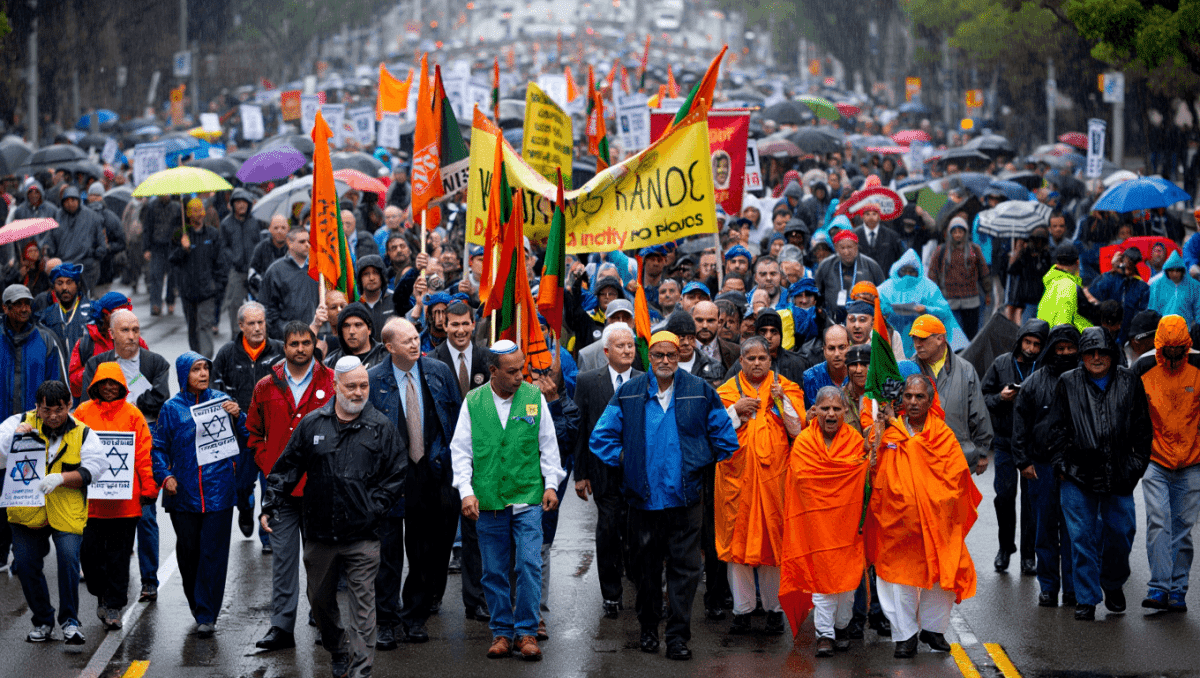
On March 3, thousands gathered in San Francisco despite heavy rain to protest a surge in anti‑Jewish hostility and to demand the immediate return of hostages. The size and diversity of the crowd — including a visible contingent of Hindu Americans — underscored a growing trend: cross‑community solidarity is becoming a public response to rising hate.
The rally, organized by StandWithUS and supported by more than 75 partner groups, drew roughly 10,000 people to the Embarcadero. Marchers carried banners and flags from many faiths and communities, and speakers from politics, business and civil society used the platform to call out antisemitism and urge broader civic engagement.
Kashi to Kedarnath costs revealed: how much a Sawan pilgrimage will set you back
Hinduism gains ground in Africa: new communities reshape culture and commerce
Why this matters now
Public demonstrations like this matter because they turn private concern into visible pressure on institutions and elected officials. When people from different backgrounds show up together, it changes the tenor of local debate and can protect vulnerable communities from isolation. For several organizers and attendees, the march was also a rebuttal to the idea that only Jewish people can — or should — carry the burden of resisting antisemitism.
Voices and incidents that shaped the day
A Michigan congressman, Shri Thanedar, joined the trip despite facing backlash at home for speaking in support of Jewish communities; his presence highlighted the personal risks some public figures encounter when they take a stand. Santa Clara District Attorney Jeff Rosen came from City Hall to meet members of the Hindu American group and thanked them for attending. The Israeli consul for the Pacific Northwest also publicly acknowledged the cross‑community support.
Onstage, a mix of elected officials, activists and business leaders condemned hate and asked allies to speak up. One speaker noted that combating antisemitism requires more than the efforts of the Jewish community alone; it needs allies to march, listen and amplify the message.
Throughout the march there were moments of cultural exchange: participants sang Hindi solidarity songs, chanted phrases pairing greetings from different traditions, and at the end of the route the Hindu American group received a standing ovation from the crowd.
- Attendance: roughly 10,000 people, despite wet weather.
- Organizers and partners: StandWithUS with 75+ partner organizations; local Jewish groups collaborated to arrange transportation.
- Core demands: an immediate end to antisemitic attacks and the safe return of hostages.
- Notable moments: interfaith chants and songs, recognition from public officials, speeches condemning hatred.
The palpable solidarity had practical and symbolic effects. For attendees from the Hindu American community, joining the march was a chance to reinforce ties with Jewish neighbors and to resist the intimidation some community members face when they speak out. Within the crowd, small acts — sharing shelter, food and conversation on the return bus — reinforced the event’s civic purpose.
What comes next
Events like this are unlikely to end deep political disagreement, but they can shift public norms. Visible, sustained support across communities helps protect targeted groups and signals to local leaders that addressing hate is a shared priority. As polarization continues across the country, these public demonstrations of cross‑community backing will be a meaningful test of whether civic bonds can outlast political divisions.
For now, participants left the Embarcadero sodden but resolute — a reminder that solidarity in public spaces still has the power to change the conversation and to make civic belonging feel less fragile.