Show summary Hide summary
A brief stop in the Himalayan village of Gangnani revealed a living layer of local belief and ritual — hot springs, a cave linked to an ancient sage, and a community that still reveres serpent deities. This account matters now because these fragile customs and remote places are encountering new visitors and changing infrastructure, raising questions about preservation, respect and access.
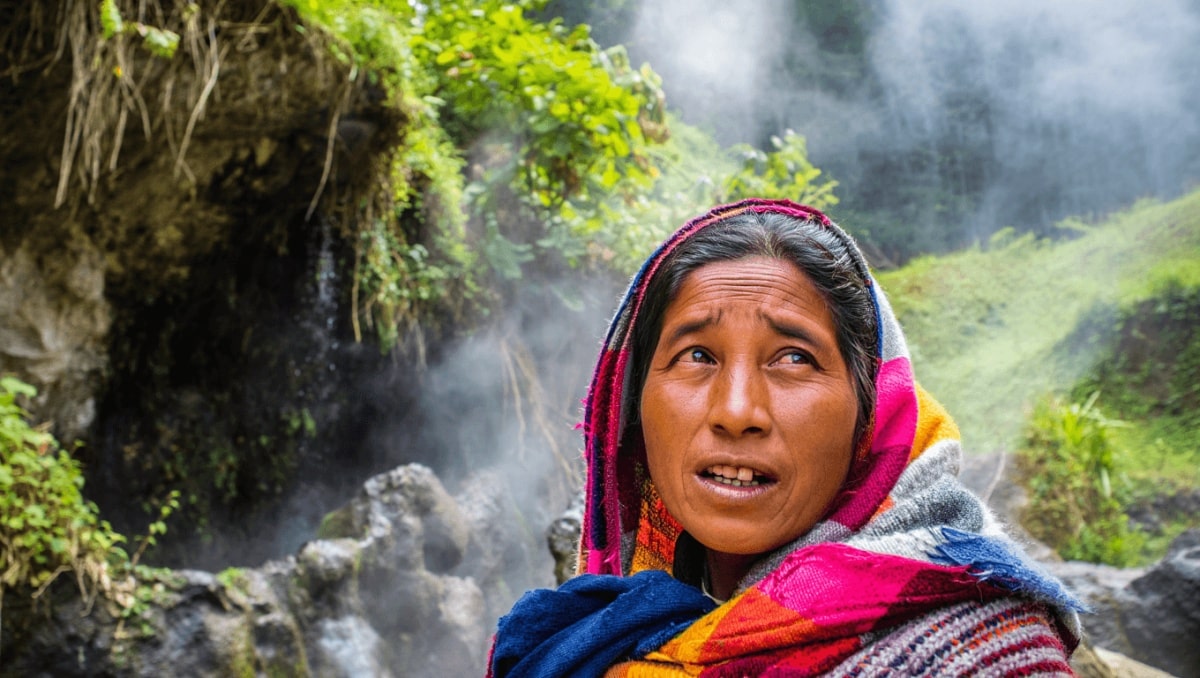
Gangnani is less a conventional village than a roadside rest point for pilgrims: steaming pools pour warmth into the cold mountain air and a modest temple anchors the settlement. We bathed in the springs and climbed partway up a nearby cascade, but the evening offered the most unexpected encounter.
Meeting a wandering sadhu in Parashara’s cave
Sara Khan slams religious trolls after backlash over interfaith marriage
British cyclist viral moment: chilled buttermilk from stranger highlights India’s warm hospitality
Locals whispered that a reclusive holy man had been seen that day in a cave above the springs — the same cave associated in lore with Maharishi Parashara. When the rumor proved true, we found ourselves alone with a Naga sadhu from the Juna Akhara who introduced himself in the customary style used by many ascetics.
The man called himself Om Giri Baba, a combination of traditional epithets that, as other ascetics explained to me, is effectively a way to remain unnamed. He moved and spoke with the quiet authority of someone who spends most of his life in the hills rather than in settled communities.
In conversation he described, among other things, a hidden upland lake some 20 kilometres east of Gangnani where villagers say a jewelled Naga — a Maninag — lives beneath the water and can be glimpsed at night. He stressed that the site is reachable only by a demanding forest route, not by any road.
We left him to his own practice before dawn; by morning he had vanished into the mountains, as wandering sadhus often do.
A hidden mountain settlement and its guardian tree
A narrow, unmarked trail behind the springs climbs steeply for almost two hours to a dispersed high-altitude village that few outsiders ever visit. The path is a scramble of stones and switchbacks; a few local men coming down the slope were visibly surprised to see us.
The settlement is very small — roughly 149 residents scattered across about 14 kilometres of mountainside — where each household tends tiny terraces and keeps goats. Some homes have lately been wired for electricity, but many huts remain off-grid and all draw water from nearby streams. There are no roads; donkeys still carry goods where a vehicle cannot go.
Villagers showed us the things that matter most to them: a centuries-old cedar, a humble temple dedicated to serpent deities, and the ritual implements of local worship. The great cedar — the villagers’ pride and spiritual anchor — is said to be around 450 years old and is treated as both protector and benefactor.
They spoke openly about their relationship with the Nagas: not as temple-bound idols but as presences in streams and forests who influence crops, livestock and health. Before building anything new, they say, permission should be sought from these beings to avoid misfortune.
- Population and layout: ~149 residents spread across 14 km of slope; mixed cluster of family homes and isolated herdsmen huts.
- Access and services: No road access; some homes have newly installed electricity; no piped water — water is carried up from streams.
- Local economy: Small-scale terrace farming, goats and a few cows; specialty produce includes unusually large local cucumbers.
- Religious focus: Primary veneration for a local Naga and a deodar cedar; secondary reverence for Shiva and a local Devi.
Participating in a local Naga puja
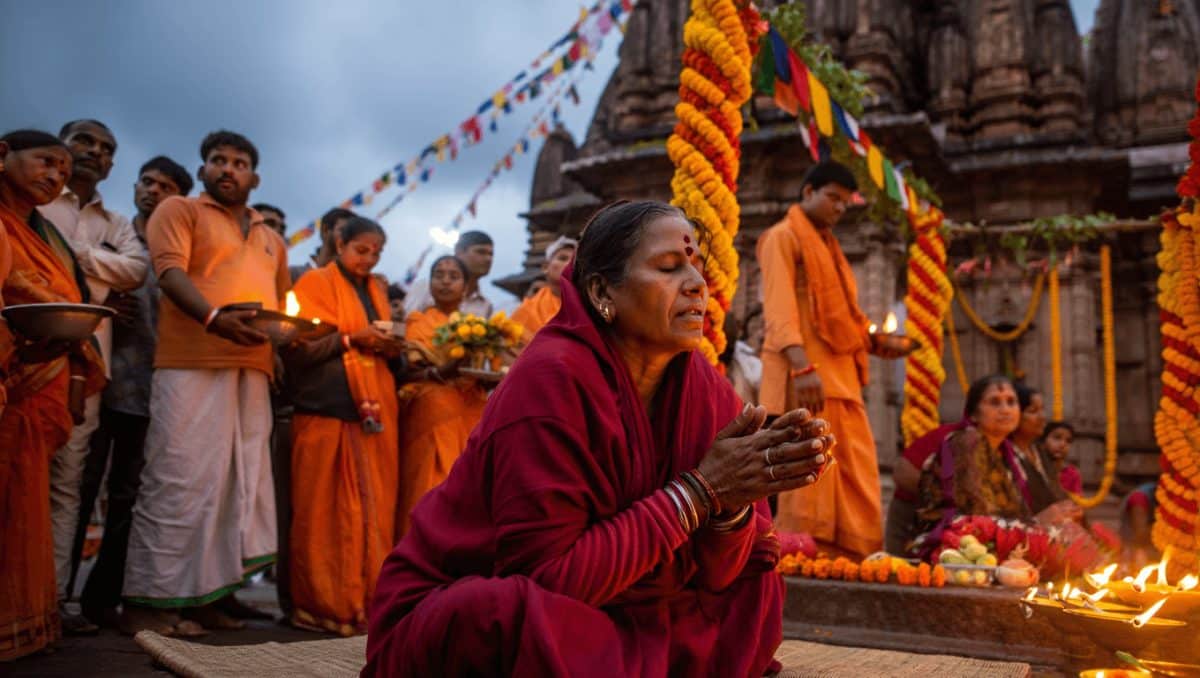
At a mountain stream we performed a Naga puja alongside villagers. The ritual was careful and low-key: offerings of spices, sugar, honey, sesame, walnuts and fresh fruit, and the recitation of traditional invocations. We used water to cleanse a flat stone used as a makeshift altar — a small detail that villagers say pleases the Nagas, who value cleanliness.
I invoked regional serpent lords and chanted verses drawn from classical sources, including Sarpa mantras from the Maitrayani Saṃhitā. Villagers explained that Nagas have historically suffered human hostility and that clear, sincere intent is important when approaching them.
During the ceremony an elderly local woman emerged seemingly from nowhere to observe; when the ritual ended she had already vanished. Afterwards the villagers invited us to their temple and demonstrated the community’s own Naga rites, which shared elements with other regional practices but retained distinct local features — a trident, a sacred post, and a ceremonial drum among them.
What this visit signals
Beyond the immediacy of the hot springs and the late-night meeting with a wandering sadhu, the visit highlights persistent traditions in remote Himalayan life. As modest electrification reaches some homes and more travelers explore off-the-beaten-path sites, the balance between cultural continuity and outside pressure becomes more tangible.
For readers interested in heritage, religion, or responsible travel, the stakes are practical as well as ethical: how to witness living traditions without disrupting them, and how communities can retain agency as visitors arrive.
Practical note: I traveled to these places in autumn 2022. Details about local sites and access mentioned here have been verified where possible and are current as of mid-2025, but mountain logistics change quickly — prospective visitors should confirm up-to-date travel and safety information before planning a trip.
Photographs accompanying this report are © Devala Rees.