Show summary Hide summary
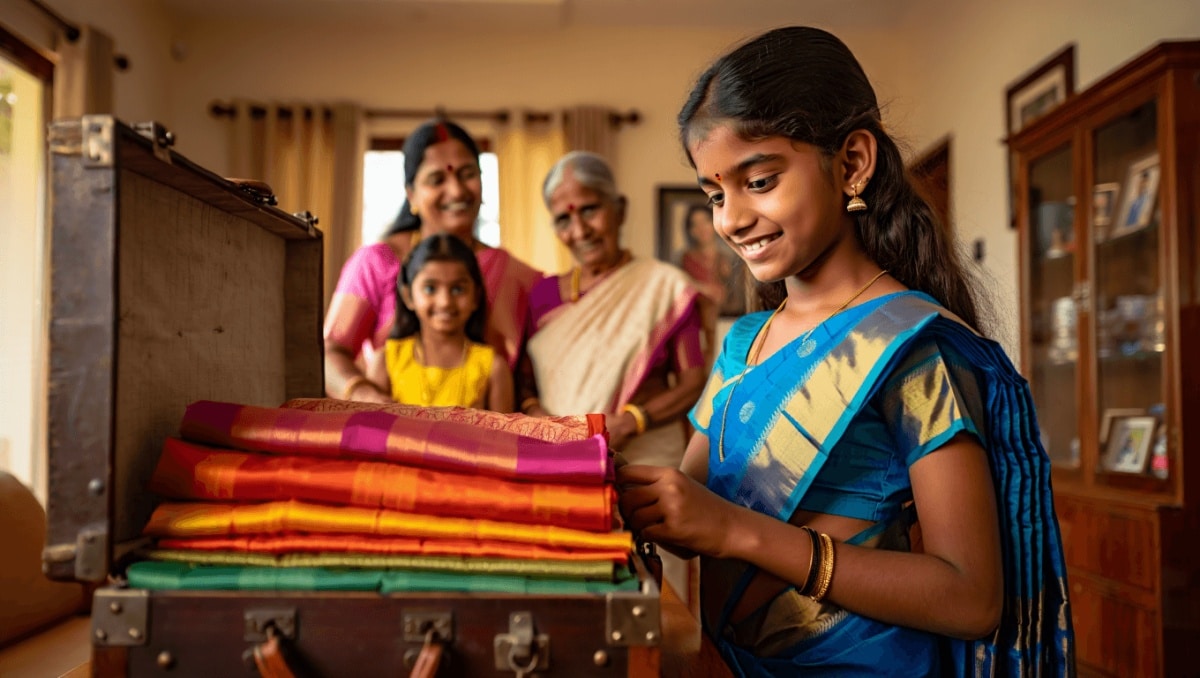
When a trunk of Kanjeevaram saris finally arrived from India after years apart, it brought more than silk — it returned a wardrobe of family memory, ritual and public identity. These saris, some handed down across generations and others newly bought before the pandemic, have become a visible way for one woman to carry heritage into community events and civic life.
The shipment and what it meant
The boxes traveled through six cities and three countries before reaching the United States. For the writer, each sari is a fragment of family history: garments worn by a mother, a grandmother, a mother‑in‑law. Some are heirlooms reserved for weddings and major religious festivals; others were purchased on personal trips and kept as keepsakes.
Shah Rukh Khan used the name Abinav to ease in-law worries: Gauri adopted Ayesha during nikaah
Javed Akhtar hails Hindu festivals as cultural glue: throwback of atheist celebrating resurfaces
That return raised a common question for many in the diaspora: how do clothes preserve ties to a homeland? In practice, the answer is tangible. Fabrics carry patterns, colors and wear that remind people of rituals, of voices and of specific household practices — a short, material biography of an immigrant family.
A single sari that stayed through the pandemic
When international travel reopened after the COVID lockdowns, weight limits on flights forced a choice: take everything or leave most behind. The writer chose one new Kanjeevaram purchased in January 2020 — the only sari that crossed the ocean with her that year.
She remembers the frantic shopping trip before a South Indian harvest festival, when the store was closing early and the usual leisurely sari ritual had to be compressed into minutes. Among many options, a multi‑colored sari — with a peacock‑blue pallu, bright pink pleats and an algae‑green body — stood out. Its three distinct design zones made it feel like three saris stitched into one, and the decision was unexpectedly swift.
From family photo to student showcase
The sari went beyond private meaning. During a summer photography assignment for the writer’s daughter at a San Francisco art school, the sari and classical dance jewelry were photographed to explore Indian identity through texture rather than color. The monochrome portrait won the student contest and was featured in the college’s student showcase — a small but concrete moment of cultural visibility.
Clothing as civic and cultural representation
The writer now wears these saris while representing the Hindu American Foundation at public events, meetings and community celebrations. At a large Independence Day gathering in Sacramento — her first assignment with the foundation — she wore an older tricolored Kanjeevaram gifted by her maternal grandparents. The garment’s colors echoed national symbolism and personal commitment to community service.
On other occasions she has chosen saris that emphasize different aspects of identity: a parrot‑green Kanjeevaram inherited from her mother, who was a performing Carnatic musician, became a statement of artistic lineage and the role of women in cultural expression. Wearing that sari at a recent community festival felt like a public acknowledgment of her mother’s influence and the transmission of cultural values across generations.
What these saris do in public life
- Preserve memory: Heirloom saris act as physical links to previous generations, keeping stories alive.
- Signal identity: Draped at festivals and civic events, they communicate religious and cultural belonging.
- Support representation: In meetings with officials or during community outreach, traditional dress can make advocacy more visible.
- Bridge old and new: Multi‑colored and hybrid designs reflect the blended identities of diasporic communities.
- Contribute to arts and education: Photographic projects and student work can reframe traditional textiles as contemporary artistic subjects.
Ritual, politics and continuity
For many in the Hindu diaspora, festivals like Navratri and community observances such as the Golu (the display of dolls and devotional tableaux) are moments when dress and ritual come together. Wearing an ancestor’s sari to a first post‑pandemic celebration, the writer recalls, conjured the presence of a relative who had passed away — a personal form of continuity that also reinforces community norms.
At times, clothing intersects with political moments. The writer notes that shortly after taking her role at the foundation she participated in community efforts linked to local legislation and broader cultural debates. While the sari is not a political weapon, its public display can strengthen the sense of a collective voice during civic engagement.
Why it matters now
As communities in the U.S. grapple with questions of representation, cultural recognition and the preservation of minority traditions, everyday objects like clothing matter. They are portable archives and tools of outreach: visible, approachable and emotionally resonant.
For readers, the story underlines two practical takeaways. First, garments and family objects are legitimate carriers of history and identity in migration. Second, cultural visibility — whether through a local festival, an advocacy event or a photograph in a student gallery — shapes how communities are seen and heard in public life.
In the end, a sari that kept someone company during a lonely year earns a place in the heart — small comfort and powerful symbol in equal measure.