Show summary Hide summary
This January in Coimbatore, the harvest festival known as Pongal unfolded in vivid color and communal rhythm — a compact lesson in how ritual, food and local knowledge bind people to land and to one another. For communities at home and abroad, the celebration offers an annual reminder of agricultural cycles, environmental respect and the social ties that sustain rural life.
Bhogi: clearing space for what comes next
My visit began on the first day, when neighborhoods smelled of smoke and fresh earth. Households completed a deep cleaning and burned discarded items in small bonfires — a practical purge that also carries symbolic weight: making room for renewal and leaving behind habits that no longer serve.
Shah Rukh Khan used the name Abinav to ease in-law worries: Gauri adopted Ayesha during nikaah
Javed Akhtar hails Hindu festivals as cultural glue: throwback of atheist celebrating resurfaces
Markets and temporary stalls brimmed with harvest goods — turmeric roots, sugarcane, rice powders and locally gathered flowers — creating a marketplace that felt both utilitarian and celebratory. A vendor on a bicycle selling jasmine and lotus garlands captured the festival’s everyday inventiveness.
Kolam: ephemeral street art and small acts of care
On the threshold of each house women drew intricate floor patterns known as Kolam, using rice powder laid over floors sealed with a thin cow-dung wash. The designs are geometric or free-form and are meant to welcome prosperity while feeding small creatures that graze on the grains — a ritual that blends aesthetics, hospitality and an ethic of shared sustenance.
The transient nature of kolams — redrawn each morning, rubbed away by footsteps and weather — gestures toward impermanence and renewal. For many participants it is a quiet practice of mindfulness as much as an offering to tradition.
Thai Pongal: communal cooking and songs
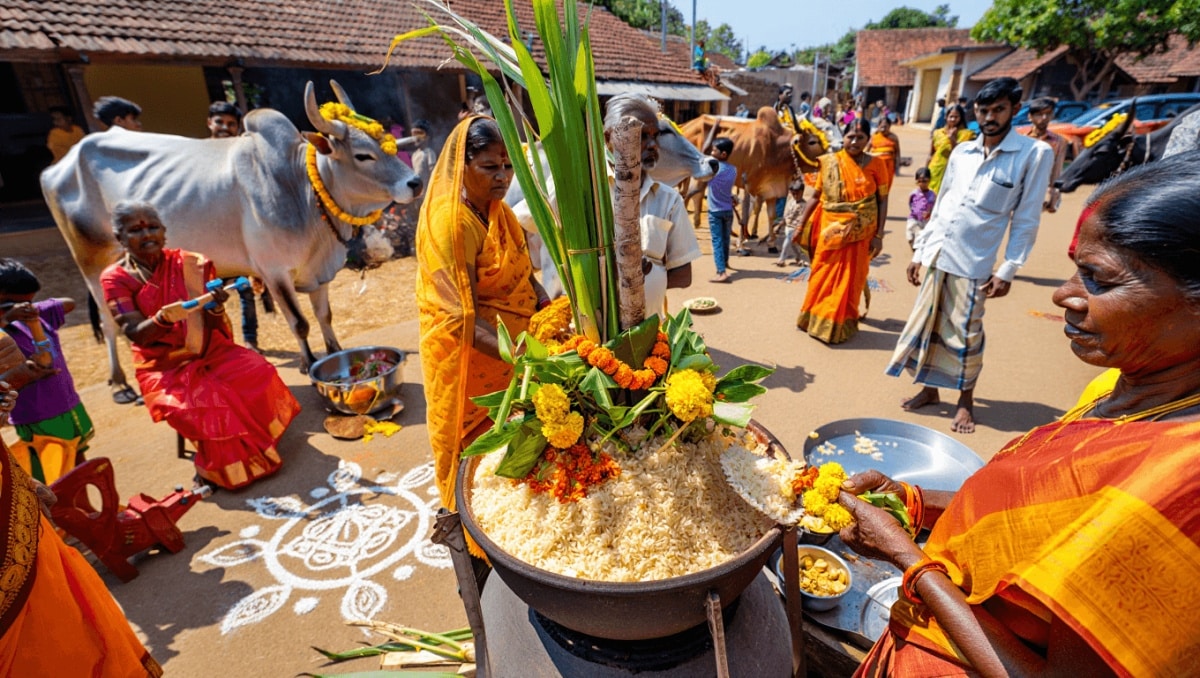
On the main day, communities gather to prepare the dish that gives the festival its name. Rice and lentils are cooked in an earthen pot set on a makeshift stove and decorated with turmeric and sugarcane stalks. As the pot boils over — widely taken as an auspicious sign — neighbors sing rural songs and take turns tending the fire.
The food itself is simple: savory and sweet versions of pongal served alongside chutney, spicy stew and strong filtered coffee. The acts of cooking and sharing reinforce patterns of mutual aid common in agricultural communities.
Veneration of the Sun and the cow
Pongal’s rituals explicitly honor natural forces central to farming. During the Surya Puja, cooked offerings are placed on banana leaves and presented with lamps, incense and water as invocations to the sun’s life-giving power.
Another day — often observed as Mattu Pongal — focuses on cattle: animals are decorated, fed special treats and allowed a respite from work. In many villages the cow is not only an economic asset but a social presence, named and cared for as part of the household.
| Day | Name | Primary focus | Typical rituals |
|---|---|---|---|
| Day 1 | Bhogi | Household renewal | Deep cleaning, bonfires of discarded items |
| Day 2 | Thai Pongal | Harvest thanksgiving | Cooking pongal in earthen pots, community songs |
| Day 3 | Mattu Pongal | Veneration of cattle | Decorating and feeding cows, animal blessings |
| Day 4 | Kaanum Pongal | Family visits and social bonds | Family gatherings, offerings for siblings, outings |
The festival’s rituals also carry practical knowledge: the cow-dung floor coating smooths cracks and cools homes, turmeric is used for its antiseptic properties, and seasonal songs encode agricultural memory. These are not mere customs but adaptive practices rooted in local ecology.
- Community cohesion: shared cooking and songs reassert neighborhood bonds.
- Ecological respect: offerings and prayers underscore dependence on sun, rain and animals.
- Cultural continuity: celebrations abroad help diasporas transfer traditions to new settings.
Why this matters beyond Tamil Nadu
Pongal’s rhythms matter now for reasons that go beyond festivity. As climate variability alters planting seasons and urban migration reshapes rural demographics, festivals like Pongal become moments to reassert knowledge about landscapes and to renew social networks that support resilience.
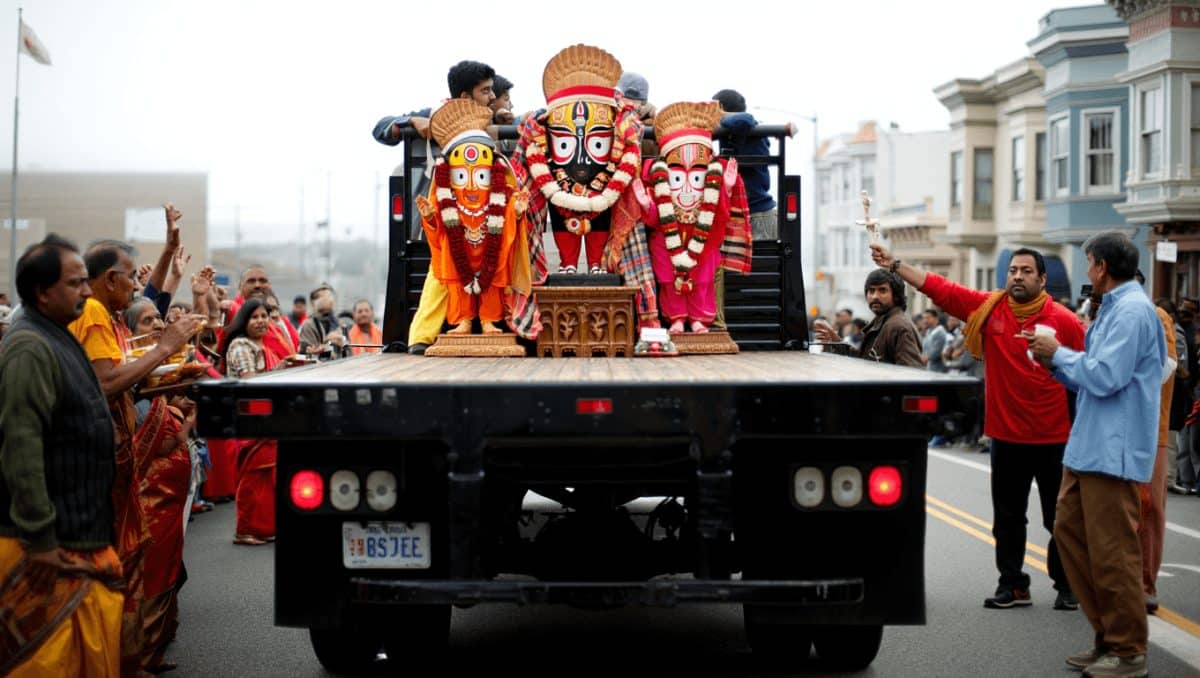
For Indians living overseas, the festival is also a practical tool of cultural transmission. Recreating communal meals and art forms in a new country helps preserve language, seasonal awareness and a sense of belonging across generations.
After the formal ceremonies, I visited an exhibition of indigenous cattle breeds at a local foundation — a reminder of how livestock diversity underpins rural livelihoods. The show prompted conversation about animal husbandry methods and ethical treatment that are central to sustaining those livelihoods.
Pongal, in other words, is at once celebration and curriculum: a compact set of rituals that teach gratitude for nature, care for animals, and the social practices that keep rural life viable. Observing it in the festival’s birthplace foregrounds those lessons in ways that matter for policymakers, farmers and diasporic communities alike.