Show summary Hide summary
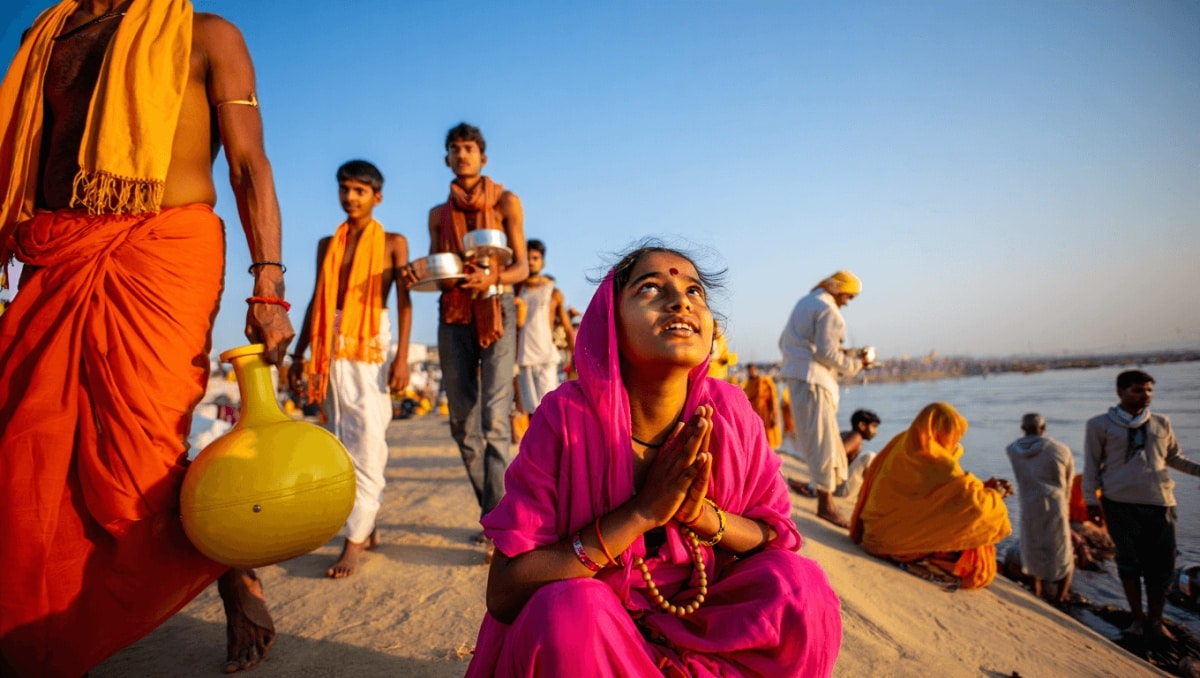
In January and February 2025, the pilgrimage at the confluence of the rivers in Uttar Pradesh drew an estimated 660 million visitors — a scale few events on Earth can match. That sheer size and the way the festival was run raise fresh questions about how international newsrooms report on India and Hindu religious life today.
The festival centered in Prayagraj, at the sacred junction known as the Sangam, unfolded over several weeks and attracted people by every available mode of transport: packed trains and buses, private vehicles and planes, and long crowds who arrived on foot. Organizers and local authorities built, operated and then removed an enormous temporary city to handle the surge.
On-the-ground logistics and services
Beyond the ritual baths and ceremonies, the event required large-scale logistics that are easy to overlook but central to understanding what happened. According to official figures, tens of millions of people were fed, moved and cared for across purpose-built facilities.
Shah Rukh Khan used the name Abinav to ease in-law worries: Gauri adopted Ayesha during nikaah
Javed Akhtar hails Hindu festivals as cultural glue: throwback of atheist celebrating resurfaces
- Scale: Official estimates placed total attendance across the festival period in the hundreds of millions.
- Welfare infrastructure: Thousands of community kitchens served free meals; sanitation included an extensive network of toilets; medical teams operated multiple temporary hospitals.
- Utilities and transport: Roads, water, electricity and telecom services were extended to the grounds for the duration of the event and dismantled afterward.
- Cleanup operations: Teams cleared offerings and managed riverbank waste between successive days of bathing to protect the site and ritual space.
- Incidents: There were tragic episodes — including crowd crushes linked to transport delays — which received attention from legacy media.
These features turned the gathering into both a religious spectacle and a short-lived urban operation: temporary hospitals, supply chains for food and water, and sanitation systems all had to function reliably for millions to safely participate.
What international coverage emphasized — and what it largely omitted
Coverage outside India frequently foregrounded negative angles: environmental damage, poverty, disorder and superstition. Those facts were not false, but they were partial. The broader social and religious dynamics on display received far less attention.
On the ground, the assembly included visible participation by women in officiant roles, as well as delegations from Sikh and Buddhist communities and foreign religious figures. For many attendees, caste or community divisions were not the organizing principle of the experience; millions shared space, food and rituals in ways that a narrow snapshot does not capture.
That contrast matters because reporting shapes international perceptions of complex societies. Highlighting only failure and dysfunction risks flattening a multi-layered event into a single, negative narrative.
Why this matters now
Global audiences rely on international outlets to make sense of moments like the 2025 festival. How those events are framed can influence diplomatic conversations, academic debates and public opinion. Accurate, contextual reporting helps readers weigh both the achievements and the problems.
At the same time, acknowledging the tragedies and logistical failures that occurred is essential. Honest coverage should balance accounts of the festival’s scale and spiritual significance with scrutiny of safety, environmental and public-health concerns.
The 2025 gathering was an unprecedented concentration of religious practice and mass organization. For journalists and readers alike, it is a reminder to look beyond headlines and examine events in full: the public-service machinery that made the festival possible, the acts of devotion that drew millions, and the safety and environmental challenges that accompanied them.