Show summary Hide summary
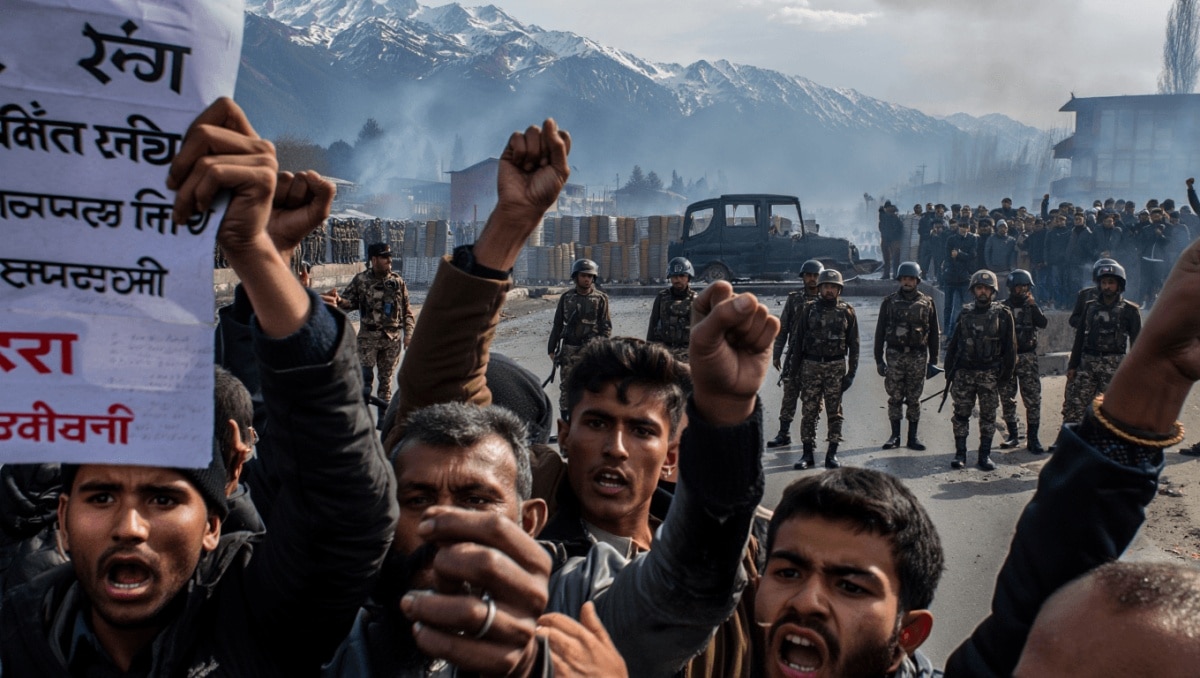
The April 22 attack in Pahalgam that killed 26 civilians has reopened fraught debates about Kashmir’s future and the language used to describe violence there. As officials, activists and international outlets react, comparisons to the war in Gaza are resurfacing — and they are reshaping how audiences interpret responsibility, retaliation and the rights of civilians.
Across campuses and social feeds, some activists draw an explicit line between Palestinian resistance and Kashmiri opposition to Indian rule, arguing that solidarity requires a single, unified stance against what they describe as colonial occupation. That framing has met rapid pushback from those who say the histories, legal claims and likely outcomes for local communities are fundamentally different.
Why the comparison is controversial
Shah Rukh Khan used the name Abinav to ease in-law worries: Gauri adopted Ayesha during nikaah
Javed Akhtar hails Hindu festivals as cultural glue: throwback of atheist celebrating resurfaces
The dispute centers on two competing narratives. One casts Kashmir as an occupied territory whose people deserve the same international backing offered to Palestinians. The other emphasizes Kashmir’s historical integration with the Indian subcontinent and stresses the legal and political processes—dating to 1947—that brought the region into India’s constitutional orbit.
Claims that India is operating a settler-colonial project in Kashmir gained traction after New Delhi removed the region’s special constitutional provisions in 2019. Critics point to demographic and administrative changes as evidence; defenders point to the accession of Maharaja Hari Singh at Partition, India’s long-standing constitutional claims, and the continuing presence of Pakistani-administered territory as complicating factors.
Short history in context
The princely state’s accession to India in 1947, and a subsequent United Nations call for a plebiscite conditioned on Pakistani troop withdrawal, remain touchstones in the dispute. Pakistan continues to administer parts of the former princely state — including Gilgit-Baltistan and Pakistan-administered Kashmir — while the remainder has been under Indian control (reorganized in 2019 as the Union Territory of Jammu & Kashmir). Historical grievances, cross-border intervention and insurgency have all fed the conflict ever since.
Large-scale violence in the late 1980s and early 1990s prompted the exodus of Kashmiri Pandits from the Valley; that episode is frequently cited in debates about communal demographic change and the security of minorities.
What many analysts say about the aims of armed groups
Observers of the movement for Kashmiri autonomy or independence often note that the groups advocating armed resistance are not uniformly liberal, secular parties seeking pluralistic democracy. Some factions explicitly seek an Islamic state or integration with Pakistan, outcomes that human-rights advocates warn could jeopardize the rights of women, religious minorities and LGBTQ+ people in the region.
That possibility is central to arguments against equating all demands for self-determination with progressive, human-rights-oriented politics.
Patterns observed after mass-casualty events
International reactions to mass-casualty attacks can follow a predictable arc: immediate sympathy for victims, followed by debate over language, and then pressure to constrain military responses. After October 7 and the ensuing Gaza war, public support for Israel initially surged in many countries but later shifted toward calls for restraint in Israel’s military campaign — a shift rooted in concerns about civilian deaths and proportionality.
In the Pahalgam case, India has conducted strikes described by officials as targeted assaults on “terrorist infrastructure” across the border, saying they avoided Pakistani military installations and sought to limit escalation. Whether public sympathy for the victims will endure as cross-border operations continue is an open question that will influence diplomatic and domestic politics alike.
- Immediate human stakes: Families of the victims and minority communities remain at risk.
- Regional stability: Cross‑border strikes increase tensions with Pakistan and could draw wider diplomatic responses.
- Media framing: The choice of words — militant, rebel, terrorist, occupier — shapes international perceptions and policy debates.
- Long-term governance: Any change in status for Kashmir would affect civil liberties, minority protections and regional geopolitics.
Balancing defense and restraint
Every state faces the dilemma of defending its citizens while avoiding measures that amplify civilian suffering or feed cycles of violence. Analysts and rights groups disagree about the best mix of intelligence, targeted operations and legal accountability to minimize collateral damage while dismantling networks that carry out attacks.
At the same time, accusations that victims are somehow culpable because of their identity or political stance have hardened divisions. That kind of victim-blaming echoes patterns seen in other conflicts and risks eroding a basic international consensus on the protection of noncombatants.
Policymakers and commentators must weigh tactical effectiveness, international law and the long-term political consequences of their choices — including how responses are presented to domestic and global audiences.
Whatever position one takes on the competing historical claims, the immediate priority is clear: protecting civilians and preserving space for accountable, evidence-based debate about remedies. Framing the crisis in absolute terms — as either simple colonialism or unqualified national sovereignty — flattens the many legal, historical and humanitarian questions that deserve careful public attention.
For readers tracking developments: watch how international media label the actors involved, monitor diplomatic reactions to cross‑border operations, and pay attention to reporting on minority safety in the Valley. Those elements will shape both short-term responses and the longer arc of Kashmir’s politics.