Show summary Hide summary
High in Uttarakhand, a short pilgrimage from Gangotri toward the glacier that births the Ganga offers a striking contrast: dense cedar forests and the hush of Himalayan tundra give way to an uncompromising, icy source. This account recounts a barefoot, autumn trek in 2022 and includes practical observations verified through mid‑2025 to help travelers and pilgrims planning the route today.
Cedar groves, cold air and early light
Shah Rukh Khan used the name Abinav to ease in-law worries: Gauri adopted Ayesha during nikaah
Javed Akhtar hails Hindu festivals as cultural glue: throwback of atheist celebrating resurfaces
The long valley that leads to Gangotri is dominated by stands of tall deodars whose resinous scent hangs in the air. The trees create a deep green canopy that opens gradually as elevation gains bring snow into view. In autumn the light is thin and crisp, sharpening ridgelines and making the first snows gleam in the mornings.
Along the way, local belief and everyday life mingle: one hears stories of spirits associated with the forests, and also encounters the very practical rhythms of shepherds, pilgrims and small hamlets that serve them.
Evening rituals at Gangotri
Arriving at Gangotri in the evening, the town centers around the temple and the riverfront aarti where devotees gather for the most crowded ceremony of the day. The atmosphere is devotional and intense; the cold of the high valley is softened briefly by the movement of the crowd and the warmth of lamps and incense.
Staying with the sadhus: Dandi Ashram
For a close encounter with the region’s spiritual life, Dandi Ashram offers a communal, donation‑based stay. It’s run by locally respected caretakers and mainly hosts ascetics and pilgrims. Expect very basic conditions: unheated rooms, intermittent electricity and no private locks. The emphasis is on hospitality rather than comfort.
Bathing is done in buckets of river water heated on request for a small contribution — an effective way to warm up after icy mountain days. The ashram also maintains a homa kund for ritual fire ceremonies and a small shrine dedicated to Ganesha and Hanuman.
Despite the austerity, visitors often find the place soulful: shared meals, simple tea and conversations with resident sadhus form the core experience. A few images stay with you — the waterfall at the village center, a sharp peak rising beyond the houses — reminders of why pilgrims come here.
Short excursions from Gangotri
Nearby sights include the small but powerful Suryakund waterfall and the craggy silhouette of Sudarshan Peak, both within easy reach of the village. A barefoot walk into the nearby forest leads to the Pandava Gupha cave, where a long‑term resident monk receives pilgrims year‑round.
On one visit, a stray dog fell in with our group and escorted us to and from the cave before slipping away — a quiet, unplanned detail that captures the lived immediacy of the place.
Two days to the glacier
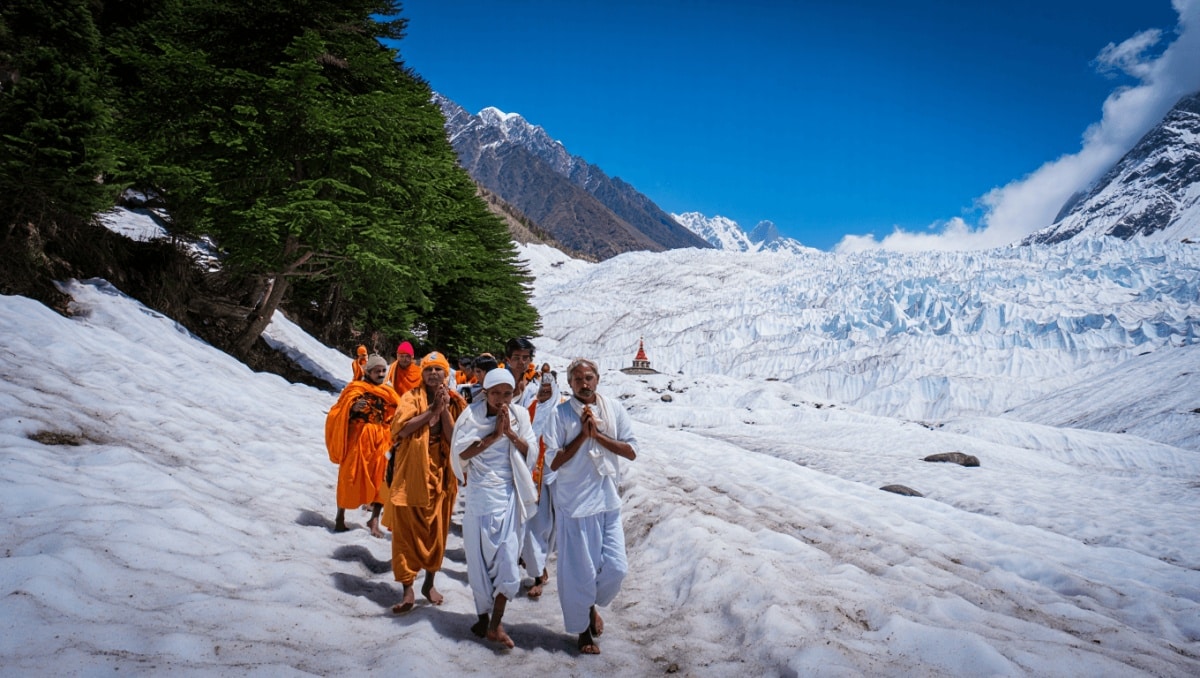
Our hike toward Gaumukh began early one autumn morning. The route climbs from tree‑lined trails into windswept moraines, with the broad Bhagirathi peaks looming above. Camps are seasonal: we spent the night at Bhojbasa, where sightings of wild mountain goats are common.
On the final day, the trail narrows around Mount Shivling and crosses streams that had mostly frozen by mid‑October. Small Shaiva shrines mark the route in places where pilgrims stop to pray. By midmorning we reached the snout of the glacier and the rocky, sacred spot where the Ganga begins to break free.
At Gaumukh some in our group performed a full ritual bathing and poured libations; others collected water to carry home. Rituals at the glacier remain central to why people make the journey despite the cold and rough footing.
Practical takeaways
- When to go: Autumn (September–November) offers clear skies and stable trails; early winter conditions can lock streams and increase cold exposure. Verify seasonal access before traveling.
- Accommodations: Expect basic, donation‑based lodging in Gangotri and seasonal tents at higher camps like Bhojbasa. Bring warm sleeping layers.
- Facilities: Electricity and hot water are intermittent; bucket baths and shared kitchens are common. Carry headlamps and battery chargers.
- Clothing and gear: Sturdy boots for the trek, layered cold‑weather clothing, and a small first‑aid kit. If you plan to bathe, be prepared for near‑freezing water.
- Permissions and logistics: Routes, permits and transport options can change rapidly. Confirm current conditions, road access and any permit requirements with local authorities or updated travel advisories.
Travel to these high valleys remains a mix of devotion and challenge: the landscape is beautiful and austere, the infrastructure minimal, and the spiritual rituals are still very much alive. For many visitors, the hardship is part of the pilgrimage’s meaning.
Trip note: The journey described here took place in October 2022. Practical details and links referenced in related materials were checked and updated through mid‑2025, but local conditions can shift quickly; verify logistics independently before planning travel. Photographs accompanying the original report are by Devala Rees.