Show summary Hide summary
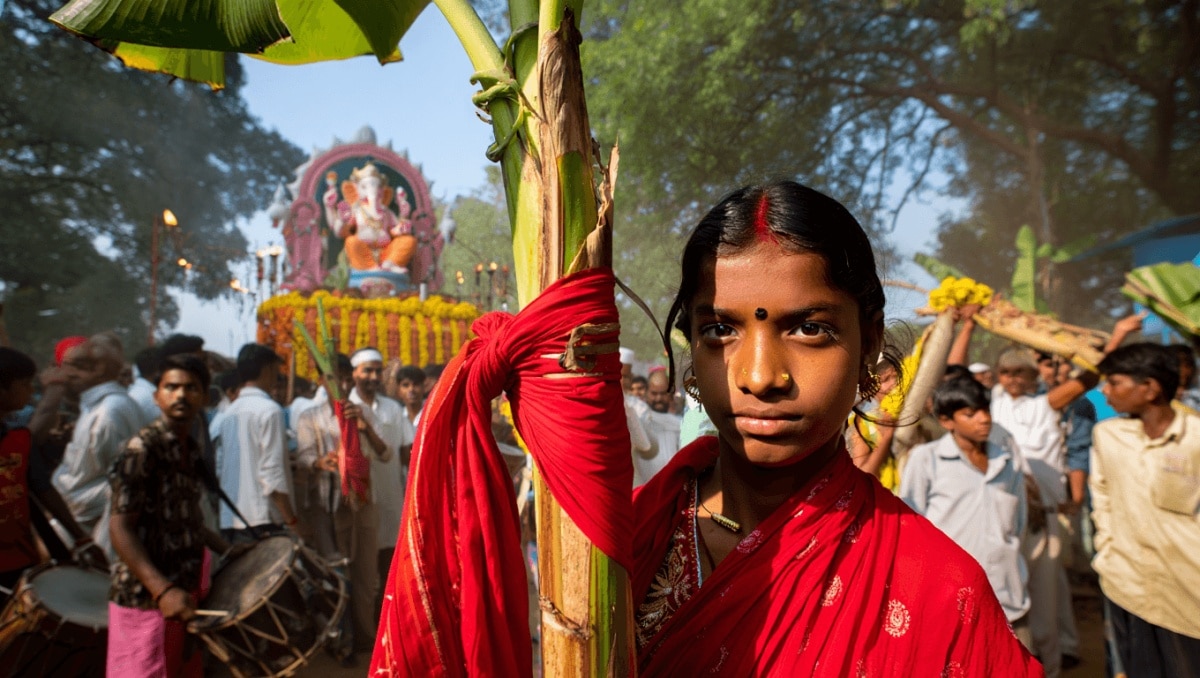
At 13, amid the roar of drums and the smell of street food at Durga Puja in Ranchi, a simple sight stopped me: a banana plant dressed in a red saree standing beside an idol of Ganesha. That single image — part ritual, part living emblem — opened a long conversation about how festivals encode ideas about nature, femininity and power that still matter today.
A curious ritual that carries multiple meanings
Shah Rukh Khan used the name Abinav to ease in-law worries: Gauri adopted Ayesha during nikaah
Javed Akhtar hails Hindu festivals as cultural glue: throwback of atheist celebrating resurfaces
I remember asking adults what the saree-wrapped banana plant was doing in the pandal. Answers varied: a folk explanation said she was Ganesha’s bride; a priest described her as an embodiment of divine energy; a cousin joked about the plant’s practical uses. Each reply revealed a different layer of meaning, and together they mapped how ritual, ecology and social imagination overlap in South Asian practice.
The figure at the center of that ritual is commonly called Kola Bou or the Navapatrikā’s leading plant. In Bengal’s Durga Puja, this cluster of nine plants is honored at the start of the festival as a living source of blessing, offering a material link between household life and sacred power.
What the nine plants represent
The traditional set combines local flora with religious symbolism. In contemporary terms, the grouping can be read as a reminder of ecological knowledge encoded in ritual — an acknowledgement that crops, herbs and trees sustained communities long before modern supply chains.
- Banana (Kola) — centerpiece; often dressed as the “bride” during the opening rite.
- Turmeric (Holud) — associated with protection and auspiciousness.
- Arum (Kachu) — tied to certain fierce feminine forms in local lore.
- Pomegranate (Dalim) — linked with life, blood and regenerative forces.
- Ashoka — invoked for relief from sorrow and to signify renewal.
- Wood apple (Bel) — carries associations with Shiva and sacred offering.
- Rice plant (Dhan) — emblematic of abundance and household prosperity.
- Jayanti — connected to particular goddesses and their blessings.
- Colocasia/Kanchu — representing scripture, sustenance and continuity.
How that symbolism connects to gender and resilience
At first glance, the visual of a plant as a demure bride can read as a symbol of submission. Yet, within the same festival, the goddess Durga is celebrated as the ultimate force that destroys injustice and reasserts balance. This contrast — modesty and ferocity presented side by side — captures a recurring cultural tension about women’s roles and power.
Seen through a contemporary lens, the banana plant’s placement and veneration suggest a different reading: the everyday, nourishing aspects of life are themselves sources of strength. The quiet endurance of domestic labor, seasonal agriculture, and communal care are ritualized as prerequisites for the spectacular moment when collective anger at wrongdoing is transformed into decisive action.
Why this matters now
Durga Puja remains one of South Asia’s most widely observed public festivals and has taken on new public roles in recent years — from sites of political expression to platforms for environmental messaging. Rituals that foreground nature are increasingly relevant as communities confront climate stresses and debates about gender and representation intensify.
Understanding Kola Bou and the Navapatrikā helps explain why many devotees treat festivals as living policy: they are moments where values, ecological practices and social expectations are rehearsed and renegotiated. Festivals can reinforce tradition, but they also provide space for reinterpretation.
Rituals as living culture, not museum pieces
Details matter. The ceremonial washing, dressing and offering to the plants are not merely ornamental: these acts reassert the connection between human life and plant life. The tradition’s survival — and its reinterpretation by younger generations — demonstrates how rituals can adapt while still transmitting core ideas.
For many people who grew up watching these rites, the spectacle is inseparable from memory: the drumbeats, the exchange of vermillion among women, the smell of fried snacks and incense. Those sensory memories shape how religious symbols are understood and re-used in debates about identity, sustainability and power.
What observers should take away
The saree-clad banana plant is more than a quaint local custom. It is a layered symbol that connects household survival, ecological knowledge and the larger narrative of feminine power. In a world increasingly focused on environmental stewardship and gender dynamics, such rites invite renewed attention.
Whether viewed as folklore, theology or social commentary, the Kola Bou offers a reminder: tradition can preserve practical knowledge and also provide a vocabulary for collective resilience. Festivals like Durga Puja continue to matter because they hold, in plain sight, the tools communities use to imagine and remake their futures.