Show summary Hide summary
As AI tools churn out images by the million, a new debate has landed in Hindu communities: when, if ever, is a machine-made depiction of a deity appropriate for worship? The question matters now because these images circulate instantly on phones and social feeds, and errors can harden into accepted forms fast.
When is an image fit for veneration?
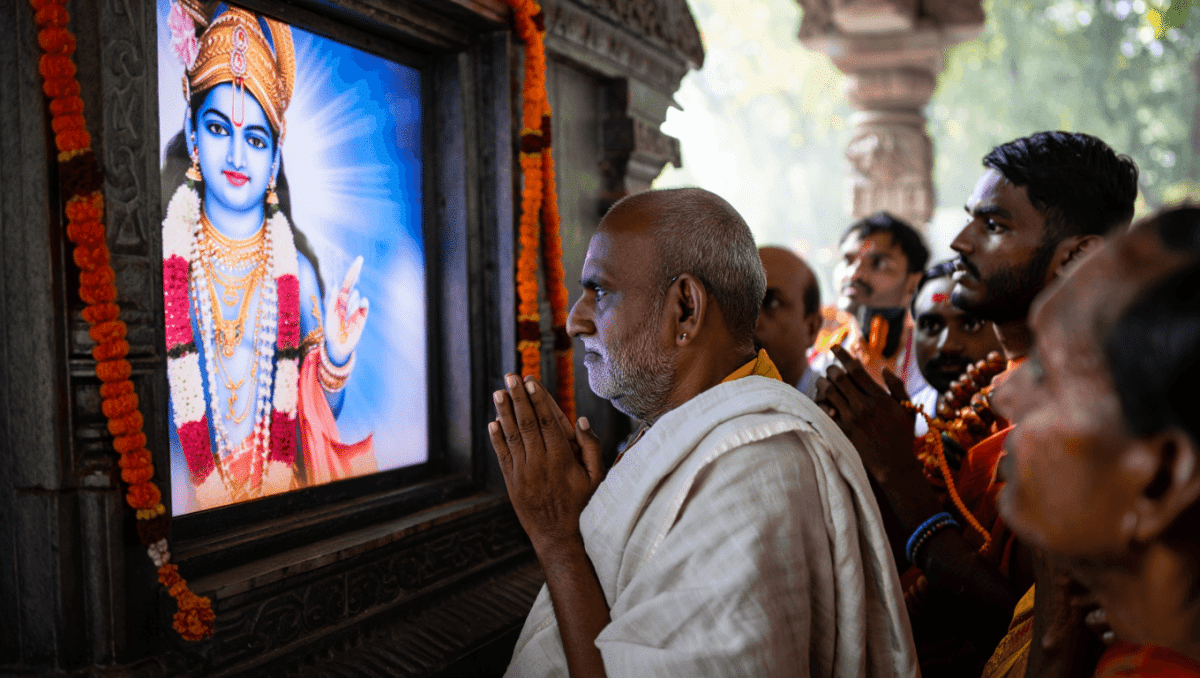
In many Hindu traditions, a sacred image used for formal worship is more than illustration. It is meant to embody a meditative vision — the dhyāna mantra — preserved and transmitted by teachers and practitioners. That lineage of spiritual perception is central to why certain icons are treated as worthy of ritual veneration.
Shah Rukh Khan used the name Abinav to ease in-law worries: Gauri adopted Ayesha during nikaah
Javed Akhtar hails Hindu festivals as cultural glue: throwback of atheist celebrating resurfaces
AI, by contrast, does not meditate or participate in devotional practice. It generates visuals by recombining existing images and patterns learned from large datasets. For this reason, the broad consensus among traditional authorities is that AI-produced images generally lack the devotional grounding required for use as consecrated icons.
Still, some communities allow limited exceptions: for very rare deities or forms without documented artistic precedents, a carefully produced AI image might serve as a provisional reference — but only if the process is guided by someone who understands the dhyāna tradition and if the result is refined for strict iconographic accuracy.
How trustworthy are AI-made depictions?
With expert prompting and close editorial control, AI can produce visually appealing images that approximate traditional forms. In practice, however, models often blend elements from multiple visual traditions and introduce distortions no trained iconographer would accept. Subtle but significant errors — odd limb counts, mixed attributes, or stylistic borrowings from other religious art — are common.
There is also a systemic risk: models learn from what they see. As inaccurate or hybrid images spread online, future AI outputs will increasingly reproduce those mistakes, creating a feedback loop that can reshape collective memory about how a deity is supposed to look.
That risk differs from historical changes in sacred art. Over centuries, styles evolved through human exchange, patronage, and regional aesthetics — processes that allowed time for communities to accept, critique, and adapt. Algorithm-driven replication accelerates change and can fossilize errors before a community has a chance to respond.
Practical guidance for practitioners and curators
If you are considering an image for ritual use, prioritize human sources and traditional forms. The following list offers an order of preference for commissioning or selecting an icon for veneration:
- Visionary teacher or spiritual master — someone steeped in dhyāna traditions and likely to have received or preserved the visual form.
- Experienced practitioner — a devotee who understands the meditative iconography and its ritual context.
- Devotional artist trained in tradition — an artisan who follows prescribed materials, proportions, and symbolic details.
- Artist focused mainly on aesthetics — acceptable for decorative or educational images, less so for consecrated use.
- Reproductions of images created by any of the above — prints, posters, or digital copies of properly made icons.
- AI-generated images only as a last resort and only when directly informed by dhyāna references and reviewed by an authority on iconography.
For non-ritual use — phone wallpapers, study aids, or purely decorative images — the threshold is lower. Many communities and organizations (including advisory bodies such as the Hindu American Foundation) have issued guidance distinguishing commercial and devotional contexts and now address AI specifically. Even for decorative purposes, though, errors can propagate, so care is still warranted.
What this means for culture and preservation
Beyond individual practice, AI-generated imagery raises institutional questions. Who decides what counts as authentic? How should temples, publishers, and educators vet new visual material? Without curation, algorithmic outputs risk altering communal understanding of traditional forms.
Communities can respond practically: document traditional forms, publish vetted reference images, and create clear guidelines for artists and platforms. Religious leaders, scholars, and practitioners working together can slow the accidental spread of inaccuracies and ensure that new technologies serve preservation rather than erasure.
- AI images are not inherently sacred. Ritual status typically requires human devotional context and lineage.
- Exceptions exist but are narrow. Rare deities may be represented provisionally by AI only when guided and corrected by knowledgeable practitioners.
- Errors spread quickly. Inaccuracies in AI-generated work can become normalized if left unchecked.
- Intent is meaningful but not sufficient. Devotion does not replace the need for correct forms in formal worship.
- Technology changes the dynamics of continuity. AI accelerates reproduction in ways that challenge traditional processes of cultural adaptation.
The arrival of generative image tools does not force a single answer but does demand active stewardship. For now, the safest path for those who worship is to favor images born of recognized spiritual and artistic practice — and to treat AI outputs as tools that require human guidance, not as replacements for living tradition.