Show summary Hide summary
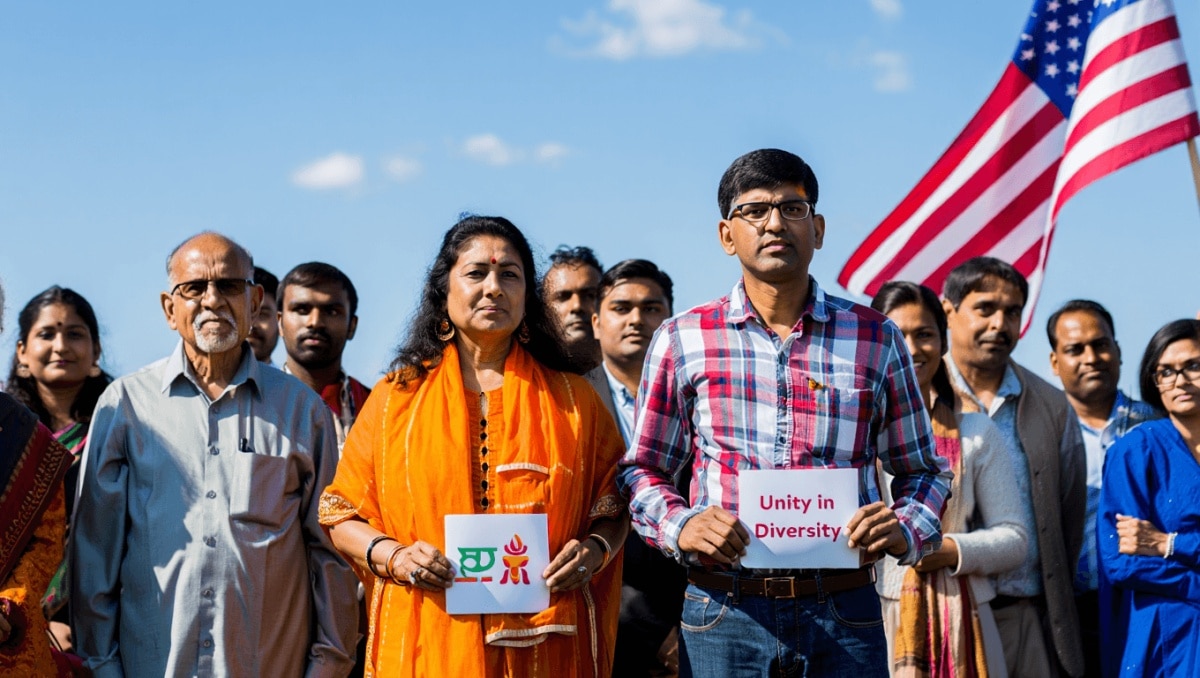
In the final weeks of October 2025, a string of contentious episodes — coordinated online attacks on Diwali gatherings, a Rutgers panel scrutinizing Hindu nationalism, and public remarks about the Vice President’s wife’s faith — pushed questions about identity and advocacy for Hindu Americans into the spotlight. The debates that followed are not just cultural; they carry immediate legal and civic consequences for a largely immigrant community navigating life in the United States.
Where the argument breaks down
At the center of the conversation are three overlapping disputes that shape how Hindu Americans organize, speak, and defend their rights.
Shah Rukh Khan used the name Abinav to ease in-law worries: Gauri adopted Ayesha during nikaah
Javed Akhtar hails Hindu festivals as cultural glue: throwback of atheist celebrating resurfaces
- Category and coherence: Is “Hindu” still a useful label, or does it obscure a vast set of beliefs and practices?
- Pluralism in practice: How should religious diversity inside the Hindu fold be recognized and represented in an American civic context?
- Transplanting politics: To what degree should social and political approaches developed in India be reproduced in the U.S. — and are they effective or counterproductive here?
These questions have been sharpened by younger commentators who say the first-generation immigrant institutions sometimes packaged an overly simplified version of Indian traditions for their children. Writers such as Vishal Ganesan and Anang Mittal argue that some temple boards and advocacy groups compressed multiple sects into a single “unity” narrative, which can limit internal debate and mask differences that matter for reform and engagement.
They also warn against importing Indian political dynamics wholesale into American advocacy, arguing that tactics designed for India’s social landscape may not translate to U.S. public life and can alienate second-generation Americans who straddle both worlds.
Practical realities and civic stakes
Theoretical debates matter, but so do on-the-ground capacities. Hindu American communities face organized criticism from a range of actors — from critics on the left to conservative opponents — and responding effectively requires more than online commentary. It demands institutions that can sustain public education, legal defense, and coalition work over time.
- Many community institutions have already adapted: multi-deity temples under one roof, weekday and weekend educational programs, and volunteer relief efforts rooted in seva.
- Most Hindu Americans are foreign-born; assuming that immigrant-led organizations are irrelevant reduces the community’s operational capacity and risks fragmenting response efforts.
- Effective advocacy in the U.S. depends on consensus-building, institutional competence, and cross-community alliances—not on purity tests about who counts as authentically “Hindu.”
Legal and administrative decisions underscore the urgency. Cases in which agencies or institutions seek to classify or label practices as inherently discriminatory can have wide effects on employment law, education, and civil-rights enforcement. When a state body treats a religious identity as a static, oppressive category or applies a label to an individual to make a legal point, it raises immediate questions about how the law interprets religion, caste, and ancestry — issues that implicate the First Amendment and equal-protection principles.
External critics usually do not differentiate among the many strands of Hindu practice; for those targeted, differences in belief do not insulate them from the effects of stereotyping, legal scrutiny, or public hostility. This reality pushes the community toward coordinated defense of civil liberties that protects diversity within the fold.
Historical resources for contemporary pluralism
There is precedent within Indic intellectual traditions for managing religious difference. Practices of samvāda (open dialogue) and siddhānta (established reasoning) historically served as methods for negotiating truth claims across schools of thought, producing shared ethical frameworks adaptable to local needs.
Those modes of engagement suggest an approach for today: maintain rigorous internal debate without allowing doctrinal disagreements to prevent joint civic action. The survival and reinvention of Dharmic traditions across centuries suggests they can adapt to—and compete in—the marketplace of American ideas, provided institutions make the case for relevance to younger generations.
At the same time, many Hindu American organizations recognize that transmission requires translating practices and teachings in ways that resonate with U.S. life. From yoga’s mainstreaming to philanthropic responses during crises, elements of Hindu culture have taken root broadly; the task for religious leaders and advocates is to combine authenticity with accessibility.
The recent controversies are a reminder that protecting religious freedom in a plural democracy requires both internal cohesion and external outreach. Mutual respect among diverse Hindu communities matters as much as respect from outside groups. If the community wishes individuals to freely choose their spiritual paths, it must first ensure the institutional and civic structures that make such choice possible and protected.
Ultimately, the issue is not enforcing a single creed or erasing difference. It is building a framework of representation and legal protection that acknowledges diversity while defending shared civil-rights interests — so Hindu Americans can practice, dissent, and belong without being reduced to a stereotype or a political prop.