Show summary Hide summary
Seven plaintiffs have filed suit against the Palo Alto Unified School District alleging that a school-sponsored mosque visit last fall crossed the line from academic instruction into religious promotion — and that students’ images were shared online without parental consent. The complaint raises immediate questions about how public schools balance religious neutrality with efforts to teach cultural and religious literacy.
What the lawsuit says
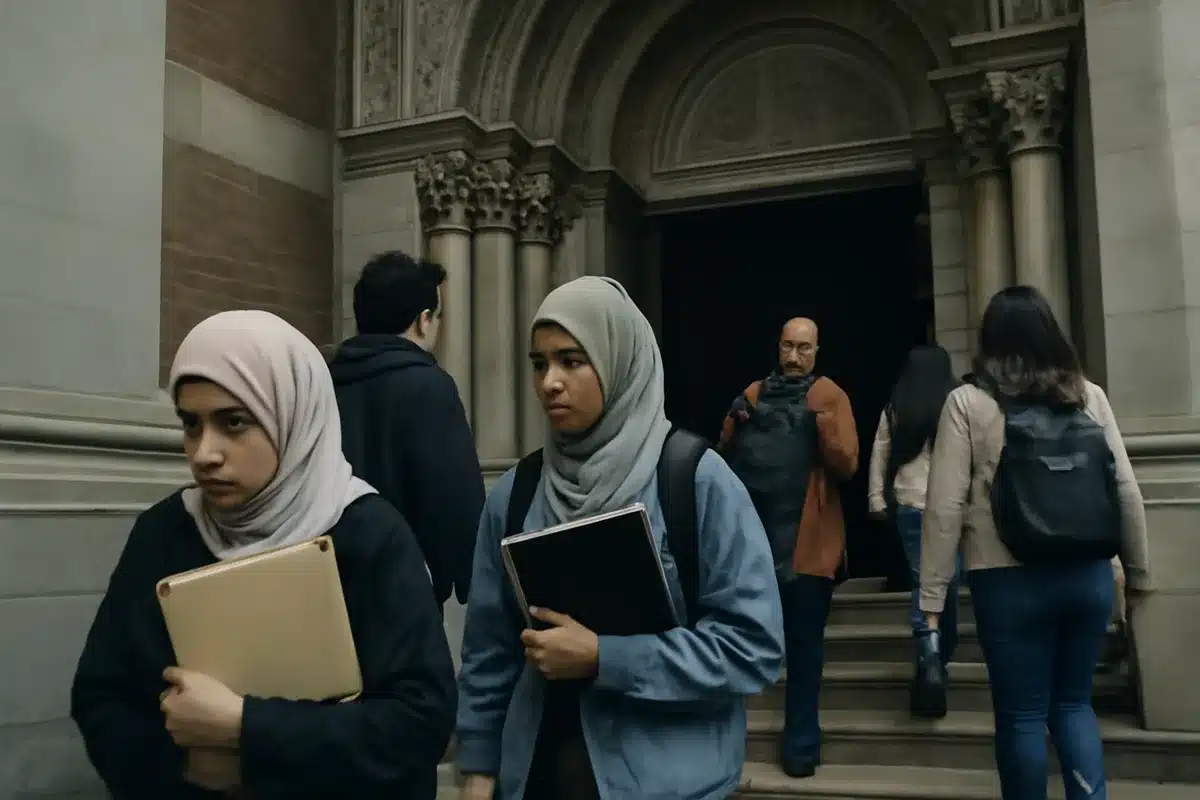
The lawsuit, brought by two Jewish parents, three former Jewish students, one Hindu parent and one Zoroastrian parent, centers on a Social Justice Pathway field trip to a local mosque. According to the complaint, female students were encouraged to wear hijabs and were given copies of the Quran during the visit. Plaintiffs say images of the students were taken and posted publicly without parental permission.
Annamalai applauds Bhagwat’s message on Muslim inclusion in India
Navratri in Times Square goes viral: social media splits over Indian celebrations abroad
Plaintiffs also object to the involvement of Zahra Billoo, identified in the filing as the executive director of the Bay Area office of the Council on American-Islamic Relations. The suit describes Billoo as a controversial figure and alleges she used the event to advance “personal religious and political views.”
- Primary claims: improper exposure to religious practice during a public school activity; unauthorized publication of students’ photos.
- Legal theory: plaintiffs say school officials knew or should have known the trips repeatedly risked exposing students to religious activity and ideological messaging.
- Relief sought: the complaint asks the district and school principal Brent Kline to be held accountable for permitting the events and the dissemination of images.
District response and policy framework
Palo Alto Unified Superintendent Jason Glass said the district had not yet received the lawsuit paperwork and reiterated the district’s policy that religion be treated academically, not devotionally, in classrooms. He said every family in the district is entitled to that standard and that he will review whether district practice matched policy.
Under longstanding legal guidance, public schools may teach about religion in a neutral, educational way but may not endorse or promote a faith. The district’s statement framed the review as a check against that constitutional line.
Reaction from CAIR and advocates
Billoo pushed back on the lawsuit, calling it misguided and arguing that exposing students to different faiths and perspectives is part of education. She told the San Francisco Chronicle that neutrality does not mean isolating students from learning about religious traditions, and that participation in the mosque visit was voluntary.
Billoo also expressed concern that the legal action could chill efforts by educators to build understanding across communities: “If schools avoid teaching about religion at all, students lose an important tool to combat prejudice,” she said, according to the Chronicle.
Why this matters now
The case touches on several practical issues for school districts nationwide: how to design off-campus learning that involves houses of worship; when and how to secure parental consent for photographs; and how to vet outside speakers who participate in school programs.

Administrators are increasingly navigating those questions as schools expand curricula on diversity, equity and inclusion. Lawsuits that test boundaries between civic education and religious expression can prompt districts to revise guidelines or change programming to avoid litigation.
Key takeaways
- Schools must balance constitutional limits on religious endorsement with the pedagogical value of teaching about religion.
- Parental consent and clear photo-release policies are central to preventing disputes over student images.
- Use of outside speakers or community partners requires transparent oversight to ensure events remain educational and neutral.
The lawsuit names Palo Alto High School principal Brent Kline along with the district. It is likely to prompt closer scrutiny of field-trip protocols and guest-speaker vetting in Palo Alto and could influence similar policies elsewhere, depending on how the courts treat the claims. The district’s pending review and any court filings will determine whether this dispute remains a local governance issue or develops into a broader legal precedent about religion in public schools.