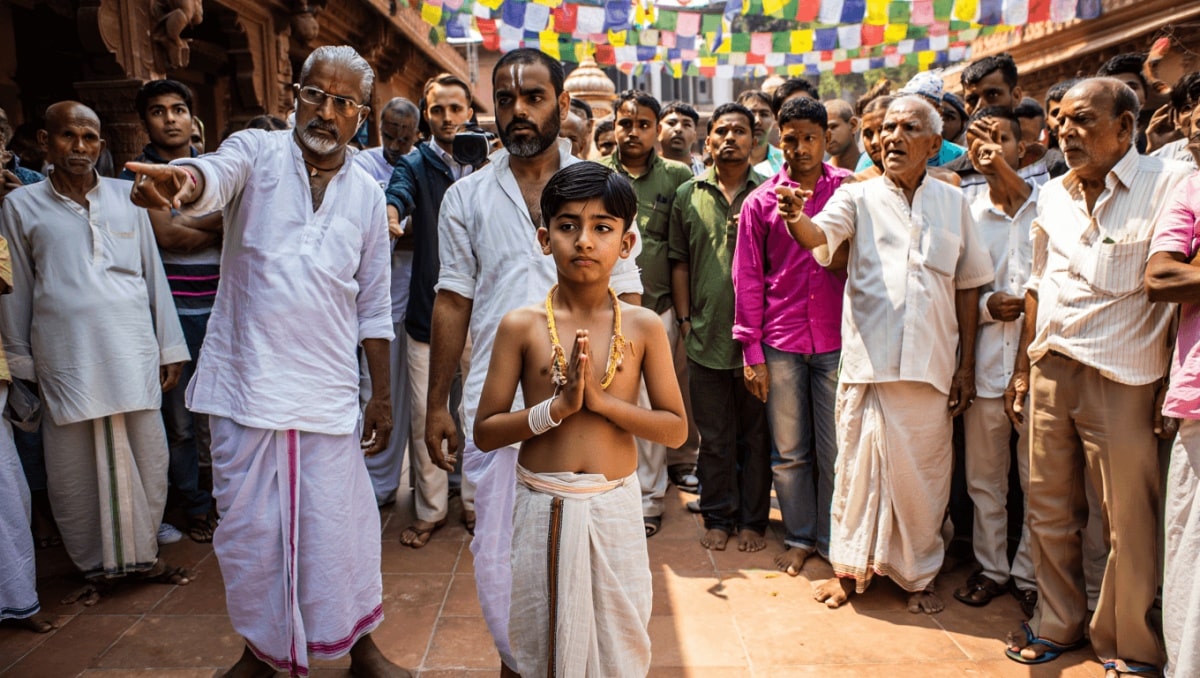
The ancient rite that marks a young boy’s formal introduction to Vedic study still shapes how communities pass knowledge across generations — but its meaning and practice have shifted dramatically in recent decades. Understanding why the upanayana mattered historically, and what has been lost or preserved today, helps explain current debates about religious education, cultural continuity and parental responsibility.
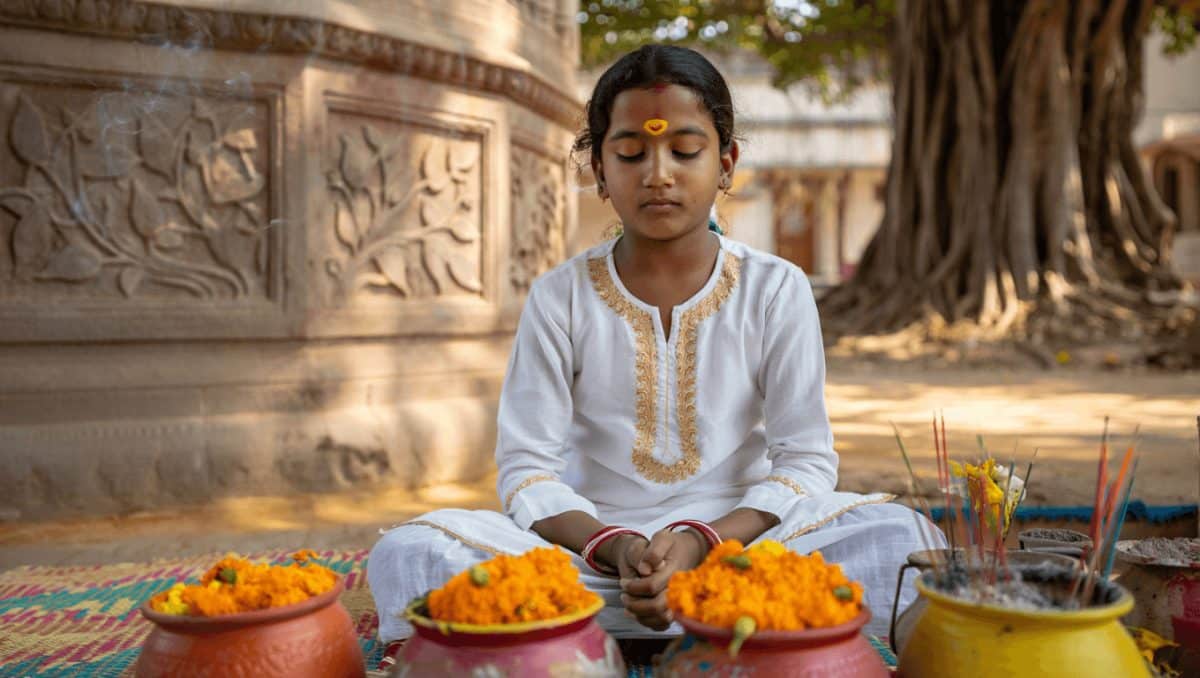
The ceremony’s name literally means “leading near” — taken to mean bringing a child close to a teacher for sustained instruction. Traditionally the event signified the start of the period known as brahmacarya, a phase of disciplined learning usually begun after a few years of elementary study in Sanskrit and basic ritual practice.
Hinduism gains ground in Africa: new communities reshape culture and commerce
Shah Rukh Khan used the name Abinav to ease in-law worries: Gauri adopted Ayesha during nikaah
In classical accounts, families prepared a child from the age of about five so he could grasp the simple commands and responses used in the rite; by eight the boy was expected to be ready to receive the sacred thread and the Gayatri chant. That start marked formal admission to a multi-year apprenticeship during which the student memorized and practiced sections of a particular Veda under a guru.
Completion of that course was marked by a different ceremony, samavartana, sometimes called the snana; it represented the student’s “return” from the gurukula and the transition from full-time study to household responsibilities. The arc between initiation and return — the lived experience of the gurukula — was meant to cultivate not only textual knowledge but a disciplined way of life.
The curriculum and observances were complex. Each Veda comprised several sections or “kandas,” and each kand a carried its own set of observances and restrictions. Students followed specific rules while mastering a mantra or a section of text: schedules, ritual vows and daily practices were all considered essential to preserve precise recitation and meaning.
Today, much of that structure has loosened. Where a century ago the timing of studies and ceremonies was carefully observed, contemporary practice often compresses or simplifies rites. Many families perform the visible trappings of initiation without the extended instructional continuity that once followed, and some communities have shifted the age, meaning or even the necessity of the event.
This change matters for a few concrete reasons. First, the rites were not merely ceremonial: they were a vehicle for transmitting language, ritual proficiency and interpretive frameworks. Second, the discipline of sustained study ensured textual accuracy — crucial for oral traditions where errors multiply without correction. Third, the rites set communal expectations for education and moral formation.
For readers wanting a quick reference, here are the principal elements and consequences often associated with the traditional practice:
- Purpose: Formal entry into Vedic study and disciplined living under a teacher’s guidance.
- Typical timing: Preparatory learning from about age 5; initiation often at age 8; minimum formal study period often counted as roughly 12 years for deeper mastery.
- Key ceremonies: Upanayana (initiation) and Samavartana (conclusion/return).
- Discipline: Strict observances and vratas tied to specific Vedic sections to preserve recitation accuracy.
- Social role: Historically signified a “second birth” or qualification to participate fully in certain religious duties and instruction.
Ritual technicalities varied by tradition. For example, students aligned with the Krishna‑Yajurveda typically observed four principal vratas corresponding to its major divisions, while those studying the Rigveda followed a different set of vows tied to their own textual structure. These internal differences underlined how initiation was always embedded in a living scholarly practice rather than a one-off rite.
Critics of contemporary practice point out that when families treat initiation as symbolic window-dressing — a brief set of rites performed without subsequent study — the ceremony’s capacity to produce knowledgeable teachers and faithful reciters fades. Supporters of reform argue that evolving social conditions, access to formal schooling and changing notions of religious authority require adaptation.
The practical stakes are straightforward: a community that no longer invests in the extended instruction once tied to initiation risks losing nuances of language, pronunciation and interpretive tradition that oral transmission once safeguarded. Conversely, demanding the full traditional regimen in contexts where families lack the means or institutions to support it can also be unrealistic.
Parents and community leaders now navigate a spectrum of approaches — from efforts to revive immersive gurukula-style learning, to hybrid programmes that pair modern schooling with focused evening or weekend instruction. Whatever the path chosen, scholars and practitioners agree that clarity about intent matters: is the ritual being performed to maintain a living educational practice, or primarily as a cultural marker?
The question has contemporary relevance beyond religious communities. It touches on how societies preserve specialized knowledge, how rites anchor identity, and how educational responsibilities are negotiated between families and institutions. For traditions built on oral mastery, the balance between ceremony and continued teaching ultimately determines whether a rite remains a meaningful preparation for lifelong practice or becomes a hollow symbol.