Show summary Hide summary
India’s cultural outreach in Malaysia has accelerated in recent months, driven by high-profile discoveries, record-setting performances and renewed diplomatic focus. These developments are reshaping how both countries remember shared history—and they matter now because they strengthen people-to-people ties that feed trade, tourism and regional cooperation.
Longstanding connections—rooted in centuries of trade and migration and shaped by a Malaysian Indian community of roughly 2.9 million—are resurfacing in tangible ways. Several recent events have turned what was often a background cultural current into headline news, giving fresh momentum to India’s soft power in Southeast Asia.
Archaeology and symbolism: the past returns
New attention to historical links was amplified when Prime Minister Narendra Modi brought home the Anaimangalam Copper Plates from the Netherlands, a relic tied to Chola-era maritime activity that underlines 11th-century interactions across the Bay of Bengal. That diplomatic gesture has been paired with local discoveries: Malaysian archaeologist Dr. Nasha Rodziadi Khaw’s excavations in the Bhujang Valley, Kedah, have uncovered Hindu-Buddhist artefacts that map premodern religious and trade networks in the Malay Archipelago.
Kashi to Kedarnath costs revealed: how much a Sawan pilgrimage will set you back
Hinduism gains ground in Africa: new communities reshape culture and commerce
Those findings matter beyond academic circles: they offer visual evidence of long-standing connections that cultural institutions and diplomats can amplify to deepen contemporary ties.
Institutions and grassroots culture
The Netaji Subhash Chandra Bose Indian Cultural Centre in Kuala Lumpur—established in 2010 and renamed during a previous Indian prime ministerial visit—has become a central node for cultural exchange. Nestled in Little India, the centre runs Hindi and yoga classes, classical dance training, Ayurveda workshops and heritage programs that attract Malaysians from diverse backgrounds.
The centre’s recent milestone celebrations—marking its 15th anniversary alongside the 77th ICCR Day on April 9—read as both a public festival and a strategic moment: officials, artists and community leaders used the platform to showcase how local creative ecosystems sustain and adapt Indian cultural forms.
Mass participation: a record-setting welcome
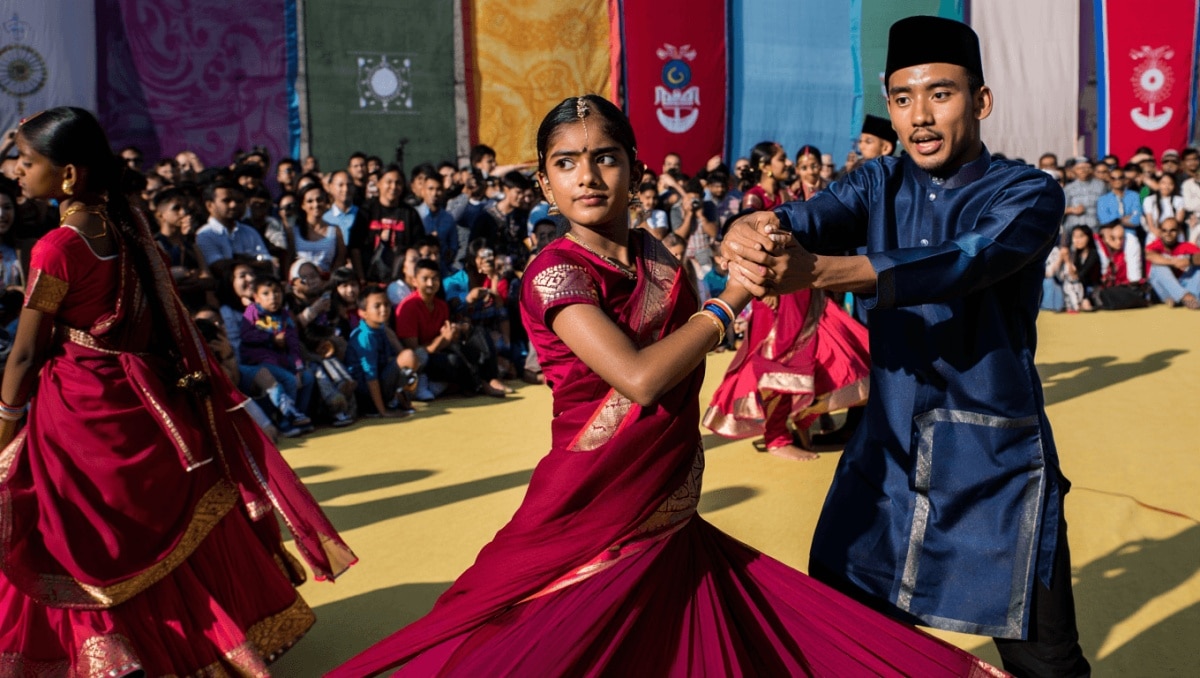
In February, an 800-strong contingent of Indian and Malaysian dancers staged a grand welcome for the Indian prime minister. The event, organised by the Indian High Commission and the cultural centre, combined nearly 50 local dance schools and earned recognition in the Malaysia Book of Records for the largest traditional and folk dance in the country.
That performance did more than set a record: it demonstrated how diasporic communities, local artists and official cultural diplomacy can coordinate at scale, creating visible symbols of shared heritage that resonate across ethnic lines.
Voices from the field
Senior diplomats and cultural leaders at the ICC celebrations emphasized two recurring themes: continuity and adaptation. The outgoing Indian high commissioner pointed to a thriving, locally driven cultural landscape in Malaysia where artists and teachers sustain traditions independently of state patronage.
Performing-arts figures likewise framed contemporary projects as bridges rather than one-way transmissions. Dance director Ramli Ibrahim’s Sutra Foundation continues to draw students across ethnic groups, and his recent production—drawing on the Radha–Krishna tradition—has toured both India and Malaysian cities with government support.
Tunku Zain Al Abidin, who visited India as an ICCR Distinguished Visitor, highlighted the region-wide echoes of Indian forms: from wayang-style puppetry to institutional similarities, he argued, the artistic and intellectual exchange is bi-directional and deep.
Kalpana Dance Theatre founder Shangita Namasivayam described the cultural centre as an “institutional bridge” that helps sustain teaching lineages and bring new audiences into classical arts—evidence that community-level continuity underpins larger diplomatic aims.
Key recent milestones and why they matter
- Anaimangalam Copper Plates returned to India — reinforces long-term maritime and cultural links dating to the 11th century.
- Bhujang Valley excavations — archaeological finds provide material proof of early Hindu-Buddhist presence in the Malay world.
- 800-performer Swagatam — a record-setting mass dance that showcased local dance schools and diasporic collaboration.
- 15th anniversary of the Indian Cultural Centre and 77th ICCR Day — institutional consolidation of cultural diplomacy in Kuala Lumpur.
- Cross-border touring productions and workshops — sustain exchange, broaden audiences and feed cultural tourism.
What’s at stake is practical as much as symbolic. Cultural initiatives like these help preserve artistic traditions, expand people-to-people contacts that ease diplomatic work, and generate soft economic benefits through festivals, teaching and performances. They also offer Malaysia a way to project its plural identity regionally while giving India a prominent cultural presence in Southeast Asia.
Looking ahead, momentum depends on continued cooperation between embassies, cultural bodies and local institutions—alongside responsible archaeological stewardship and community-led arts education. If that triangle holds, the current surge in visibility could translate into sustained cultural and diplomatic gains for both countries.