Show summary Hide summary
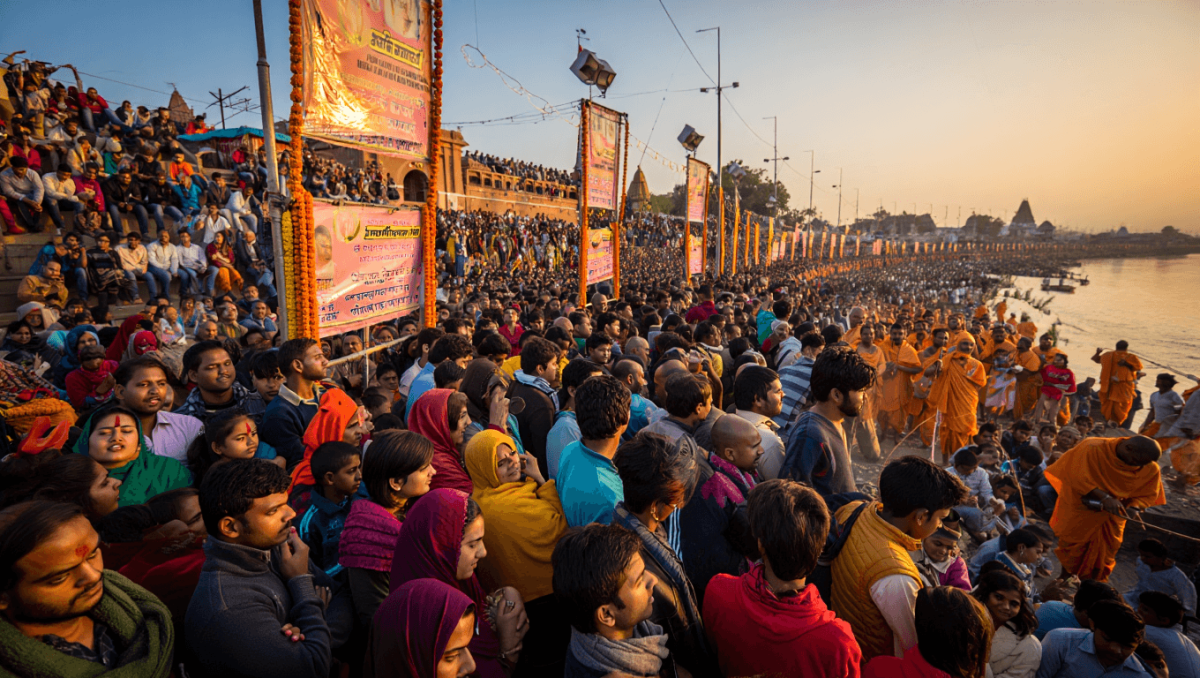
When Jupiter returns to Leo in late 2026, Nashik and Trimbakeshwar will host the Simhastha — a Kumbh that promises not only massive crowds but a test of whether a twelve‑year ritual can become a permanent regional asset. The question is immediate: will the 2027 gatherings leave a lasting legacy, or will the temporary city vanish with the pilgrims?
Two sacred sites, one celestial timetable
The Simhastha is not a single, brief festival. It unfolds across two linked but distinct locations, roughly thirty kilometres apart. In Nashik, devotees gather at the ghats of Panchavati — including the Ramkund — while Trimbakeshwar draws pilgrims to the Kushavarta Kund near one of Shiva’s twelve Jyotirlingas.
Sharad Purnima 2026: moonrise time and rituals for kheer and all-night vigil
Ugadi guide: crucial updates, dates and traditions to know today
The official arc begins with the flag‑raising ceremony, the Dhwajarohan, in October 2026 and stretches through to the flag lowering in the monsoon of 2028. The principal bathing days, the Shahi Snans, are concentrated in August and September 2027, when centuries‑old processions, including those of the Naga sadhus, form the event’s most emblematic moments.
Scale and stakes
Organisers and officials are preparing for a turnout often cited at nearly twenty crore people over the full cycle — a number that ranks among the largest peaceful human gatherings on record. The logistics questions are familiar: crowd flow, sanitation, potable water and emergency access. Those practicalities are urgent, but they are only the visible surface of a deeper challenge.
What remains after the last pilgrim departs? That choice — to treat Simhastha as a recurring logistical peak or as the seed of a sustained regional transformation — will determine whether the festival becomes a one‑off surge or an enduring benefit.
The corridor opportunity
Geography gives Maharashtra an advantage. Within a short journey of the Kumbh sites lie Shirdi, permanent pilgrimage circuits around Trimbakeshwar, the Sahyadri hills and Nashik’s vineyards. Roads and railways already link these places; for a season they will be saturated with people.
If even a small share of visitors stay longer or return in quieter months, the economic effect could be disproportionate. That spillover can convert a peak event into a persistent amenity: hotels and homestays occupied year‑round, local guides with steady work, improved transport links and a market for culture and craft.
- Infrastructure: permanent upgrades to sanitation, water supply and transport.
- Local economy: hospitality, retail and services benefitting beyond the festival window.
- Environmental management: systems for waste and river health that last past the crowds.
- Cultural economy: year‑round programming, interpretation and community livelihoods.
- Digital backbone: information systems that reduce friction for pilgrims and residents alike.
Changing pilgrims, changing expectations
The demographic of those who travel to the Kumbh is shifting. Younger pilgrims increasingly treat such journeys as a choice rather than an obligation — a search for meaning, community and cultural connection rather than a box to be ticked.
For this cohort, the Kumbh is as much a social and cultural platform as a strictly religious one: a site for entrepreneurship, heritage expression and identity work. Designing the event with these visitors in mind, while respecting ritual protocols, could catalyse renewal rather than simply preserve tradition.
Technology as a stabiliser, not a substitute
Applying digital tools does not dilute sanctity; it can reduce uncertainty. Clear schedules, verified accommodation listings, route guidance, multilingual interpretation and reliable information about ritual timing can all remove friction so that the devotional act is what remains central.
At scale, good logistics are an act of public service: enabling millions to participate safely and with dignity is a form of collective care. Technology should be framed as an operational layer that supports, rather than replaces, the lived religious practice.
Decisions now will shape the long term
The ceremonial flag will rise in late 2026; the biggest baths are scheduled for 2027. The infrastructure and policy choices made in the months before — on waste systems, transport investment, heritage interpretation and digital coordination — will determine whether the Simhastha leaves behind only memory or a functioning, year‑round spiritual landscape.
When the planets move on and the crowds disperse, the measure of the 2027 Simhastha will not be the number of bodies in the water but the durability of what was put in place. Will the moment be a flood of people that recedes, or the beginning of a river that sustains the region?