West Bengal’s newly sworn-in cabinet on Monday ordered a fresh review of the state’s backward classes list and dismantled the existing system of sub-categorisation used to allocate reservation quotas in government jobs. The move is a direct response to a May 22, 2024 ruling by the Calcutta High Court, and it could reshape who is eligible for state reservations.
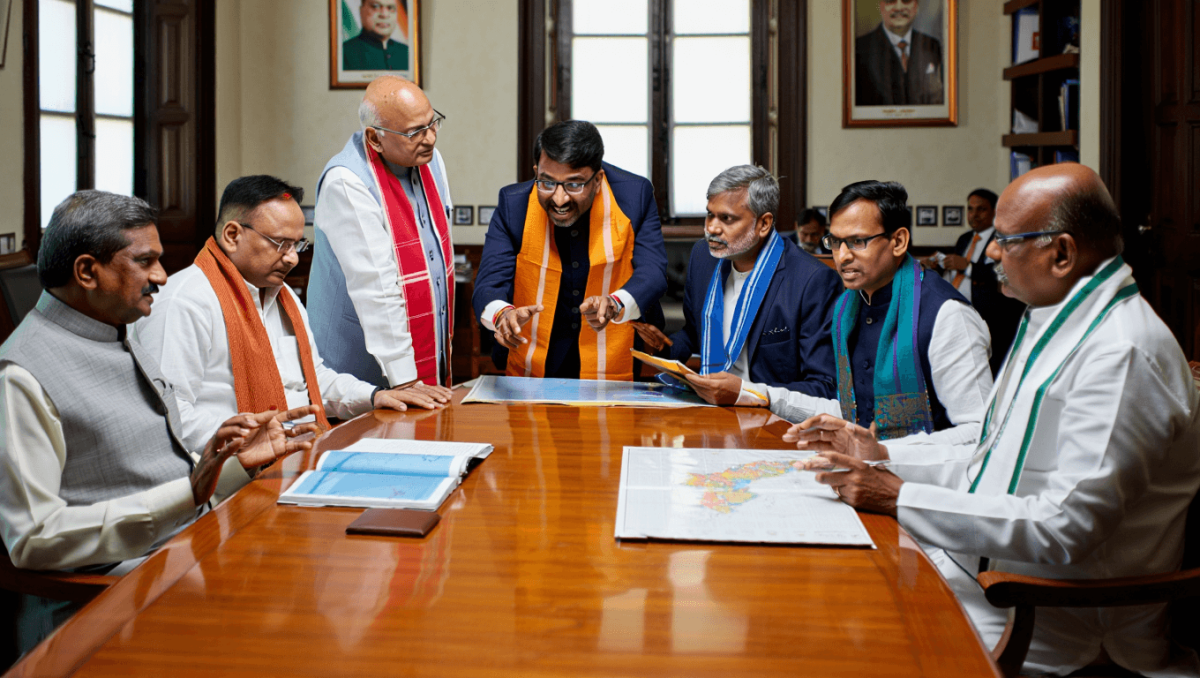
State minister Agnimitra Paul told reporters the government will rework the list of backward classes and adjust reservation percentages to align with the court’s directions. An inquiry panel will be appointed to examine which groups qualify for quotas; officials said only those communities the court explicitly identified will be reconsidered for inclusion.
What precipitated the change
The issue has been a political and legal flashpoint for years. After 2012, the previous state administration added numerous communities to the backward classes list through executive orders. Official records show 77 groups were included in that period; most of those additions were Muslim sub-groups. Critics, particularly the BJP while in opposition, argued the expansion relied on religious identity rather than the standard socio-economic criteria.
Shah Rukh Khan used the name Abinav to ease in-law worries: Gauri adopted Ayesha during nikaah
Javed Akhtar hails Hindu festivals as cultural glue: throwback of atheist celebrating resurfaces
That contention reached the courtroom in May 2024 when the Calcutta High Court struck down certificates issued under the post-2010 system. The court found the revised process effectively used religion as the main basis for granting OBC status and declared those procedures unconstitutional. While the decision protected incumbents already holding reserved posts, it invalidated large numbers of certificates issued under the contested framework.
| Action | Timing | Immediate effect |
|---|---|---|
| Additions to backward classes list via executive orders | After 2012 | 77 communities added; majority were Muslim sub-groups |
| Calcutta High Court judgment | May 22, 2024 | Certificates issued after 2010 under revised system struck down; process deemed unconstitutional |
| State cabinet decision | Monday (current week) | Sub-categorisation cancelled; government to re-evaluate list and reservation percentages; inquiry panel to be set up |
| Previous attempt to re-notify list | Post-judgment (previous government) | High Court stayed the new notification on procedural grounds |
For citizens and applicants, the practical consequences are immediate and tangible.
- Existing employees whose posts were secured under the reservation framework remain protected for now.
- Many OBC certificates issued under the challenged system have been invalidated, affecting eligibility for new recruitments and benefits.
- An administrative review could reopen eligibility for a limited set of groups — but only after the inquiry panel’s findings and any further legal steps.
- The timeline for the review and any reinstatement is not yet public, creating short-term uncertainty for applicants and institutions running recruitment drives.
Administratively, the government faces a complex task: redesigning the state’s list and the quota percentages in a way that satisfies the court and withstands legal scrutiny, while minimizing disruption to ongoing recruitment and services. Politically, the issue remains sensitive; decisions about caste-based reservation intersect with communal and electoral fault lines in the state.
The next signals to watch will be the formal constitution of the inquiry panel, the publication of its terms of reference, and any provisional rules the state sets for recruitment while the review proceeds. Those developments will determine how quickly affected applicants and public boards can move forward.