
Show summary Hide summary
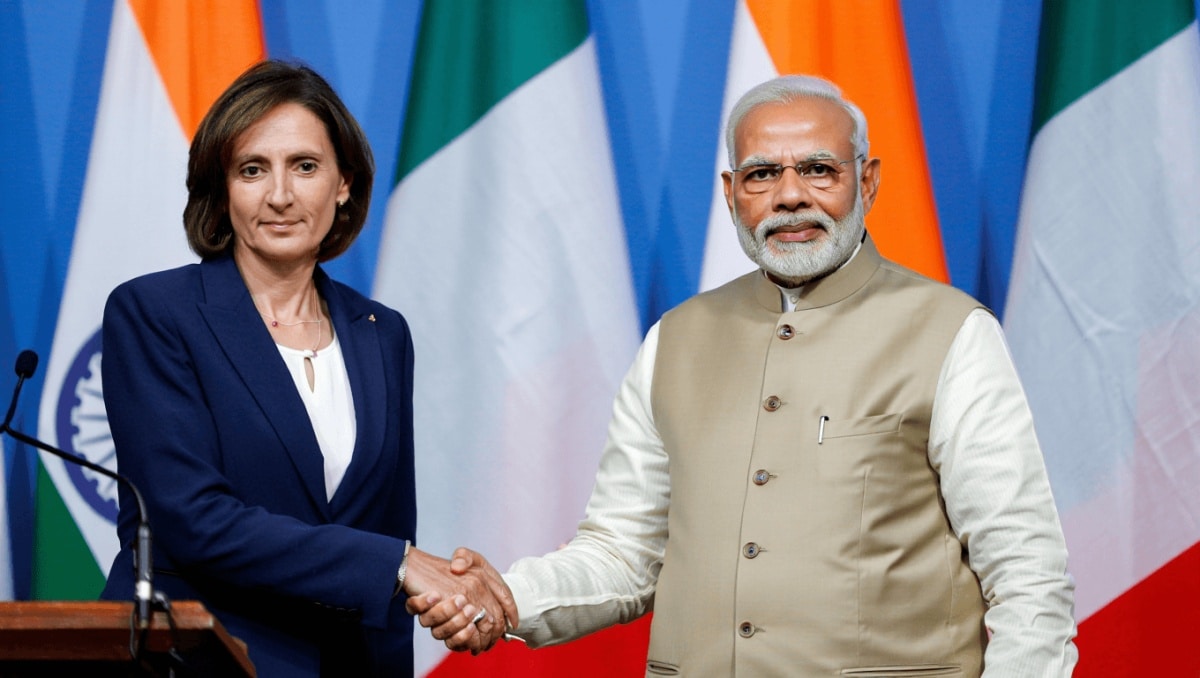
In a move that recalibrates their strategic ties, India and Italy this week elevated bilateral relations to a Special Strategic Partnership, signing a broad package of agreements spanning defence, critical minerals, science and cultural cooperation. The accord signals both capitals are aiming to lock in deeper industrial and research links as global supply chains and security concerns shift rapidly.
The visit produced a steady stream of memoranda and roadmaps designed to convert diplomatic goodwill into long-term projects — from joint defence production plans to climate science collaboration and new channels for healthcare mobility.
Agreements at a glance
- Defence Industrial Roadmap: A framework to expand joint manufacturing and co-development of defence equipment, dovetailing with India’s push for defence indigenisation.
- Critical minerals MoU: Cooperation on supplies such as lithium, cobalt and rare-earth elements to support batteries, electric vehicles and renewable technologies.
- Law-enforcement cooperation: Italy’s Guardia di Finanza and India’s Directorate of Enforcement agreed enhanced coordination on cross-border financial crime investigations.
- Higher education and research roadmap: New institutional links to encourage student and faculty exchanges and joint research projects.
- Climate and science pacts: An MoU between India’s IITM, Pune and Italy’s CMCC on climate modelling, plus expanded ties with Elettra Sincrotrone Trieste for advanced scientific work.
- Nurses mobility pathway: A bilateral arrangement to facilitate trained Indian nurses working in Italy, responding to demographic pressure and healthcare demand.
- Traditional medicine and health: Cooperation on Ayurveda aimed at research, standards and international engagement for traditional systems.
- Maritime cooperation and ports: Agreements on shipping, port links and a collaboration for the National Maritime Heritage Complex at Lothal (Gujarat).
- Agriculture and seafood ties: MoUs to boost agritech cooperation and a partnership between India’s MPEDA and Italy’s seafood association to deepen trade and standards.
- Cultural and tourism planning: Both countries announced 2027 as a year to spotlight culture and tourism to deepen people-to-people connections.
Kashi to Kedarnath costs revealed: how much a Sawan pilgrimage will set you back
Hinduism gains ground in Africa: new communities reshape culture and commerce
These commitments are practical rather than symbolic: several include implementation roadmaps and institutional mechanisms intended to keep momentum beyond ceremonial signings.
Why this matters now
Geopolitical shifts and recent supply-chain disruptions have pushed countries to diversify partners and secure critical inputs. By locking in collaboration on minerals and defence manufacturing, Italy and India are attempting to reduce strategic vulnerability and expand domestic industrial capacity.
For Italy, the agreement opens access to India’s growing manufacturing base, research talent and market; for India, it offers technology partnerships, specialised scientific infrastructure and European market linkages. The nursing mobility pathway also answers an immediate demographic need: aging populations in parts of Europe have increased demand for trained healthcare workers.
The science and climate agreements carry long-term implications. Joint climate modelling and access to advanced research facilities can sharpen both countries’ ability to plan for extreme weather, coastal risks and sustainable energy transitions.
Practical implications and short-term milestones
- Defence firms in both countries will likely begin identifying joint projects and co-investment plans within months.
- Critical-mineral cooperation may accelerate exploratory missions, supply-chain mapping and commercial contracts for batteries and EV components.
- Academic exchanges and joint PhD programs are expected to be announced as university-level agreements follow the high-level roadmap.
- Visa and licensing pathways for nurses will require regulatory work and credential recognition frameworks before large-scale movement begins.
Not every item moves at the same pace — some deals, like cultural events slated for 2027, are calendar-driven, while industrial projects will hinge on financing, technology transfer and regulatory approvals.
What to watch next
Observers should track three concrete indicators: (1) publication of implementation timelines for the defence roadmap, (2) the first bilateral contracts or joint ventures in the critical-minerals and defence sectors, and (3) legal or regulatory steps that make nurse mobility operational. Progress on these fronts will determine whether the new partnership translates into deeper, measurable cooperation.
Overall, the upgrade to a Special Strategic Partnership reflects both pragmatic economic goals and shared interest in resilient, diversified external ties — an agenda likely to shape India–Italy engagement through the rest of the decade.