Show summary Hide summary
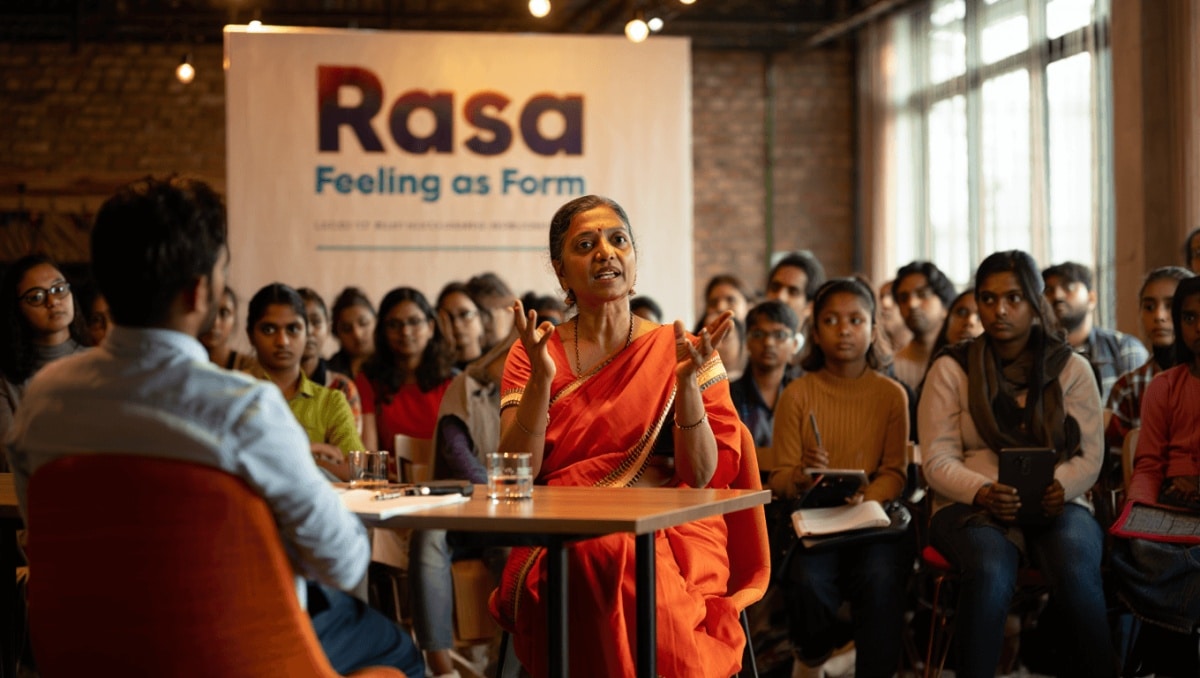
At a packed session at Mumbai’s G5A on May 19, 2026, artists and scholars re-examined an ancient Indian framework for emotion and expression and argued it still matters for contemporary creative work. The panel — titled “Rasa: Feeling as Form” — explored how principles from the Natyasastra are being adapted across dance, poetry and cinema today.
The conversation foregrounded two practical questions: how can a text written millennia ago remain useful to living artists, and what does that continuity mean for audiences and cultural institutions now? Participants approached those questions from multiple angles, insisting that classical theory is not static doctrine but a resource for reinvention.
How the old ideas are being used now
Panelists traced several clear lines of influence between the Natyasastra’s concepts and modern practice. Choreographers described structuring sequences around emotional arcs; poets spoke about implied meaning and layered suggestion; filmmakers considered how subtextual resonance shapes viewer engagement.
Kashi to Kedarnath costs revealed: how much a Sawan pilgrimage will set you back
Hinduism gains ground in Africa: new communities reshape culture and commerce
Three terms from the Natyasastra came up repeatedly: Rasa, the aesthetic flavor or feeling evoked in the audience; Bhava, the emotional states expressed by performers; and Dhvani, the power of suggestion and implied meaning. Rather than serving as rigid rules, these were treated as tools for shaping attention and empathy.
- Dance: Contemporary choreographers use Rasa to map emotional high points across a performance, mixing classical and vernacular movement to reach broader audiences.
- Poetry: Writers spoke of applying Dhvani to create layers of meaning that reward close reading without alienating casual readers.
- Cinema: Directors and editors discussed editing rhythms and sound design that reinforce subtle Bhava shifts, influencing how viewers interpret character motives.
These applications matter beyond aesthetics. Artists argued that engaging with classical theory can strengthen cultural literacy, inform pedagogy in arts institutions, and offer new frameworks for cross-genre collaboration.
What this means for audiences and cultural policy
For audiences, the panel suggested, revisiting older models can sharpen emotional responsiveness; when creators intentionally shape feeling, viewers and listeners tend to notice patterns, themes and social subtext more readily.
At the policy level, speakers raised practical implications: funding bodies and curators may need to support hybrid projects that fuse traditional techniques with contemporary forms, and schools could integrate aesthetic theory into practical training rather than treating it as purely historical study.
Importantly, the discussion avoided romanticizing the past. Panelists emphasized adaptation over preservation: classical ideas gain vitality when reinterpreted for present-day concerns, from gender politics to urban sensibilities.
Takeaways from the panel
- Ancient frameworks like the Natyasastra remain relevant when treated as adaptable vocabularies rather than fixed prescriptions.
- Contemporary artists are actively reworking Rasa, Bhava and Dhvani to address modern narrative and performative challenges.
- Institutions and educators should consider supporting cross-disciplinary projects that translate theory into practice.
The G5A event underscored a simple but consequential idea: heritage can be a living resource when artists bring it into conversation with current forms and concerns. For readers who follow dance, literature or film, the resurgence of interest in these theories points to more performances and works that foreground feeling as a deliberate, craftable element — not merely an accidental byproduct.