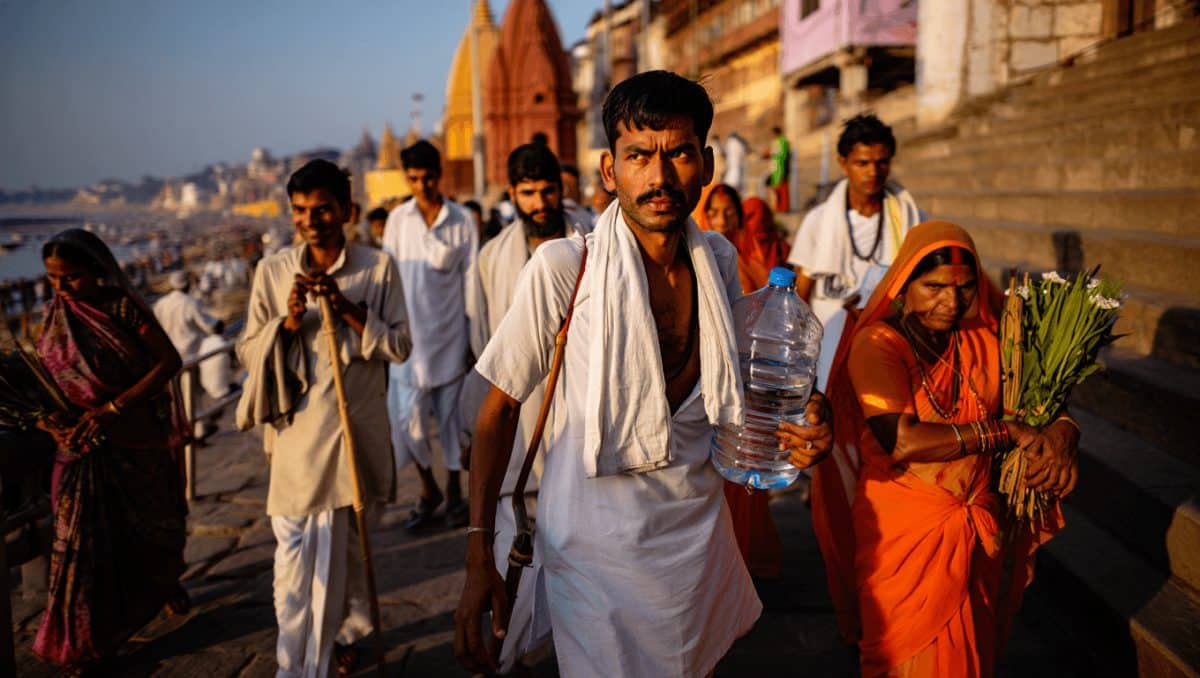

A long-standing appeal to preserve ritual chanting and Vedic study has new urgency as modern life pulls people away from traditional learning. The choice facing communities is practical: sustain a living oral tradition that shapes daily practice and public ritual, or risk letting key elements of scripture and ceremony fade.
Central to this effort is regular communal and individual practice. The ritual known as Brahmayajna — understood as the daily upholding of Vedic mantras — is presented as the foundation for keeping the texts alive in living memory. Daily recitation of the Gayatri mantra, ideally learned from an authorized teacher, is recommended as a concentrated way to keep the scriptures’ essence in active use.
For working adults who cannot commit to full-time study, a realistic baseline is advised: maintain a disciplined, sustainable practice rather than none. Even modest, consistent repetition — performed at morning, midday and dusk — is seen as a meaningful contribution to spiritual continuity. Traditional guidance also singles out Sunday pre-dawn observance for extended recitation to support both individual welfare and communal well-being.
Kashi to Kedarnath costs revealed: how much a Sawan pilgrimage will set you back
Hinduism gains ground in Africa: new communities reshape culture and commerce
Those who took up secular careers are urged to do what they can to ensure transmission within families. Where adult learning is possible, examples suggest significant progress can be made later in life; several individuals have begun Vedic study in middle age and achieved steady competence through persistent effort.
A structured approach for children is proposed as a practical way to keep learning widespread:
- Initiate boys in the traditional rite of upanayana at the customary age, followed by daily evening instruction.
- Provide one hour of Vedic tutoring each evening for about eight years, to build a lasting foundation.
- Organize tutors on a cooperative basis within villages or neighborhoods to reduce cost and make instruction accessible to poor families.
Beyond families, the survival of formal institutions matters. Many small Vedic schools struggle financially; preserving them requires targeted support so they can continue teaching and welcoming students. Reviving deteriorating schools and encouraging new enrollments are presented as priorities if the oral tradition is to remain viable.
At the same time, the proposal emphasizes a balanced approach to material support. Teachers and custodians of the tradition should receive enough financial and practical assistance to live without severe hardship, but not indulgence that would encourage abandoning their vocation for more lucrative work. The goal is pragmatic: keep dedicated practitioners engaged by removing basic economic pressures, while avoiding creating dependency or luxury.
Practical measures suggested for communities today include:
- Establish small stipends or living allowances for full-time teachers and reciters.
- Fund cooperative tutor networks so children from poorer households can attend evening classes.
- Offer adult evening or weekend programs that accommodate office workers and mid-life learners.
- Restore and upgrade modest facilities at struggling Vedic schools to make them functional and welcoming.
- Encourage local ritual observances — regular group chanting, periodic intensive recitation days — to sustain public practice.
The stakes are cultural as well as spiritual: loss of oral transmission would change how ritual, metre and intonation are preserved and taught. Those advocating preservation argue that deliberate, community-level interventions now can prevent an irreversible decline while respecting the austere spirit traditionally associated with scriptural life.
Preservation, under this approach, is both a personal and collective responsibility — one that asks for steady, realistic inputs rather than grand gestures. Communities that adopt cooperative teaching schemes, modest financial support for teachers and flexible learning pathways for adults could see the most immediate impact in keeping this oral heritage active for the next generation.