Show summary Hide summary
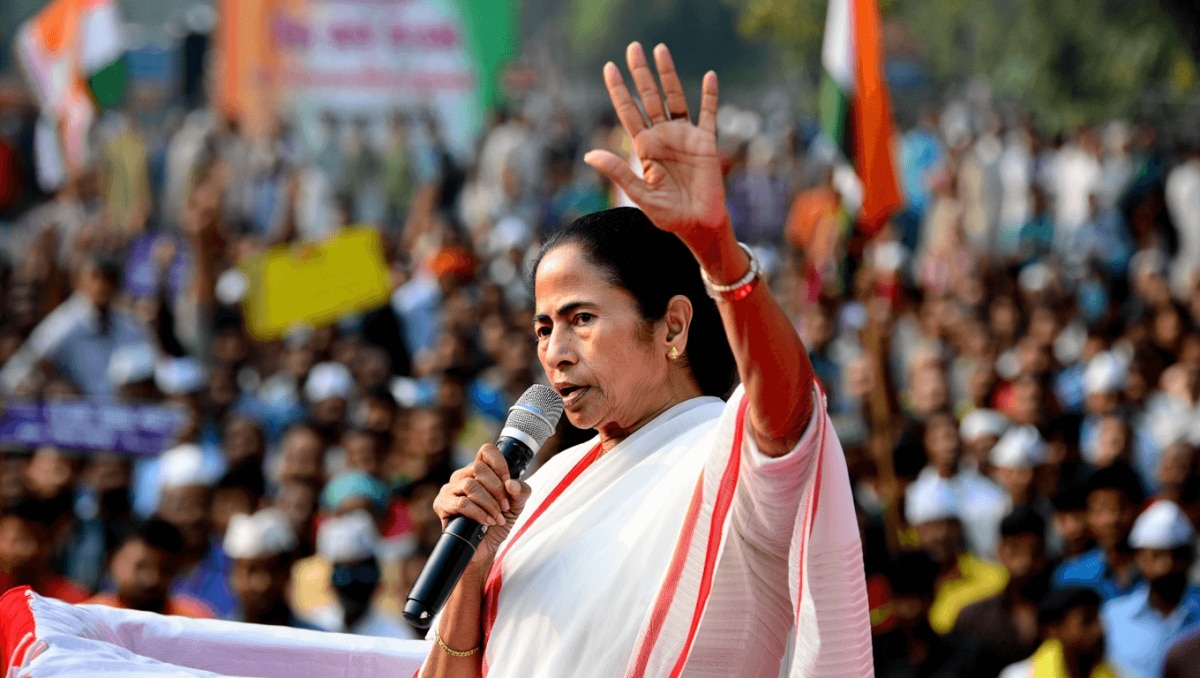
Mamata Banerjee turned Kolkata’s largest Eid gathering on Red Road into a political spotlight on Saturday, accusing the central leadership of double standards in foreign and domestic rhetoric and tying the dispute to a legal fight over voter list removals. Her comments, delivered to a packed crowd, sharpen the contest in West Bengal as parties position themselves ahead of key assembly dates.
At the rally
Speaking for roughly six minutes, the West Bengal chief minister suggested Prime Minister Narendra Modi projects a conciliatory image abroad while promoting communal divisions at home. Banerjee argued this contrast undercuts trust in the federal government and fuels anxiety among minority communities.
Shah Rukh Khan used the name Abinav to ease in-law worries: Gauri adopted Ayesha during nikaah
Javed Akhtar hails Hindu festivals as cultural glue: throwback of atheist celebrating resurfaces
She framed her intervention around recent actions to remove names from electoral rolls under the SIR process, saying she has sought relief in both the Calcutta High Court and the Supreme Court. “I will not let people’s rights be taken away,” she told attendees, promising legal and political support across communities.
Banerjee also appealed to Bengal’s tradition of pluralism, describing the state as a place where Hindus, Muslims, Sikhs and Christians live together. She warned against any attempt to fracture that coexistence and vowed to defend the state’s social fabric.
Allegations about administration and elections
The chief minister accused the BJP of effectively inserting its operatives into state administration in the run-up to the recent April 23 and April 29 assembly poll dates, calling the arrangement an “undeclared President’s rule” — a phrase she used to allege heavy-handed control over bureaucratic posts.
She charged that officials had been removed and replaced with people aligned to the BJP, and warned that such moves were part of a broader strategy to influence outcomes. Without naming individuals, Banerjee referenced a local MLA she described as having switched allegiance, suggesting attempts to split votes with outside backing.
- Legal action: Banerjee says petitions are active in Calcutta HC and the Supreme Court over suspected voter deletions.
- Political claim: She alleges administrative capture ahead of recent poll dates and replacement of officials with party loyalists.
- Communal argument: Her speech framed the issue as an attack on Bengal’s plural traditions.
- Local fallout: Mentions of defections point to tensions over candidate loyalty and vote splitting.
She closed with a note often heard in Indian political rallies: that courage and resistance matter in the long run, and ultimate outcomes rest with higher forces — a line she borrowed from popular culture to underscore her point.
Trinamool Congress leaders reinforced the message. Party general secretary Abhishek Banerjee urged people to honor each other’s festivals and painted the occasion as one of communal harmony rather than political division.
Why this matters now
The episode ties together several high-stakes threads: contestation over electoral rolls, accusations of bureaucratic interference, and a public campaign around identity politics. For voters in West Bengal, the immediate consequences could be literal — names removed from rolls mean individuals lose the ability to vote unless courts intervene. For parties, the narrative shapes campaign priorities and how communities mobilize in coming rounds of voting.
Whatever the next legal outcomes, the exchange highlights how ceremonial events such as Eid gatherings are being used as platforms for electoral messaging — a trend likely to intensify as parties prepare for future ballots.