Show summary Hide summary
Bhubaneswar’s state-sponsored Pakhala Parba drew attention Thursday as Odisha pushed its signature summer dish onto a wider stage — linking cultural preservation, public health claims and a high-profile Guinness World Records bid. The event illustrated how local food traditions are being mobilised to reinforce identity, support farmers and connect Odias living abroad.
Chief Minister Mohan Charan Majhi opened the programme by framing pakhala as more than a seasonal meal: he described it as an emblem of Odia heritage that should resist being eclipsed by global food trends. At the same time he underscored practical arguments for the dish, calling it “zero waste” and pointing to its fermented, probiotic qualities that local officials say can support gut health.
Majhi linked the celebration to wider policy aims, saying Pakhala Divas complements the state’s Viksit Odisha vision — an effort, he said, to balance modernization with cultural continuity. He thanked farmers for their role in sustaining traditional cuisine and urged younger generations to value local foodways as part of that continuity.
Kashi to Kedarnath costs revealed: how much a Sawan pilgrimage will set you back
Hinduism gains ground in Africa: new communities reshape culture and commerce
Global reach, local ritual
The event included a remote interaction with Odias from across Asia and 15 Indian states, tapping into the diaspora’s interest in food as a cultural anchor. Chefs who have promoted Odia cooking nationally and internationally were recognised during the ceremony, reflecting an official push to brand the cuisine beyond state borders.
Majhi referenced religious connections as well: pakhala and related preparations are part of temple offerings at the Shrimandira, a detail he used to signal the dish’s cultural and spiritual resonance across social strata.
- Where: Bhubaneswar, organised by the tourism department
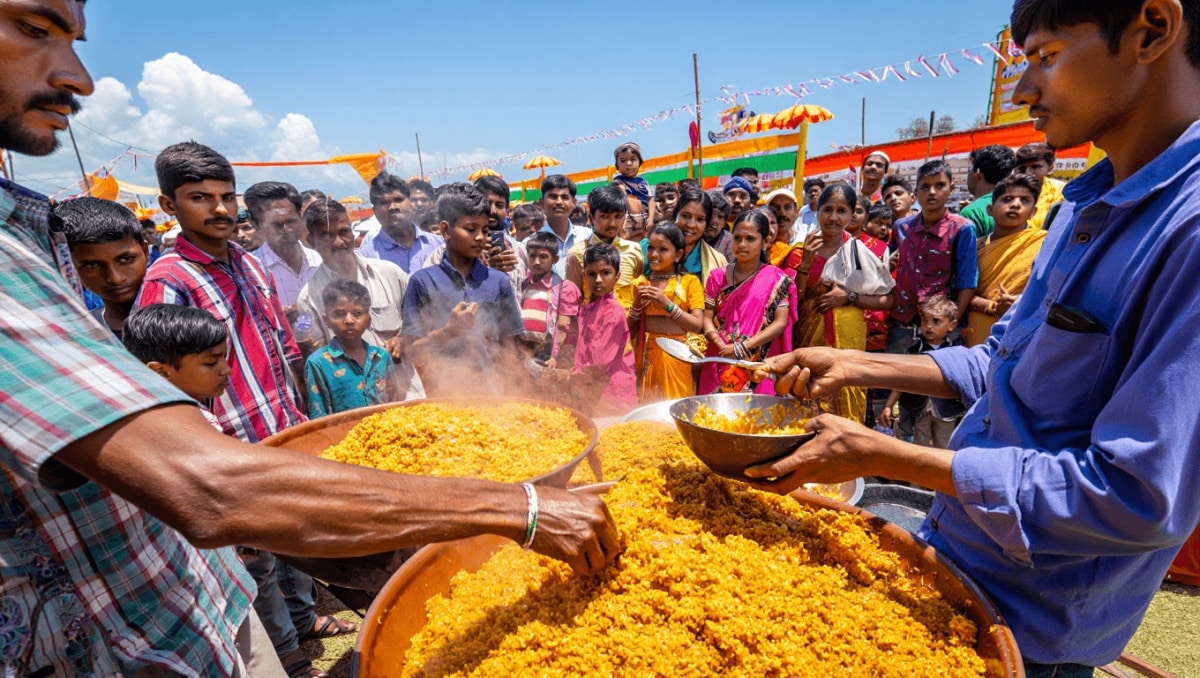
- Record attempt: A 1,177‑kg pot of pakhala prepared using 850 kg of rice
- Distribution: Over 2,000 underprivileged people received servings
- Food fair: About 326 different Odia dishes showcased at Panthanivas
- International ties: Live links with Odias in Indonesia, Malaysia, Bahrain, Singapore and more
Scale and charity
The tourism department’s headline act was the massive pot of pakhala, staged as part of a Guinness World Records attempt. Organisers later distributed the rice-based preparation to thousands of people, folding a social-welfare element into the publicity effort.
Elsewhere on site, visitors could sample hundreds of regional recipes at an Odia food fair — a reminder that the state’s culinary identity includes far more than its best-known dish. Officials presented the fair as both cultural showcase and economic opportunity for small-scale food producers and cooks.
Public-health claims about pakhala’s probiotic benefits were repeated during the programme, with officials saying fermentation fosters beneficial bacteria that may help suppress harmful microbes. The comments were presented as context for why the dish remains popular during Odisha’s hot months.
Why this matters now
As states and communities worldwide re-examine local foods for cultural and economic value, Odisha’s campaign illustrates a broader trend: regional dishes are being repurposed as tools of identity, tourism and soft power. For residents and the diaspora, events like Pakhala Parba offer a tangible way to maintain ties while creating potential income streams for growers and cooks.
Whether the record is certified, the festival has already highlighted several immediate outcomes: a high-profile moment for Odia cuisine, public distribution of food to vulnerable groups, and renewed attention to agricultural and culinary heritage.