Show summary Hide summary
Rep. Andy Ogles ignited a heated exchange this week after posting on X that “Muslims don’t belong in American society. Pluralism is a lie.” The comment prompted immediate rebukes from lawmakers and commentators who said the remark clashes with long-standing American principles and could deepen partisan divisions over immigration and religious tolerance.
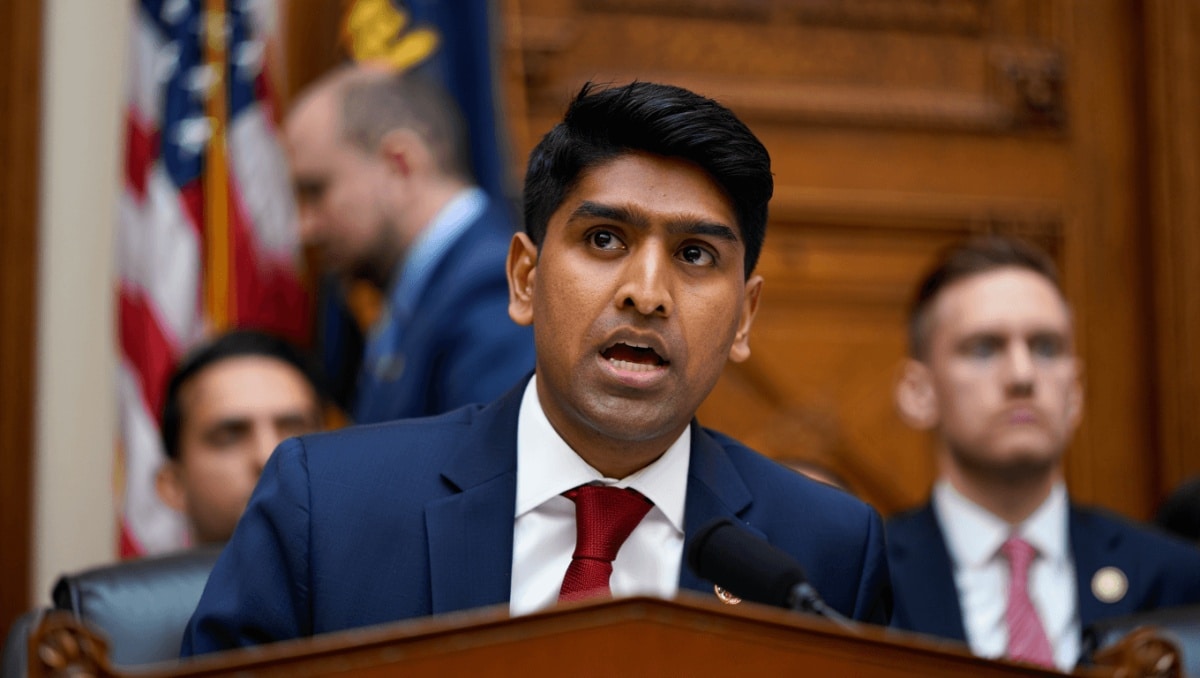
Rep. Shri Thanedar, a Democrat from Michigan with Indian heritage, publicly challenged Ogles on the social platform and in later statements, invoking the country’s constitutional protections and historical diversity. Thanedar noted that freedom of religion is enshrined in the First Amendment and pointed to the long presence of Muslim communities in North America as evidence that exclusionary claims contradict the nation’s traditions.
What critics are saying
Shah Rukh Khan used the name Abinav to ease in-law worries: Gauri adopted Ayesha during nikaah
Javed Akhtar hails Hindu festivals as cultural glue: throwback of atheist celebrating resurfaces
British journalist Mehdi Hasan also weighed in, drawing a parallel meant to highlight a perceived double standard: he suggested that if a member of Congress had written that “Jews don’t belong in American society,” the reaction would be immediate and severe. Hasan argued that similar language directed at Muslims has not produced equivalent political repercussions.
The exchange has fed into a larger debate about how lawmakers discuss religion and immigration. Ogles, who represents Tennessee, has previously supported tougher immigration measures and proposals targeting migration from countries with majority-Muslim populations, positions that have drawn both backing and criticism from across the political spectrum.
Quick facts
- Ogles’ post: Posted on X, asserting that Muslims do not belong in American society and rejecting pluralism.
- Thanedar’s response: Cited constitutional protections and America’s historical motto E Pluribus Unum as counterpoints to exclusionary rhetoric.
- Media reaction: Commentators like Mehdi Hasan framed the post as evidence of unequal standards when religious groups are targeted.
- Policy background: Ogles has advocated stricter immigration controls and supported legislation critics say focuses on migrants from mainly Muslim countries.
The controversy underscores a tense moment on Capitol Hill over the boundaries of acceptable political rhetoric. Lawmakers who emphasize national identity and stricter immigration policy view Ogles’ comments through the lens of cultural and security concerns; opponents see them as an affront to constitutional values and an escalation of anti-Muslim sentiment.
Why it matters now
At a time when immigration and religious pluralism remain central to national debates, statements by sitting members of Congress can shift media attention and influence policy discussions. Beyond immediate headlines, the dispute raises questions about enforcement of House norms and whether such remarks prompt official censure or broader political consequences.
For voters and civic observers, the episode highlights competing interpretations of American identity: one that prioritizes religious and cultural homogeneity, and another that points to a constitutional commitment to diversity. How party leaders and the wider public respond may affect future discourse on immigration, religious freedom, and the tone of political debate.
There has been broad commentary online and in news coverage, but as of this writing no formal disciplinary action has been publicly announced by House authorities. The exchange remains a focal point for conversations about free speech, religious inclusion, and the limits of acceptable political speech in a polarized environment.