Show summary Hide summary
Delhi’s cultural life is quietly shifting indoors: intimate concerts, supper tables and mehfils hosted in homes, havelis and small heritage sites are drawing audiences who want more than spectacle. What matters now is access—to artists, to context, and to spaces that stitch personal history into public life, while also offering a more sustainable economy for traditional practitioners.
Small rooms, closer listening
Across the city, evenings once reserved for large auditoriums are being reimagined in living rooms and courtyards. Organisers say these formats collapse the distance between performer and audience — turning passive viewing into active exchange. Abu Sufiyan, who curates heritage walks and now stages gatherings under the label Tales of City, describes the shift as an attempt to recover older social rhythms where music and conversation happened side by side.
Kashi to Kedarnath costs revealed: how much a Sawan pilgrimage will set you back
Hinduism gains ground in Africa: new communities reshape culture and commerce
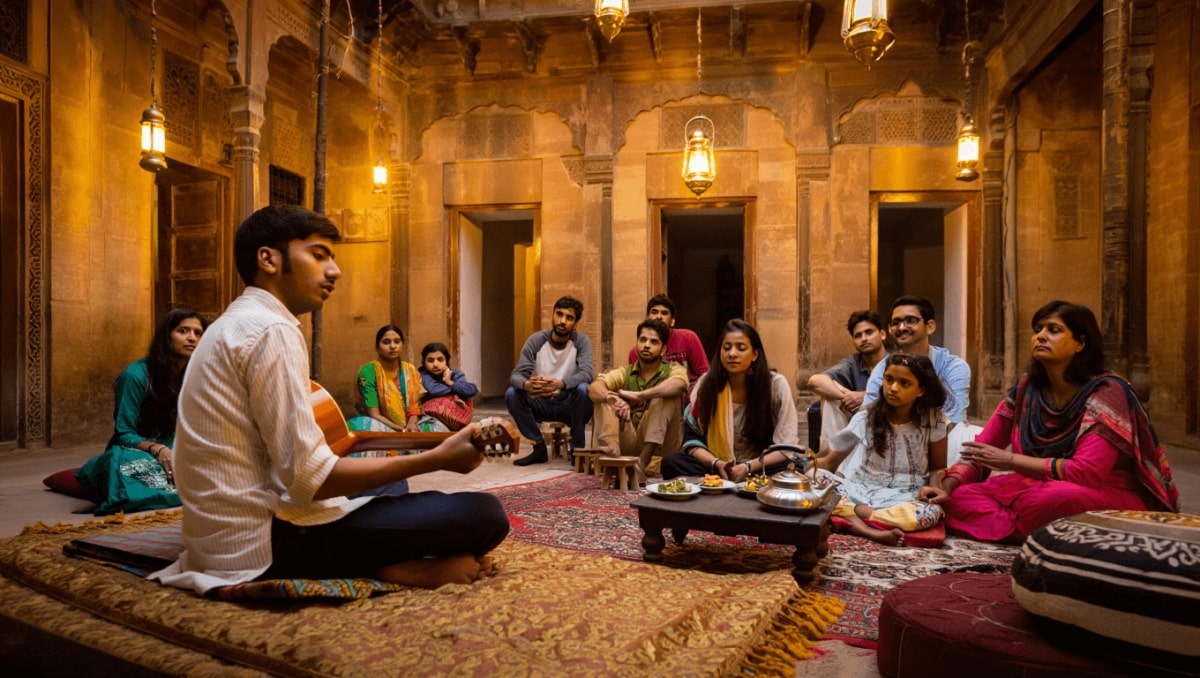
Mehfil and baithak-style events bring back pauses for silence, storytelling and unscripted response. The mood is deliberately low-key: lamps, close seating and invitation-based attendance encourage attention rather than applause. For many attendees, the result is not just entertainment but a sense of being part of a small, focused community.
Why people are choosing these rooms over arenas
The move reflects changing priorities. Organisers and participants point to a desire for meaning, not merely novelty. “Curated evenings attract people who want to invest their time thoughtfully,” says Arpita Sharma of Once Upon India. Rather than show up to a crowded spectacle, guests prefer spaces where they can learn, ask questions and linger after the performance.
- Intimacy: Artists and audiences share the same space, allowing conversation and post-performance interactions.
- Context: Curators add historical or narrative frames that deepen understanding of the art on display.
- Community: Recurrent gatherings create circles where faces and conversations become familiar.
- Discovery: Attendees are introduced to less mainstream artists and traditional practices not easily found on streaming platforms.
Not every evening follows a strict format: some events combine poetry with regional food, others pair classical recitals with short talks. This irregularity is part of the appeal — each gathering is shaped by the hosts, the venue and the participants.
Food, memory and local flavours
Alongside music and storytelling, supper clubs and home tables are becoming a cultural axis. These meals are often curated around family recipes, seasonal produce or regional specialties, turning dinner into a storytelling device. Hosts and small-scale chefs design menus that echo place and memory: a plate is as much a conversation starter as a palate pleaser.
For organisers such as Sukanya Banerjee of Upstairs With Us, these settings help break algorithmic isolation: instead of sampling fragments online, people discover traditions with guidance and in the company of others.
Repricing tradition: dignity and sustainability
One structural change stands out: ticketing. Organisers increasingly charge for events to ensure artists and venues are fairly compensated. Tanvi Singh Bhatia, co-founder of IBTIDA, frames this as correcting an old imbalance — the expectation that classical and folk traditions should be freely available while large commercial shows command high fees.
By setting prices that reflect an artist’s expertise, small cultural promoters aim to reposition audiences as patrons rather than passive consumers. The effect is practical as well as emotional: when people pay, they tend to listen more attentively and commit to the community that forms around recurring programmes.
Heritage spaces as living places
Conservation-minded hosts say these events keep old houses and monuments in active use. At Kathika Cultural Centre and Museum, for example, candlelit recitals and workshops in a haveli courtyard have drawn regular visitors — including all-women groups that use the space as a monthly gathering spot. For curators like Atul Khanna, maintaining activity in a haveli is a form of preservation: it keeps the building woven into the city’s daily life.
Arjun Shivaji Jain of Red House notes an emotional dimension: people want authenticity and a reconnection to simpler social rhythms — the kind of evenings where conversation, food and creativity are shared like family practice rather than staged performance.
These home-grown formats are not a rejection of larger festivals; rather, they are an expanding layer of cultural life that offers different values. For audiences, the stakes are practical and personal: deeper listening, cultural continuity and a more sustainable livelihood for artists. For a city that has long been defined by its public festivals and crowded food streets, the growing popularity of curated, intimate gatherings signals a subtle but meaningful reshaping of how Delhiites spend their weekends.
What to expect at a curated home gathering
- Limited seating and advance booking
- A blend of performance, context and conversation
- Locally sourced or traditional food paired with the programme
- Modest ticket prices aimed at supporting artists and upkeep of the venue