Show summary Hide summary
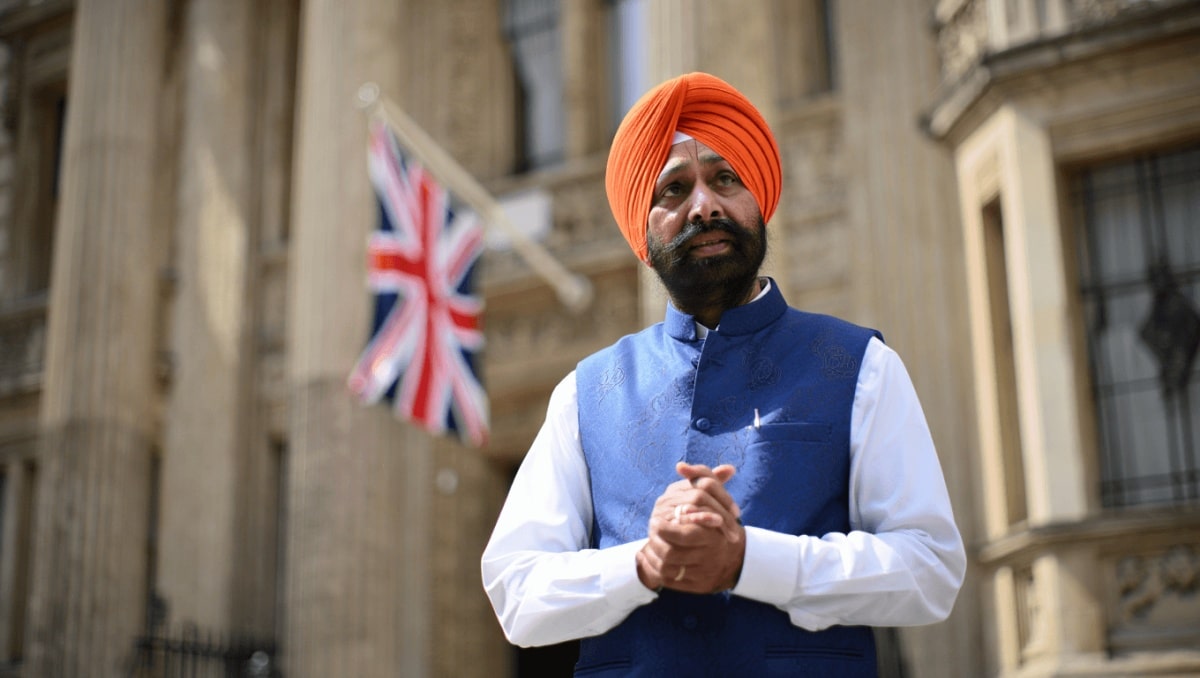
The UK government appears to be moving toward recognising Sikh identity as both an ethnic and religious category for official statistics — a change that could reshape how public services record discrimination and allocate support. The question has gained fresh urgency after a recent Westminster Hall debate and a public consultation on which ethnic groups should appear in future government surveys and the next census.
Ministers, statisticians and campaigners push for change
At a parliamentary debate this week, the Cabinet Office reiterated that Sikh and Jewish identities are understood within government as having both ethnic and religious dimensions. Officials told MPs the final decision sits with the Office for National Statistics, which must weigh evidence and make an impartial judgement about whether to add groups to the standard ethnicity list used across government.
That list is maintained by the Government Statistical Service (GSS) and will guide the next census and many public surveys. The GSS has just closed a consultation on expanding the harmonised ethnicity standard; ministers say any additions will be chosen on a practical, evidence-led basis rather than politics.
Shah Rukh Khan used the name Abinav to ease in-law worries: Gauri adopted Ayesha during nikaah
Javed Akhtar hails Hindu festivals as cultural glue: throwback of atheist celebrating resurfaces
Why this matters now
Classifying Sikhs as an ethnicity as well as a religion would change how government data capture inequalities, hate crimes and access to services. Campaigners argue that current forms of data collection can mask distinct social and economic patterns within communities, preventing targeted interventions.
Officials, meanwhile, warn that not every identity can be added to a national survey and that choices will be guided by whether new categories meet clear user needs and can be collected reliably.
- Key rules the GSS says it will apply:
- Strength of user need for the data
- Whether the information is already available through other questions (for example, a religion question)
- Whether people from the group accept and recognise the proposed question
- The GSS plans to announce the recommended list of ethnic groups in autumn.
- At the 2021 census, roughly 100,000 people wrote “Sikh” into a free-text ethnicity box rather than selecting an existing tick-box such as “British Indian.”
Campaign history and legal challenges
Sikh organisations including the Sikh Federation UK and the Supreme Sikh Council UK were consulted during the process. Activists have long argued that an ethnic tick-box would improve visibility and protection against racially aggravated attacks.
In 2020, the Sikh Federation UK took legal action against the Cabinet Office over the absence of a Sikh ethnic category in the 2021 census. A high court judge rejected that challenge, noting there were differing views on whether Sikh identity meets the definition of an ethnic group.
What to watch next
The ONS and GSS will weigh public responses and the practicalities of collecting additional ethnicity categories before publishing their recommendations. If Sikh or Jewish entries are added to the harmonised standard, the change would affect how central and local government collect, report and respond to data about communities across the UK.
For people working in public services, researchers and community leaders, the outcome will determine whether future statistics offer a clearer picture of needs and harms — and whether policy responses can be more precisely targeted. The GSS announcement in the autumn will be the first concrete sign of whether that shift is coming.