Show summary Hide summary
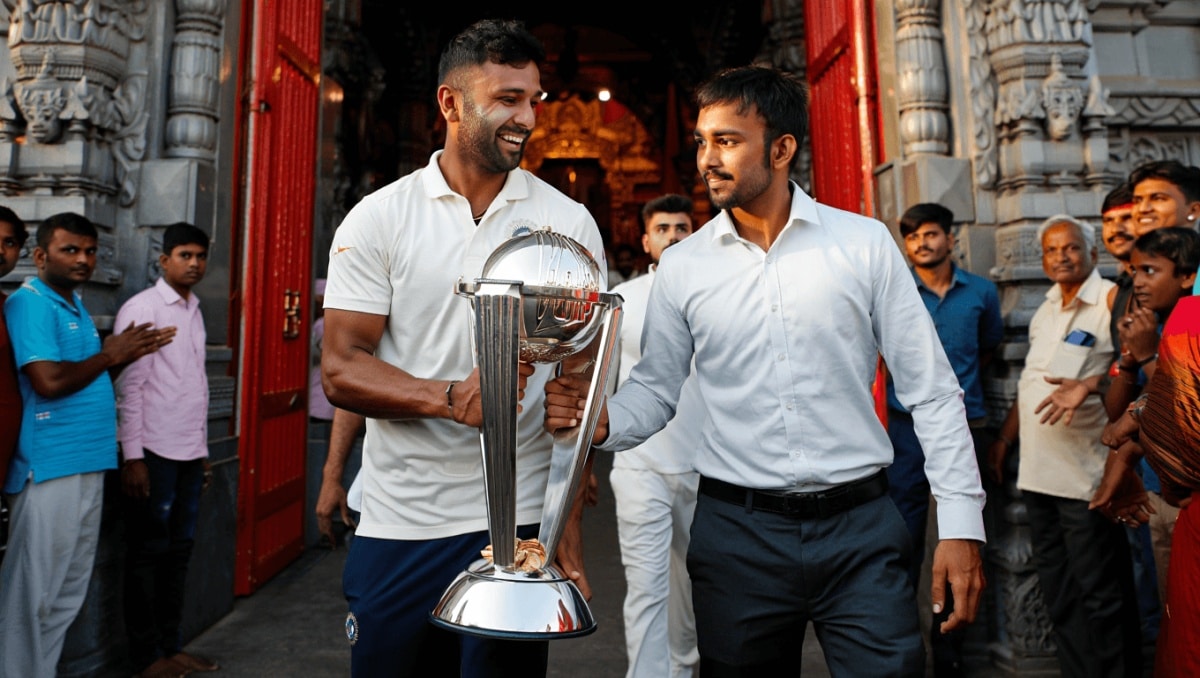
Members of India’s cricket squad visited Mumbai’s Shree Siddhivinayak Temple on Saturday as part of continued celebrations after lifting the ICC Men’s T20 World Cup, even as an earlier trophy visit has sparked a wider debate about public displays of faith. The dispute, driven by remarks from a former cricketer-turned-politician, has shifted attention from the team’s on-field achievement to questions about symbolism and national unity.
The Mumbai appearance followed an earlier visit by captain Suryakumar Yadav, coach Gautam Gambhir and ICC chair Jay Shah, who had offered prayers in Ahmedabad with the trophy. The team maintained that these were personal gestures of gratitude after a historic win, while critics said such moments carry broader civic meaning.
What triggered the controversy
Shah Rukh Khan used the name Abinav to ease in-law worries: Gauri adopted Ayesha during nikaah
Javed Akhtar hails Hindu festivals as cultural glue: throwback of atheist celebrating resurfaces
Former India player and politician Kirti Azad objected to the trophy being taken to a temple, arguing that the World Cup belonged to all Indians regardless of faith and asking why the celebration could not include other places of worship. His comments framed the visit as exclusionary and prompted debate across media and social platforms.
Responses from the cricketing world
Several figures from India’s cricket establishment pushed back hard. Veteran spinner Harbhajan Singh accused Azad of injecting politics into what should be a purely sporting moment, saying the criticism unfairly detracted from the players’ efforts.
Gautam Gambhir defended the team in blunt terms, warning that elevating such commentary risks diminishing the players’ achievements. He said the controversy was “not worth answering” and stressed that the focus should remain on the athletes and their performance under pressure.
Batter Ishan Kishan brushed aside the row during media duties, urging reporters to stick to the World Cup triumph rather than amplify side issues: he suggested questions be centred on the cricket itself.
Why this matters beyond the dressing room
- Public symbolism: Trophy celebrations are seen by some as national property; how they are conducted can shape public perceptions of inclusion.
- Player welfare: Sustained controversy risks diverting attention and adding stress to players returning from an intense tournament.
- Political ripple effects: Politicians and commentators may use such incidents to score points, prolonging debate beyond the sporting context.
- Future celebrations: Teams and boards may reassess protocols for public appearances to avoid similar flashpoints.
The row highlights a recurring tension: when athletes celebrate personal or cultural traditions in public, those gestures can be read as political statements in a charged environment. While the players and staff have framed the temple visits as expressions of personal faith and gratitude, critics say national symbols—like the World Cup trophy—ought to be treated as secular and shared.
For now, most voices in the camp want to steer the conversation back to cricket. The team will continue public engagements and appearances in the coming days; whether the debate endures will depend largely on how political actors and the media choose to pursue it.