Show summary Hide summary
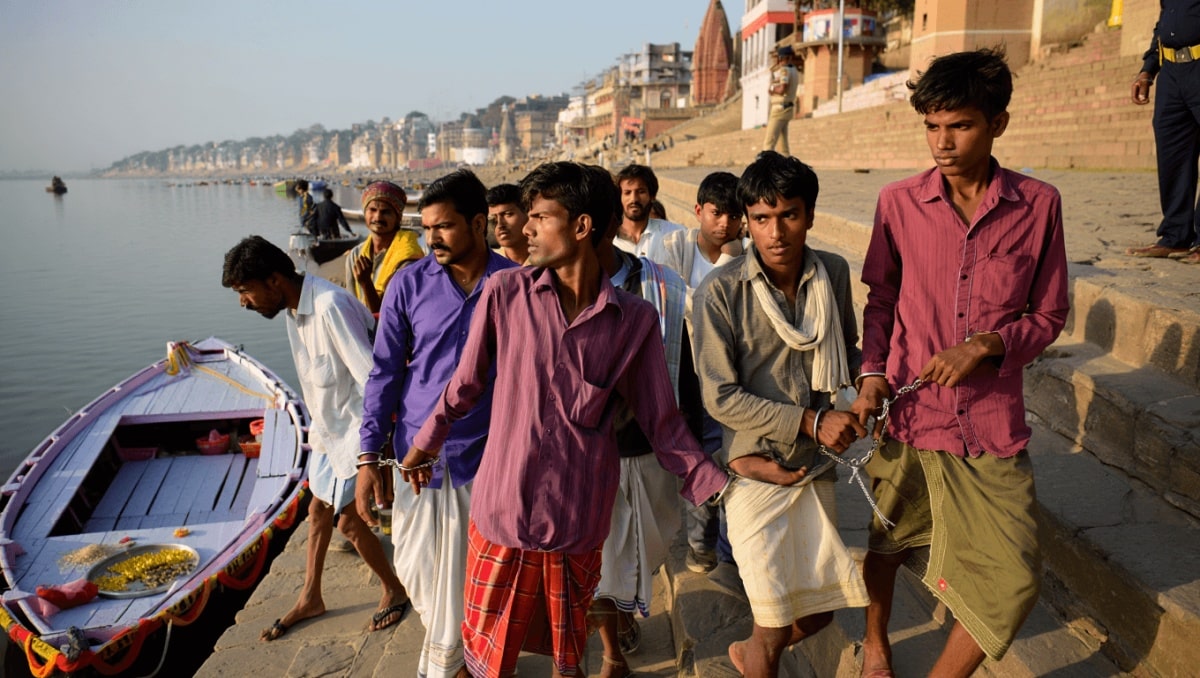
Fourteen people have been sent to 14-day judicial custody after a Varanasi court refused their bail following allegations that they held an Iftar on a boat in the Ganga and ate chicken biryani. The case, which surfaced this week after a video circulated online, has raised legal and communal sensitivities in the pilgrimage city.
Court order and immediate allegations
Additional Civil Judge (Senior Division) Amit Kumar Yadav rejected the accused’s bail applications and ordered their remand. Police arrested the group after a complaint was filed by a local youth leader who said the gathering took place midstream and included the disposal of food remnants into the river.
Shah Rukh Khan used the name Abinav to ease in-law worries: Gauri adopted Ayesha during nikaah
Javed Akhtar hails Hindu festivals as cultural glue: throwback of atheist celebrating resurfaces
The complaint alleges that the occupants forced the boatman to take them out onto the river and then held the meal on his vessel. Authorities say the boatman’s statement and eyewitness accounts are included in the police report that went to court, prompting investigators to seek further charges.
What police say and possible new charges
Investigators have already invoked provisions aimed at protecting religious places and public order. They have also cited environmental statutes related to pollution of public water bodies.
- How the case emerged: A video shared online prompted a written complaint the same day.
- Key allegations: forcing the boatman to take them out on the river, eating on the boat, and throwing leftovers into the water.
- Legal action so far: arrests, charges for offending religious sentiments and defiling sacred spaces, and invocation of pollution-related laws.
- Investigative developments: police have sought to add an allegation of kidnapping as they collect more statements.
According to the complainant’s filings, the Ganga is treated as a sacred resource by millions of pilgrims who come to Kashi to perform rites. The filing argues that the conduct on the boat was deliberately provocative and offensive to worshippers who use river water in religious ceremonies.
Broader implications
The episode touches on two sensitive and intersecting issues: the protection of sites and practices regarded as religiously important, and enforcement of laws designed to prevent pollution of public waters. Both dimensions can carry criminal penalties and have the potential to inflame local tensions if not handled transparently.
Police are continuing to gather evidence and interview witnesses. The court will review further submissions as the probe proceeds, and any additional charges would be considered in subsequent hearings.
Why this matters now: incidents in high-profile religious settings can have outsized social and legal consequences. Authorities face pressure to balance swift investigation with careful, fact-based prosecution to avoid escalating community sensitivities around places of worship and public resources such as the Ganga.