Show summary Hide summary
- Hanuman as a psychological archetype
- The Sundarkand as an inner itinerary
- How ritual functions as applied psychology
- Typical structure of a practice session
- Benefits observed and practical outcomes
- Common misconceptions
- Who typically finds this practice helpful?
- Putting it into action — a concise checklist
At a time when many people seek practical strategies for stress and focus, the Sundarkand episode of Tulsidas’ Ramcharitmanas and the ritual of Hanuman puja attract renewed attention as tools for mental resilience. Read as a spiritual narrative and a disciplined practice, Sundarkand frames courage, clarity and surrender as a step-by-step method for steadying the mind and mobilizing inner strength.
Hanuman as a psychological archetype
Beyond the battlefield exploits of the Ramayana, Hanuman functions in the tradition as an inner model of disciplined energy. He combines force that is controlled, devotion that is self-effacing, and discernment that directs action rather than ego.
Annamalai applauds Bhagwat’s message on Muslim inclusion in India
Navratri in Times Square goes viral: social media splits over Indian celebrations abroad
Think of Hanuman less as a mythic hero and more as an operating principle: the life force (or Prana) aligned with ethical purpose. That alignment is what literature and ritual around him seek to cultivate.
Core qualities, in brief
- Bhakti — devotion as stabilizing focus, not emotional dependency.
- Bal — strength exercised with restraint and responsibility.
- Vivek — the capacity to choose the right means at the right moment.
- Vinay — humility that prevents power from becoming domination.
The Sundarkand as an inner itinerary
Sundarkand narrates Hanuman’s mission to Lanka, but read symbolically it maps a seeker’s passage from confusion to clarity. The chapter’s appeal today is practical: it offers a concise model for moving through fear, testing strategies, finding inner equilibrium and returning with renewed purpose.
Tulsidas’ emphasis is not on cataloguing the problem of suffering but on presenting steps that lead out of it.
Key scenes and what they signify
| Episode | Psychological/metaphorical meaning |
|---|---|
| Crossing the ocean | Leaping past doubt and inertia; choosing committed action over paralysis |
| Encounters with Surasa and Simhika | Handling ego inflation and shadow distractions with intelligence rather than force |
| Ashok Vatika | Discovering calm and presence amid external turmoil |
| Meeting Sita | Reconnecting with the heart’s steady center—hope and assurance |
| Burning Lanka (but sparing Sita) | Removing arrogance and harmful attachments while preserving inner purity |
How ritual functions as applied psychology
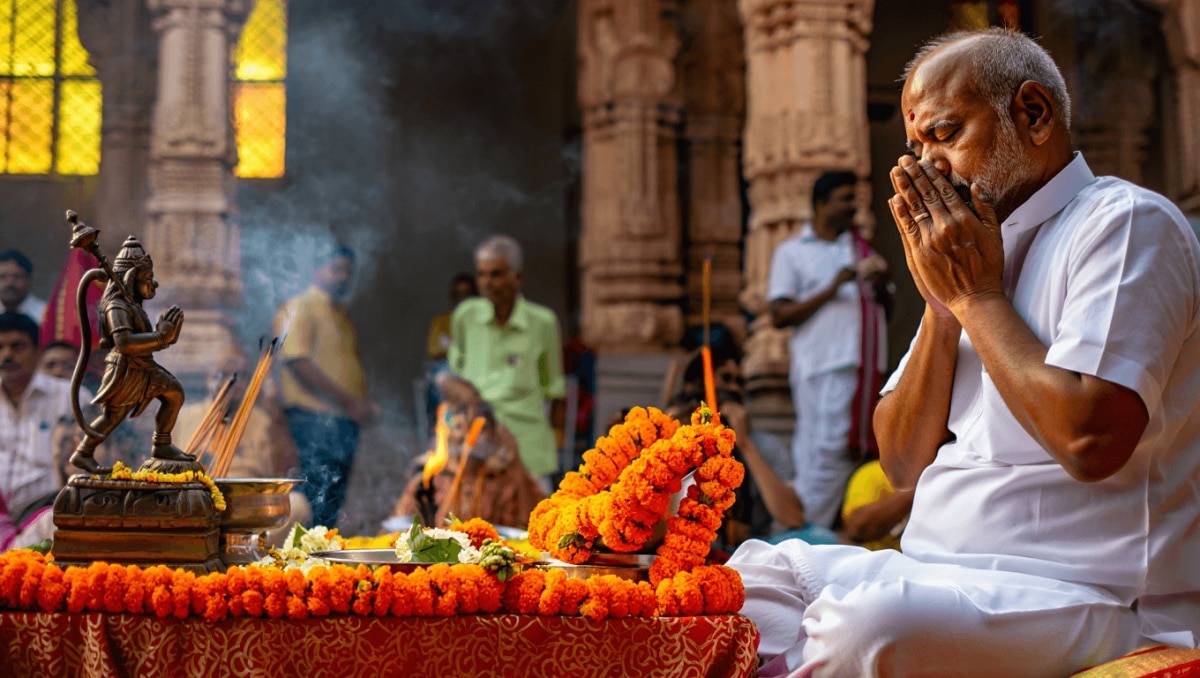
Recitation and ritual surrounding Hanuman are structured practices: they shape attention, regulate breath and create predictable rhythms for the mind. For many practitioners this is less about doctrine and more about the cognitive effects that emerge from disciplined repetition and focused intention.
Contemporary research into mantra and chant-based practices links regular recitation with lowered physiological stress markers and increased parasympathetic (rest-and-repair) activity—effects that align with longstanding claims about ritual calming and emotional regulation.
Common framing and practical timings
Traditionally, Hanuman puja and Sundarkand readings often take place on specific days such as Tuesday and Saturday. Those choices reflect cultural associations rather than universal mandates; many practitioners also favor dawn or dusk for their symbolic and practical advantages—morning for activation, evening for settling the day.
Typical structure of a practice session
Sessions vary widely, but a commonly followed sequence looks like this:
- Clear or tidy the space to reduce distractions.
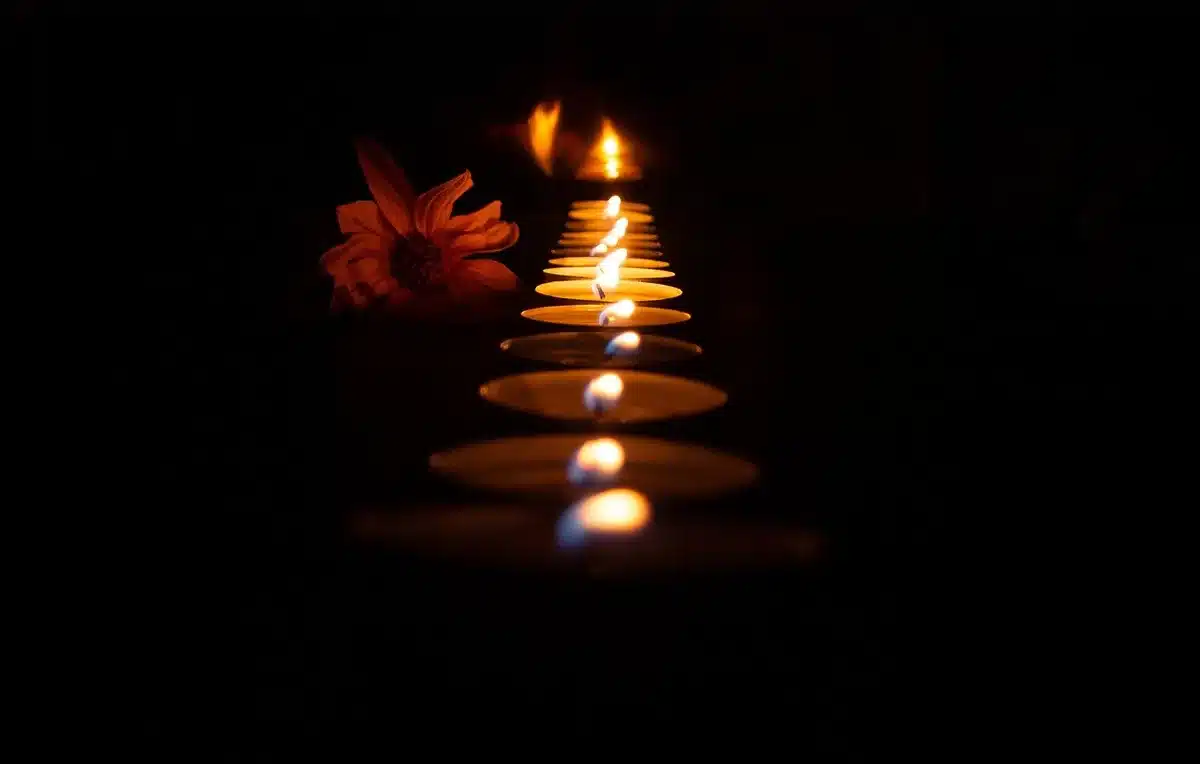
- Light a lamp or candle to mark intentionality.
- Offer flowers or a simple gesture of respect.
- Begin with short chants or a repeated name to anchor attention.
- Proceed through the Sundarkand text or selected passages slowly, with attention to meaning.
- Close with a short hymn, silence or reflective sitting.
For those reading the full Sundarkand aloud, a complete session typically lasts between an hour and two; shorter, focused rituals are common and effective as well.
Benefits observed and practical outcomes
While no spiritual practice guarantees specific external results, regular engagement with Sundarkand and related puja is associated in practitioners’ reports and some studies with:
- Reduced anxiety and steadier responses under pressure
- Improved concentration and clearer decision-making
- Greater emotional resilience and patience during difficulty
These outcomes flow from repeated attention training, rhythmic vocalization and the supportive social contexts in which such rituals often take place.
Common misconceptions
Several persistent misunderstandings merit clarification:
- Playing an audio recording is useful, but active, attentive participation yields stronger psychological benefits.
- Perfection in pronunciation is less important than sincerity and consistent effort.
- Ritual and recitation are accessible to anyone; they are not restricted by caste or background.
Who typically finds this practice helpful?
People who report benefit tend to include those coping with chronic worry, individuals beginning a disciplined spiritual practice, people navigating major life stressors, and anyone seeking deliberate tools for emotional regulation. The practice is framed as preparation for confronting difficulties, not avoidance of them.
Putting it into action — a concise checklist
- Set an intention: What quality do you want to cultivate (courage, clarity, steadiness)?
- Create a brief, repeatable ritual you can maintain (5–20 minutes to start).
- Choose material you can engage with meaningfully—short passages, verses, or a single hymn.
- Balance regularity over length: daily short practices often outpace sporadic long sessions.
Viewed in this light, Sundarkand and Hanuman puja operate as a pragmatic system: they offer narrative, symbolic tools and ritual structure to reshape attention and strengthen resolve. In a fast-paced, distraction-prone world, that combination of story and practice explains why this material continues to be returned to by seekers and by those simply looking for steadying habits.