Show summary Hide summary
At a United Nations commemoration for the International Day to Combat Islamophobia, India accused Pakistan of repeatedly manufacturing claims about religious discrimination to score political points—a charge that comes as regional tensions spike after deadly cross-border strikes. New Delhi’s intervention presses the UN to broaden its focus beyond single-faith frameworks and to treat all forms of religious intolerance as part of a wider problem.
India’s message to the UN
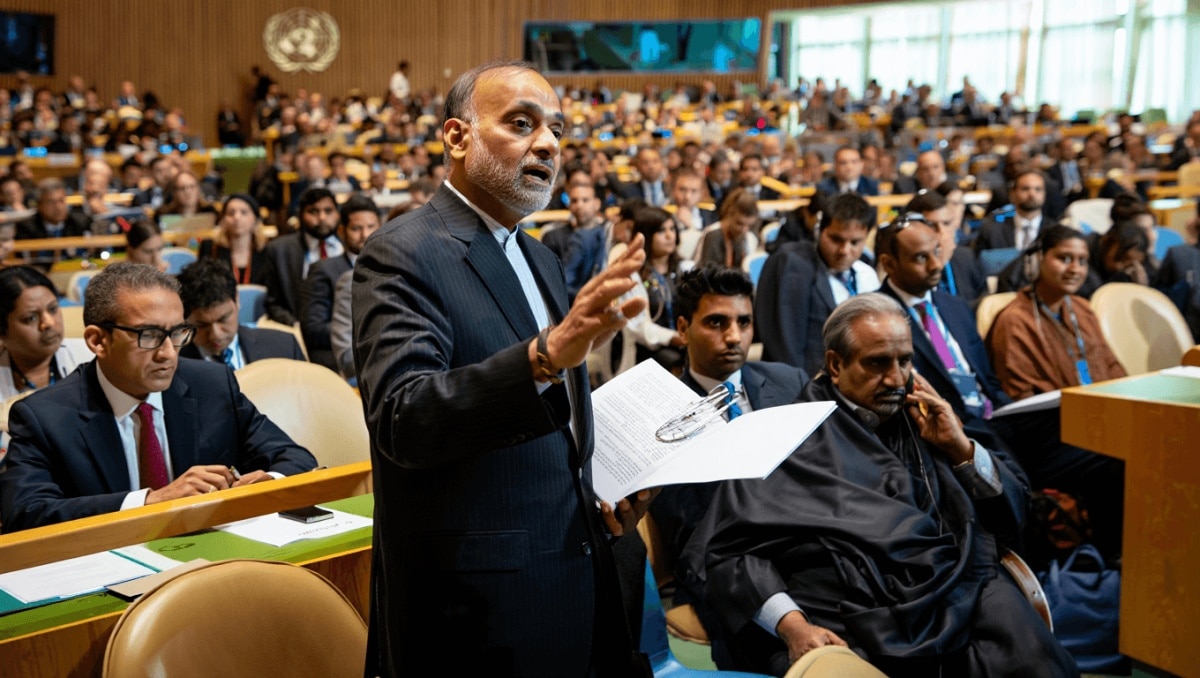
India’s permanent representative to the UN, Parvathaneni Harish, used the General Assembly platform to reject what he said were repeated attempts by Pakistan to single out India under the banner of Islamophobia. He criticized Islamabad’s record on minority rights and cited instances he said undercut Pakistan’s credibility when it raises such issues internationally.
Shah Rukh Khan used the name Abinav to ease in-law worries: Gauri adopted Ayesha during nikaah
Javed Akhtar hails Hindu festivals as cultural glue: throwback of atheist celebrating resurfaces
In his remarks, Harish pointed to the treatment of religious minorities inside Pakistan — including the persecution of Ahmadi communities — and flagged recent actions affecting Afghan civilians during Ramadan as examples of where Pakistan should answer questions before accusing others. He also accused Pakistan of leveraging the Organisation of Islamic Cooperation to amplify allegations against India.
New Delhi urged the UN to avoid policy frameworks that focus on a single religion and instead address the wider phenomenon of religious discrimination. India reaffirmed the continued relevance of the 1981 Declaration on the Elimination of All Forms of Intolerance and of Discrimination Based on Religion or Belief as a neutral instrument protecting followers of all faiths.
Context: Afghanistan and the recent strikes
The exchange at the UN unfolded amid a fresh crisis between Pakistan and Afghanistan. Afghan officials said an airstrike hit a Kabul drug treatment facility, causing hundreds of casualties; Afghanistan’s authorities and Taliban spokespeople blamed Pakistan. Islamabad has denied targeting civilian sites and said its operations hit Taliban-linked infrastructure in Kabul and Nangarhar, claiming there was no collateral damage. Pakistani media outlets cited security sources dismissing the hospital allegation.
Those conflicting accounts have added strain to an already tense regional environment, turning a diplomatic dispute into a subject with potential humanitarian and legal consequences.
- Key allegation: India says Pakistan invents Islamophobia claims while having its own record of sectarian practices and refugee pushbacks.
- OIC role: New Delhi accused Pakistan of trying to “weaponise” the Organisation of Islamic Cooperation to pursue political aims.
- Recent flashpoint: Afghanistan alleges a deadly airstrike on a Kabul hospital; Pakistan rejects the claim and points to strikes on militant targets.
- UN stakes: India warned that selectively framed frameworks risk politicising religion and undermining the UN’s impartiality.
- Legal anchor: India highlighted the 1981 Declaration as the appropriate, faith-neutral reference for addressing intolerance.
The debate matters because how the UN responds—whether by endorsing single-faith focused mechanisms or by applying universal standards—will shape international responses to religious discrimination and the political narratives states pursue in multilateral forums.
For readers tracking South Asian stability, the exchange signals how diplomatic disputes, accusations of religious bias, and contested military actions can feed one another, raising the risk of further escalation unless verified investigations and impartial multilateral processes are prioritized.