Show summary Hide summary
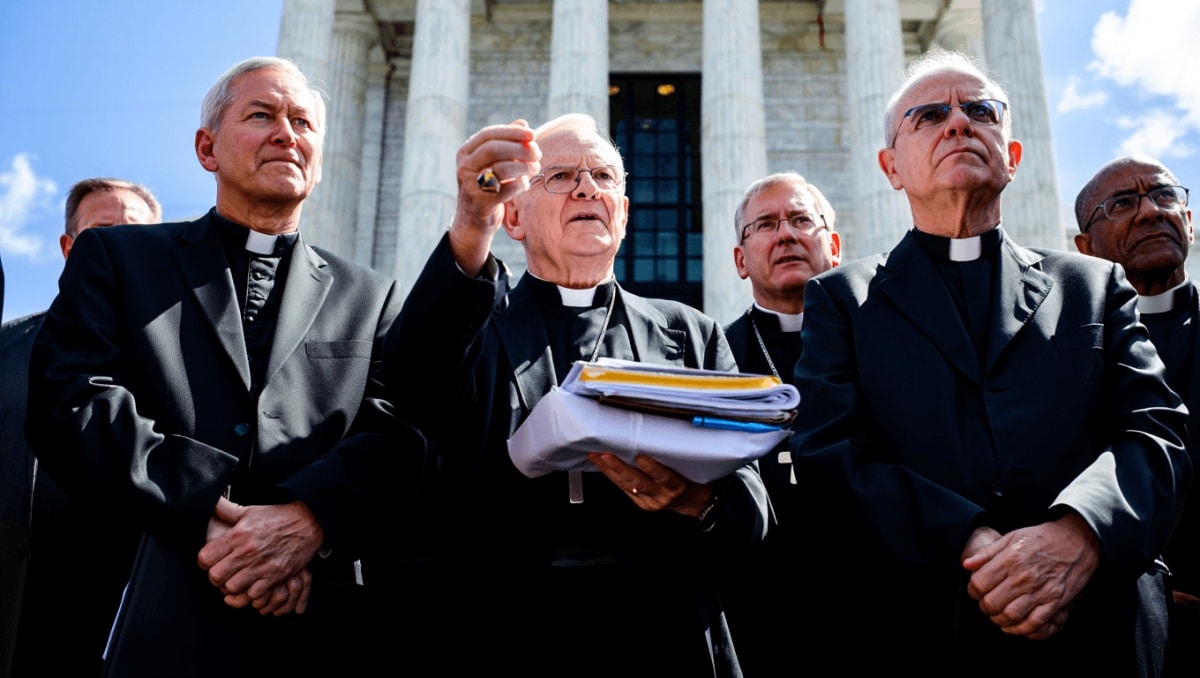
Catholic leaders in Maharashtra have publicly objected to the recently approved Maharashtra Freedom of Religion Bill, 2026, saying the measure undermines the very liberty it claims to protect. In a firm statement, members of the Western Region Bishops’ Council demanded the law be withdrawn or significantly rewritten, warning of legal and social repercussions if it remains unchanged.
Council calls the law contradictory
The council said the legislation, passed by both houses of the state legislature in recent days, runs counter to the Constitution’s guarantee that individuals may freely choose and practice their faith. Bishops described the bill as a contradiction: an instrument that, in their view, restricts rather than preserves religious choice.
Shah Rukh Khan used the name Abinav to ease in-law worries: Gauri adopted Ayesha during nikaah
Javed Akhtar hails Hindu festivals as cultural glue: throwback of atheist celebrating resurfaces
They framed their response not as a political attack but as a defense of a fundamental civil liberty. “Religious freedom is not a concession from government but a constitutional right,” the statement declared, urging immediate action from lawmakers.
Key concerns highlighted by church leaders
- Limits on voluntary conversion: The bishops argued the bill could curtail decisions made freely by individuals to change faiths.
- Legal ambiguity: They warned that vague or broad provisions may invite misuse and litigation.
- Impact on communities: The council raised worries about increased tensions between faith communities and possible administrative overreach.
- Call for revision: Rather than incremental fixes, the bishops demanded either full withdrawal or substantial redrafting of the law.
Beyond the legalistic objections, the letter emphasized the human dimension: the potential chilling effect on personal conscience and community relations if the law is enforced without clearer safeguards.
Who signed the protest
The statement carried the signatures of senior Catholic prelates across the state. Signatories included archbishops and bishops from major dioceses, reflecting broad institutional concern rather than an isolated local complaint.
- Elias Gonsalves — Archbishop of Nagpur
- John Rodrigues — Archbishop of Bombay
- Sebastian — Archeparchy of Kalyan
- Thomas D’Souza — Bishop of Vasai
- Lancy Pinto — Bishop of Chhatrapati Sambhajinagar
- Simon Almeida — Bishop of Pune
- Ephrem Nariculam — Eparchy of Chanda
- Malcolm Sequeira — Bishop of Amravati
- Matthews Mar Pochomio — Eparchy of Khadki
- Agnelo Pinheiro — Sindhudurg Diocese
- Auxiliary bishops Savio Fernandes, Stephen Fernandes and Allwyn D’Souza of Mumbai
By assembling a unified front, the diocesan leaders signaled the matter extends beyond individual congregations to the institutional level, suggesting sustained engagement ahead.
What this means now
The bishops’ demand for withdrawal or major amendment places pressure on the state government and may prompt legal scrutiny or wider public debate. For residents, the dispute touches on practical questions: how the law will be applied, whether conversions will face new administrative hurdles, and how religious communities will navigate potential disputes.
No immediate response from the state administration was included in the bishops’ release. The coming days are likely to show whether political leaders will enter into consultations with religious groups, pursue revisions, or defend the statute as drafted.
As the issue unfolds, it will matter for anyone concerned with civil liberties, communal harmony, and how state powers intersect with personal conscience. The bishops’ pronouncement has brought the debate into the open at a moment when legal precision and political judgment will shape its consequences.