Show summary Hide summary
Why were many traditional Hindu life-cycle rites largely reserved for men? Understanding the reasoning offered by some scholars and practitioners—that ritual duties and religious training were organized around specific practical roles—sheds light on ongoing debates about gender, ritual access and cultural reform today.
Traditional defenders of the ritual order argue that the distribution of samskaras (life-stage rites) followed functional needs rather than a simple hierarchy of value. Several rites mark stages intended specifically for those expected to become custodians of Vedic learning and sacrificial practice. Others, it is claimed, were unnecessary for people whose primary responsibilities lay in running households and raising children.
From this perspective, rites performed before and immediately after birth—rituals aimed at ensuring the physical and spiritual conditions for a male child to become a Vedic student—were not designed with girls in mind because their social roles typically differed. Many commentators point out that girls still received ceremonies such as naming and purification after birth, and later the marriage samskara, while participation in public sacrifices was commonly organized around the husband’s primary role.
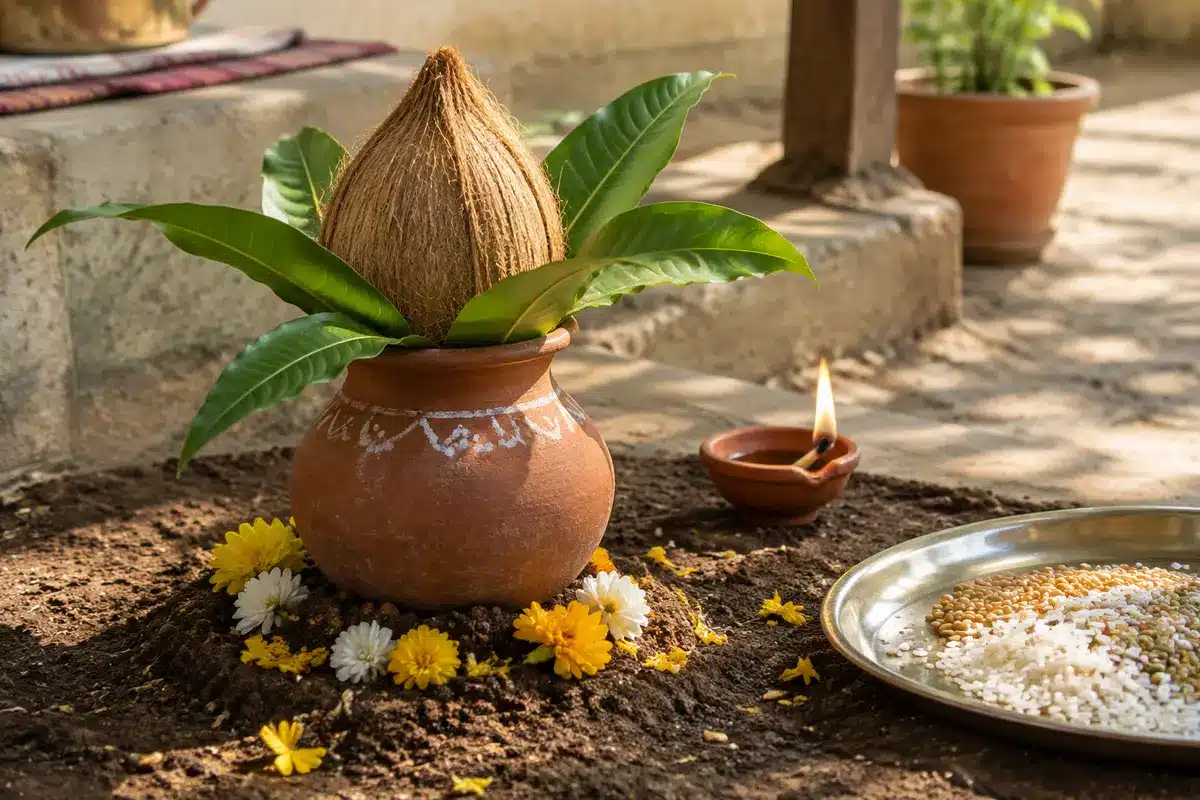
Navratri 2026: ghatasthapana kicks off nine days of worship, Dussehra on Oct 20
Professor Chris Fici blends Hindu scholarship with daily bhakti practice
- Role-specific rites: Some samskaras were intended to prepare a child’s body and environment for Vedic study and mantra transmission.
- Division of labor: Household responsibilities such as child-rearing and domestic management were seen as essential public goods that required full attention.
- Ritual specialization: The idea was that certain bodies and households needed special preparation and separation to protect the integrity of sacred sounds and practices.
- Limited duplication: Proponents say avoiding duplicate training and ritual duties preserved social balance and practical efficiency.
Advocates of this view emphasize that the emphasis was on different kinds of service to the community rather than on intrinsic inferiority. They argue that when women carried out household and family responsibilities fully, they fulfilled an equally vital social function and, therefore, achieved the moral and spiritual aims ascribed to other sampradayas (traditions). In short, fulfilling one’s prescribed duty was seen as a legitimate path to spiritual fulfillment.
Ritual technique and the preservation of tradition
Another common argument centers on the technical nature of certain rites. Mantra practice and Vedic recitation were treated as disciplines that required controlled environments and long-term, specialized training. For those tasked with preserving these practices, early-life observances and repeated initiations were intended to keep the body and household aligned with that work.
To illustrate the point without invoking older metaphors: specialized instruments or laboratory equipment are kept under strict conditions to prevent contamination and to ensure reliability. Proponents say rituals aimed at those responsible for mantra transmission functioned similarly—they were precautionary and technical rather than statements of worth.
That logic also explains why some rites were common to both sexes—such as naming and certain purification ceremonies—while others were more narrowly prescribed. Where ritual participation did occur for women, it often took forms that fit household responsibilities, for example participation in domestic fire rituals.
What this means for contemporary debates
These traditional explanations are frequently cited in contemporary discussions about religious reform and gender equality. Supporters contend they show a different ordering of responsibilities, not necessarily devaluation; critics counter that functional rationales have been used historically to deny women public religious roles.
For readers following modern debates on ritual inclusion, the practical takeaways are clear: arguments about ritual exclusion can be framed as questions about social function, technical requirements of practice, or historical power dynamics. Each framing leads to different policy and reform choices.
Whether one reads these explanations as defense, context, or justification, they are central to any informed conversation about how ancient ritual practices relate to 21st-century ideas of equality and religious participation.