
Show summary Hide summary
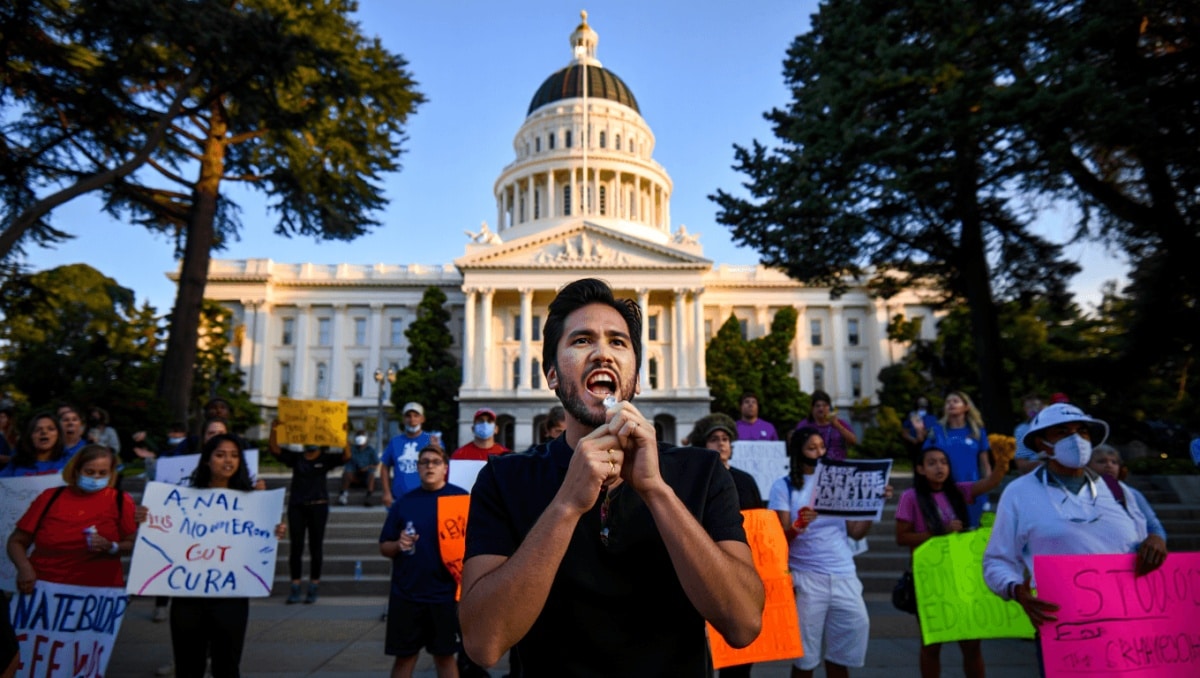
California lawmakers are debating whether to add “caste” as a distinct protected category in the state’s civil‑rights code — a change that proponents say addresses real harms, while opponents warn it could create legal confusion and unintended consequences for South Asian communities. The question has moved quickly through Sacramento and now raises immediate legal and social stakes for employers, schools and community institutions across the state.
Senator Aisha Wahab introduced SB‑403 this year with the stated aim of making caste‑based discrimination explicitly illegal. Supporters describe the measure as a corrective for long‑standing, community‑level biases that are not always visible in existing law.
Yet the bill has also prompted intense criticism from some Californians — including members of the South Asian diaspora — who argue the change would single out people by ancestry in a way that existing protections already cover. Legal experts and civil‑rights advocates on both sides have flagged several unsettled questions about how a standalone definition of caste would be implemented and enforced.
Annamalai applauds Bhagwat’s message on Muslim inclusion in India
Navratri in Times Square goes viral: social media splits over Indian celebrations abroad
What supporters say
Backers of SB‑403 argue the law would:
- Recognize a form of harassment and exclusion that they say is underreported and distinct from other types of bias.
- Provide a clearer path to remedy for victims who claim mistreatment linked to caste identity.
- Send a public signal that state law will not tolerate discriminatory practices tied to inherited social hierarchies.
Key criticisms and legal concerns
Opponents raise three broad objections. First, they say the concept of caste lacks a single, broadly accepted legal definition, risking uneven application and mistaken inferences about individuals’ backgrounds. Second, critics argue the measure could overlap with or duplicate existing protections based on race and national origin, making the statute legally redundant. Third, some worry the text effectively presumes a class of victims and oppressors within the South Asian population, which could foster ethnic profiling rather than protect civil liberties.
Legal commentators on the state Senate Judiciary Committee expressed unease about potential conflicts with equal protection and due process principles. Despite those warnings, the bill advanced out of committee and cleared the Senate floor in a swift vote that some observers called expedited.
Members of the affected communities say they were not consistently consulted before the bill’s introduction. Several South Asian organizations and prominent residents — including those in Senator Wahab’s district — have voiced concerns that casting the issue in broad, criminalized terms may stigmatize families, workers and students rather than address concrete harms.
Historical context matters
California’s legislative choices have reverberated beyond the state before, sometimes with constructive effects on health and technology policy — and sometimes with regrettable consequences. Legal scholars point to past laws, like the 1913 Alien Land Law, as cautionary examples of statutes that targeted particular immigrant groups under seemingly neutral language. That history is part of why opponents are urging extra caution and public consultation now.
Practical implications
If SB‑403 becomes law, its effects could be felt across multiple settings. Consider these potential outcomes:
- Workplaces: Employers may face new compliance challenges in assessing complaints that invoke caste, with unfamiliar standards and investigatory burdens.
- Schools: Educators could receive complaints framed around family traditions or social associations, forcing difficult judgments about intent and context.
- Community organizations: Religious and cultural institutions might be drawn into legal disputes over internal practices and affiliations.
- Legal system: Courts would need to develop tests and precedents for a category that currently lacks a settled statutory meaning in U.S. jurisprudence.
Where the debate goes from here
The discussion around SB‑403 is not just about defining a term on paper; it is about balancing the need to address real instances of bias with the risk of creating new forms of legal or social exclusion. Lawmakers face competing demands: to act for victims of discrimination while ensuring protections do not inadvertently single out or stigmatize whole communities.
Some stakeholders urge a slower, consultative approach — refining definitions, clarifying overlaps with existing law, and engaging community leaders — before enshrining caste as a separate protected class. Others say speed is essential to stop harms they believe are occurring now.
As the legislature moves forward, the central questions remain practical and constitutional: Can a narrowly tailored law reduce harms without undermining equal protection or becoming a source of new discrimination? And will affected communities be given a meaningful voice in shaping the answer?