Show summary Hide summary
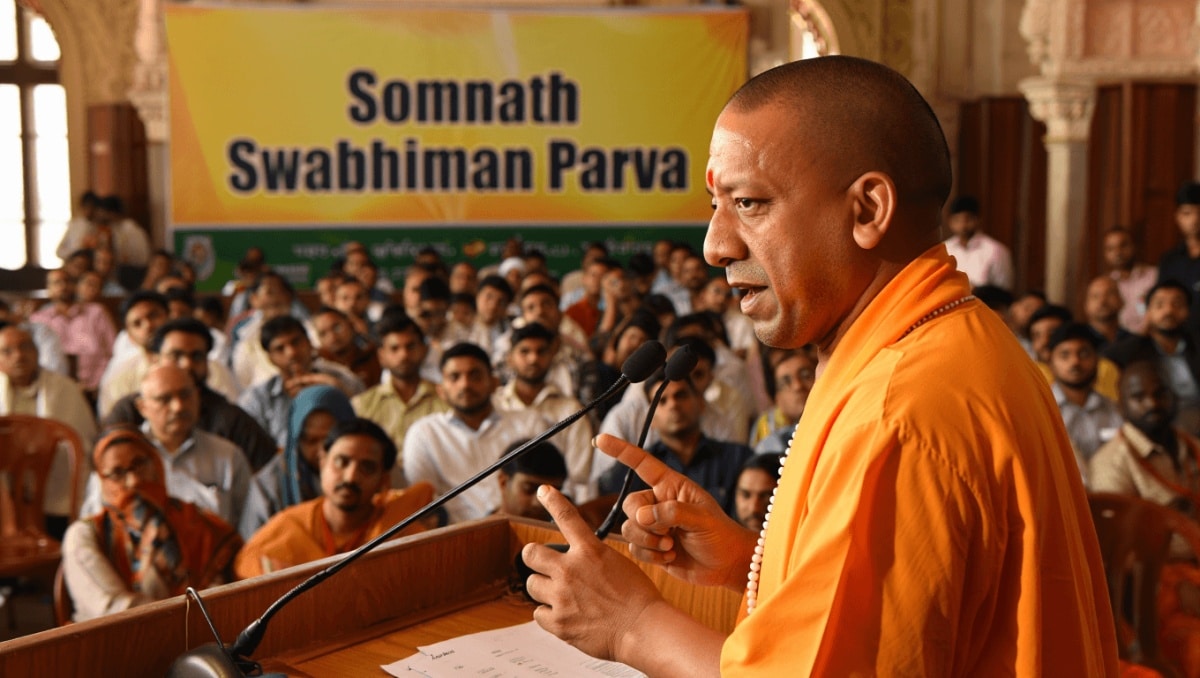
At a seminar hosted at Banaras Hindu University under the banner of Somnath Swabhiman Parva, Uttar Pradesh Chief Minister Yogi Adityanath argued that India’s spiritual traditions and cultural values offer practical guidance as the world grapples with overlapping crises. Organised jointly by the state’s Sanskriti Vibhag and the Ministry of Culture, the event brought religious leaders, academics and policy figures together to discuss how ancient knowledge can inform present-day challenges.
Why this matters now
Speakers framed the conversation as more than heritage rhetoric: with climate stress, geopolitical uncertainty and social fragmentation, participants said India’s philosophical traditions could shape responses in public health, education and civic life. That claim matters for policymakers and educators who are considering how traditional knowledge — from temple-based learning to practices like yoga and Ayurveda — can be woven into contemporary institutions.
Consciousness shapes faiths and philosophies worldwide: why experts say it matters today
Priyanka Chopra: Jonas’ respect for her Indian roots made their marriage work
Voices from the seminar
The online address by the chief minister underscored the Somnath temple’s symbolic role as a marker of civilisational endurance and collective self-respect. He presented the festival as a reaffirmation of cultural identity at a time when many societies are searching for ethical anchors.
BHU Vice-Chancellor Ajit Kumar Chaturvedi urged a practical bridge between India’s scholarly legacy and modern science. He highlighted historical contributions in fields such as astronomy, mathematics and music, and called for explicit efforts to connect those traditions with current research and curricula.
Religious and cultural leaders expanded the discussion beyond symbolism. Swami Avdheshanand Giri pointed to the global rise in interest in practices like yoga and Ayurveda as evidence that elements of Indian culture have cross-border relevance. Baba Ramdev framed India’s strength as rooted in “Dharma Shakti” — a value system oriented toward welfare and spiritual discipline rather than material gain.
Several speakers emphasized institutions and social roles historically associated with Indian temples. Mahatma Gandhi Kashi Vidyapith vice-chancellor A.K. Tyagi noted that temples traditionally functioned as hubs of education, commerce and community organisation, not solely as places of worship.
Key takeaways
- Somnath Swabhiman Parva was presented as a reaffirmation of cultural resilience and national self-respect.
- Organisers and participants called for integrating traditional knowledge systems with modern science and education.
- Growing global interest in yoga and Ayurveda was cited as evidence of the international relevance of Indian practices.
- Speakers highlighted the role of youth and institutional renewal in translating cultural values into public good.
Speakers also paid tribute to historical figures who, they said, preserved and advanced India’s cultural heritage. Swami Chidanand Saraswati described the gathering as an expression of “Sanatan Swabhiman,” while others recalled leaders such as Sardar Vallabhbhai Patel and Madan Mohan Malaviya for their roles in cultural preservation.
Jagadguru Vasudevacharya Vidyabhaskar underscored the potential of young people as catalysts for social service and national renewal, urging educational systems to encourage engagement with scriptural and civic responsibilities. Sampurnanand Sanskrit Vishwavidyalaya vice-chancellor Biharilal Sharma observed a renewed public interest in Sanatan traditions, suggesting a cultural revival in parts of society.
Shri Lal Bahadur Shastri Rashtriya Sanskrit University vice-chancellor Murali Manohar Pathak closed the program with Sanskrit verses, describing the Somnath temple as emblematic of a wider civilisational comeback rooted in spiritual strength and cultural continuity.
Implications and next steps
Speakers’ calls for blending traditional learning with contemporary science have concrete implications: curriculum reform, funded research into classical knowledge systems, and diplomatic efforts that emphasise cultural diplomacy. For policymakers, the seminar outlined an agenda that links heritage with practical policy areas — public health, education and youth engagement — rather than treating culture as mere symbolism.
Whether and how those proposals translate into sustained policy changes remains an open question. But the event highlighted a growing institutional appetite — among universities, religious institutions and government bodies — to explore the policy potential of India’s cultural and spiritual traditions in a rapidly changing world.