Show summary Hide summary
As devotional chanting moves from temple halls into mainstream playlists, one practitioner’s journey illustrates both the appeal and the complexities of sharing sacred practice in a global culture. Jahnavi Harrison — raised inside an ISKCON community in England and now a leading voice in contemporary kirtan — describes how music, humility and daily discipline shape a life built around devotion.
From temple childhood to international stages
God and science collide: new findings ignite global faith and research debate
UP and Yamanashi strike tourism deal: Buddhist circuit set for renewed push
Harrison grew up near Bhaktivedanta Manor, the estate long associated with the spread of Gaudiya Vaishnavism in Britain. Her parents, each having taken up the bhakti path independently, raised their children within temple life; the rhythms of ritual and song were part of everyday household culture. That upbringing set the stage for a career that has moved beyond niche circles: her 2015 debut album drew attention, she has been featured on national radio, contributed to a Grammy‑nominated project, and recently worked on an EP with a mainstream artist.
Yet she stresses that public recognition arrived slowly and without pursuit. Fame, she says, never became the aim; rather, it is a byproduct of offering what she has learned and loves — a position she tries to keep anchored in the tradition’s teachings.
Why kirtan resonates with younger listeners
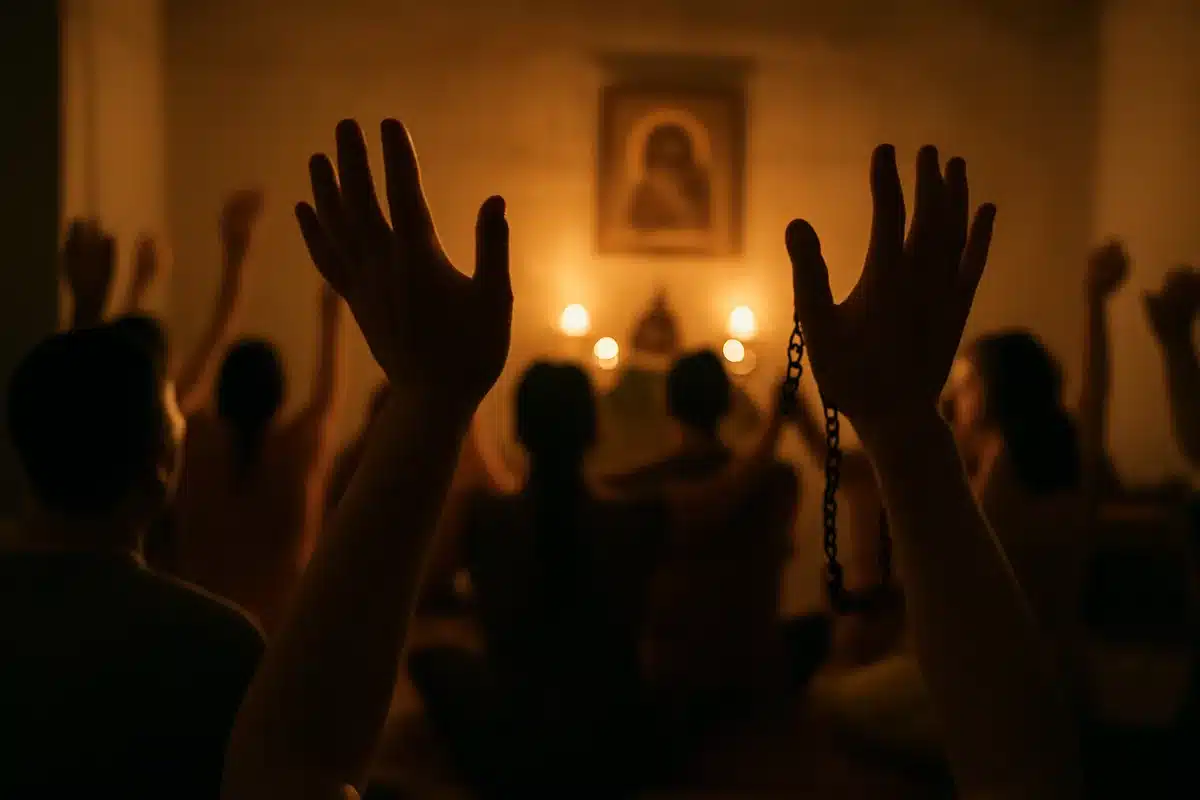
Harrison points to a handful of simple qualities that make kirtan appealing to new generations: it is easy to join, emotionally accessible, and inherently communal. Music lowers barriers, she notes, and the collective nature of chanting fosters connection without demanding expertise. For many, the practice functions as a kind of lived meditation — both social and spiritual.

“You can just show up and be yourself,” she says — a brief observation that captures kirtan’s open, invitational character.
Daily practice that sustains
Her routine remains deliberately practical. The anchor of her day is japa meditation — chanting the maha-mantra on a mala, ideally in the morning — supplemented by readings or lectures and small moments of prayer throughout daily life. Consistency, rather than perfection, is the value she emphasizes: regular practice deepens commitment and keeps the work from becoming merely performative.

- Core practice: morning japa on a japa mala
- Study: short daily readings or audio lectures
- Community: singing with others as a continual teacher
- Attitude: humility, service, and sincerity over showmanship
On authenticity and cultural questions
As kirtan reaches wider, more culturally diverse audiences, debates over appropriation have grown louder. Harrison acknowledges that she and others have faced criticism — at times intensely personal — and says she chose not to amplify those conflicts publicly. Her strategy has been to keep doing the work with sincerity and to let the practice speak for itself.
She recommends a posture of respect for newcomers: approach with humility, ask questions, and be ready to serve. Drawing on classical language from the Bhagavad Gita, she cites the ideal learner as one who is inclined to surrender, to ask respectfully, and to serve — not someone who simply borrows attractive elements without understanding consequences.
Practical advice for newcomers
- Start with a sincere intention — sincerity matters more than style.
- Learn from experienced practitioners and elders rather than treating elements as fashion.
- Engage with the community: shared chanting teaches nuance and context.
- Be mindful of cultural histories and avoid extracting practices as mere trends.
Her single, direct piece of advice for young people entering kirtan today is short and emphatic: “Be sincere.”
Looking forward
Harrison sees sound and music as effective carriers of spiritual experience in a media-driven world. She expresses hope that more people will encounter the “beauty, joy and medicine” of devotional chant — not through celebrity alone, but through steady sharing by performers and everyday participants alike. For her part, she describes herself as one voice among many, committed to continuing that work in whatever forms it takes.
Recordings by contemporary kirtan artists, including Harrison, are widely available on mainstream streaming platforms, reflecting how devotional forms have shifted from local gatherings to global audiences while raising new questions about stewardship and respect.