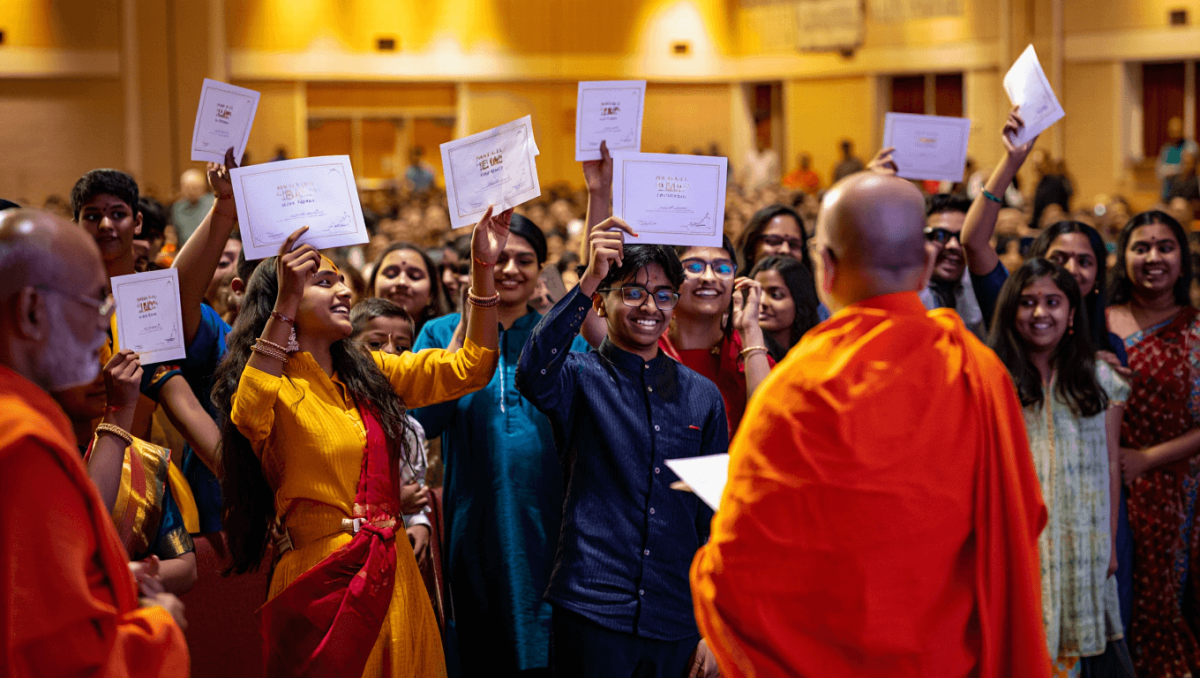
On May 16, Chinmaya Mission Houston marked a milestone for 51 young people who completed its long-running value-based education program, underscoring how cultural schooling continues to shape identity and community ties for immigrant families. The convocation combined traditional Vedic rites with practical advice from alumni, offering a roadmap for graduates entering a complex, appearance-driven world.
Founded in 1982 by resident teachers Shri Gaurang Nanavaty and Smt. Darshana Nanavaty, Chinmaya Mission Houston has spent more than 40 years teaching the philosophical core of Vedanta to children through weekly classes. The program, known locally as Bala Vihar, serves students from preschool through high school with a focus on scripture, ethical practice, and cultural literacy.
The ceremony opened with a procession: graduates and teachers gathered to pay respects at the shrine and moved together to the temple for a brief puja. A priest carried a ceremonial pot as the group chanted an invocation from the Taittiriya Upanishad, a gesture that linked the event to the ancient rite of passage traditionally given to students leaving formal instruction.
Annamalai applauds Bhagwat’s message on Muslim inclusion in India
Navratri in Times Square goes viral: social media splits over Indian celebrations abroad
Spectators described the scene as composed and warm — families, teachers and friends watched as the students entered the hall to music performed by the mission’s orchestra. The orderly entrance and formal seating reflected months of rehearsals and the discipline emphasized in the curriculum.
The lead teacher then lit the ceremonial lamp and addressed the graduates from the vyas peet, framing the convocation in the context of the Vedic ceremony called Samavartana. He urged the young people to align their actions with truth and duty, to maintain personal well-being, and to continue reflective study and listening to teachings as they move forward.
Alumnus Dr. Milan Vaishnav, director of the South Asia Program at the Carnegie Endowment for International Peace, was the guest speaker. Drawing on his own path from Bala Vihar to an international policy career, he offered practical guidance and anecdotes aimed at helping graduates navigate academic and professional choices without losing sight of their roots.
- Read broadly. Venture beyond familiar subjects and be intellectually curious.
- Stay humble. Recognize the limits of one’s knowledge and remain open to learning.
- Serve others. Prioritize contribution over compensation and help without expectations.
- Value relationships. Acknowledge the sacrifices of parents and teachers who supported your journey.
Each graduate received a trophy inscribed with a teaching attributed to Pujya Swami Chinmayananda, and, one by one, students lit small lamps on stage — a symbolic commitment to lifelong learning and spiritual values. A background slideshow highlighted the class’s achievements, college plans and favorite aphorisms from the mission’s teachings.
In accordance with the tradition, the class presented a gesture of gratitude to their instructors through their senior teacher. Music filled the hall as the orchestra performed a congratulatory piece, and the ritual concluded with the entire group reciting the Chinmaya pledge, reaffirming a commitment to service and ethical conduct.
The event was the product of extensive volunteer work and careful planning, culminating in a communal meal hosted by the families of the graduates. For many attendees, the ceremony was more than a school graduation: it was a public affirmation of continuity between cultural heritage and life in the United States.
Parents who emigrated from India said the weekly Bala Vihar sessions played a key role in keeping children connected to language, rituals and values while they adapted to American schools and social life. For those families, the convocation offered visible evidence that cultural education can coexist with academic and professional ambition.
Photo credit: Bharath Rao