 By Ajay Nemade
Most intellectuals refer Hinduism as Polytheism and not monotheism. But do most of them know the difference between monotheism and polytheism. What is the difference between Monotheism and Polytheism?
Suppose Electricity is God which is unseen and formless. Electricity runs through bulb, tube, fan, air conditioner, computer etc. One monotheist says bulb is God because it gives us light. Second monotheist says tube is God because it is larger than bulb. Third monotheist says fan is God because it gives us air. Fourth monotheist says air conditioner is God because it gives us cool air. Fifth monotheist says computer is God because it gives us education and knowledge.
They just stick to their idea about God, but they all are not perfect. Since here, the God is Electricity which is unseen and formless, but they prefer the equipment (as a God) in place of electricity (the unseen and formless God). Polytheism says they (equipment) all have existence due to electricity, without electricity the equipment cannot run. Like this, the one unseen and formless Nirakar Brahm exists in all forms of God. This is relevant thoughts.
Monotheism believes in just equipment or one form; you can say they are mono-idolater. They create image/ statue/ centre/ stone or house and they say that is their God and they prostate and pray toward it. They are just believing in one equipment/form, but not the unseen and formless God. This mono-idolatries is irrelevant because all are praying to just equipment i.e. just one form (i.e. image, statue, stone, or God’s house etc).
Only, praying the unseen and formless without any image, statue, stone or direction, without any ritual or book, by just sitting in meditation is the true devotion of one God i.e. Nirakar Brahm (unseen and formless). This is the true God.
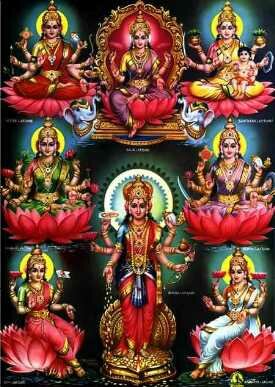
Hinduism has two types of Upasana (praying type)- Nirakar (unseen and formless), and Saakaar (form). In nirakar upaasana, Hindus believe in one unseen and formless God i.e. Nirakar Brahm. In saakaar, they believe in God and Goddesses as a form of Nirakar Brahm. They believe that nirakar (unseen and formless) exists in all forms. You can pray to Nirakar by meditation and sakar by any form.
Hinduism says- Ek satvipray bahudha vadanti i.e. God is one, but people call the God by various names as per their traditions and languages.
Insisting one form of God in the name of monotheism is actually mono-idolatry. Mono-idolatry says their God (i.e. image or form/Stone/House) is true and other’s are false, this creates clashes and conflict in humanity in the name of God. Hence insisting in one form of God is not practical, it is irrelevant.
Polytheism i.e. many forms of God, promotes coexistence in all humanity, because no one’s God is false, all Gods are reflection of unseen and formless i.e. the one.
Monotheism is an ideology, it is boring. Polytheism is natural and entertaining. Monotheism is just an idea of a founder of religion. Polytheism has scope of innovation and art. Monotheism starts with organized people, hypnotizing them in mass and motivating them for implementing ideas of their founder, also declaring war against non-believers. Polytheism de-organizes people, promotes pluralism, no division of believers and non-believers and promotes co-existence between all faiths.
God is one. If everyone knows this, why there are there so many religions? Why there are there so many sects? All monotheist religions have so many sects.. why? Because polytheism is a natural tendency of human beings. Polytheism says God is one, but yours and my language to approach God is different, i.e. there are different ways to approach God.
Monotheism is harmful to people of other faith i.e. non-believers as it is created by the founder of religion. Polytheism is the nature of the world.
The author’s analogy between God and electricity one the one hand and the polytheist and supposed monotheist positions on the other is apt, but not in the way he thinks. As the author has written, electricity is the common force that runs through the bulb and the fan. Now to extend this analogy to polytheism:
Ancient people in most parts of the world deified different aspects of nature as gods. Therefore you have a fire-god, a wind-god, a sun-god or goddess, a rain-god, an earth-goddess, a moon-god, or in some cases, goddess, a sky-god, a dawn-goddess, a god of love and so on. The Vedas do recognize that these presiding deities of different aspects of nature are but aspects of one truth, and that is fine. But it is still the elements themselves which are in way worshipped.
However, in monotheism one does not worship only the fire, or only the sun and so on. The Jewish, Christian and Islamic conception is of an ineffable God Who “Fills the Heavens and the Earth” (Jeremiah 23:24), Who “Upholds all things by the Word of His Power” (Hebrews 1:3) and “Whose footstool extends over the Heavens and the Earth” (Qur’an 2:255, the famous Ayat-al-Kursi). To assert that monotheists worship only the bulb or the fan is to say that they consider God to be limited to a particular force of nature. That is an extremely false view of monotheism.
Typos by me:
“The author’s analogy between God and electricity ON the one hand…”
“But it is still THESE elements themselves which are in A way, worshipped.”
Readers, please kindly excuse me for the above.
Excellent article. I think monotheism is worshiping only one form and one name of God and Polytheism is worshiping One God with any form and any name.