(CHAKRA Blogs) February 12, 2014 was one of the worst days in the history of Indian democracy. A ruling party in Delhi resorted to a strange type of vote bank politics which was unheard of in Independent & Republic India.
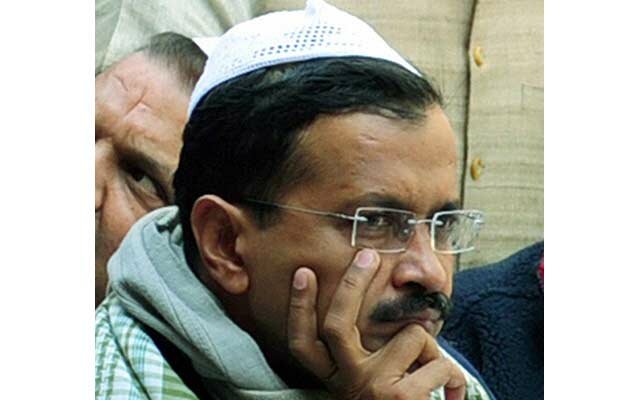
Arvind Kejriwal of AAP party
Last year, Kejriwal had asked citizens of Delhi to protest “by not paying electricity bills” (which by the way is illegal because whether people like it or not, they have to pay bills). Although lot of mature & honest people appreciated his protests, they still went ahead and paid their bills because they were ethical and could not think of going against their moral conscience. But there were many who went against their moral conscience & did not pay their bills, thereby becoming his “followers” (by listening to what he said inspite of it being illegal). And now that he is in power, he has excused such followers and rewarded them by subsidizing their electricity bills (i.e. he has indirectly encouraged illegal acts & penalized honest & ethical citizens).
There have been lot of discussions on this matter of vote bank politics and although it is being highly condemned, there still seems to be justification from certain corners for it by supporters who are stating that even other political parties do vote bank politics and hence it is unfair to target Kejriwal’s party now.
Firstly, one wrong cannot be countered with another wrong. Secondly, If Kejriwal has to be excused just because “others also do the same”, then what was the need of his new party which was formed on the basis of “high moral ground” and “different from other parties”?
Thirdly and finally and most importantly, this is the worst & dangerous form of vote bank politics. How? Lets dissect this issue and compare it with the vote bank strategies of other political parties and find out how the strategy used by Kejriwal is dangerous for the nation.
Whenever a political party gives special benefits to a certain section of the society, it becomes vote bank politics.
We can broadly have the following types of vote banks:
1) Based on religion/caste:
Typically, a person born in a particular religion or caste remains in the same for lifetime (conversions are negligible and exceptional cases. An SC/ST remains SC/ST from birth to death). Moreover, these are actually derived out of the Constitution. It can mostly be justified by stating that certain castes were being oppressed for several centuries and hence must be given an opportunity now (and uplifted) through such vote bank politics.
2) Based on economics:
This is a widely acceptable form of vote bank because it does not discriminate people based on religion. People who are in need (below poverty line or poor farmers) are given certain benefits. Some examples include Food Security Bill, BPL schemes etc.
3) Based on a static category like gender, profession, education:
This is a recent phenomenon which has emerged due to the movement for equality. Thanks to some of the feminine movements, females are now being given some extra benefits to help them rise and attain equality. Also, some special considerations & facilities might be of great use to professions in which workers find it difficult to afford such facilities due to the nature of their earnings. Examples include free bicycles for newspaper boys or carts for vegetable sellers. Providing laptops to students is also widely appreciated because it might help students (who are going to be tomorrow’s leaders) in their education.
4) Based On loyalty/affiliations:
This is the most dangerous form of vote bank because it is neither based on religion/caste which tries to uplift certain sections which were oppressed for centuries, nor is it based on economy which tries to help the poor and nor does it promote equality.
This vote bank is based on affiliation and was popular among Islamic rulers who had implemented differential taxation systems based on religion to promote conversions. Such Islamic rulers would either forcefully convert people from different religions to their own religion (by threatening to kill them), or penalize ppl of other religions by setting them very high taxes (or subsidize citizens of their own religion) so that it can indirectly force everybody to convert to their own religion (i.e. change their loyalty from one religion to another).
Among all the above mentioned vote bank type of politics, in type 1, type 2 and type 3, even those who did not support/vote for the party will get the benefits. i.e a poor farmer who did not vote for Congress will still get the farmer loan waiver or FSB when Congress comes to power. Even a female who did not vote at all, is still a beneficiary of the promised policies.
Whereas in the 4th type of vote bank politics, it tries to reward/benefit only those who explicitly support the party and obey what the ruler/dictator instructs. For example, in the above example of Islamic ruler, even if a Hindu supports/votes for him, he still has to pay the high taxes because he did not convert to Islam as expected by the Islamic ruler (i.e Did not obey the King). And this is something which was followed by rulers like Aurangzeb. (Please Google search “Jizya tax system” to know more about it).
What Kejriwal is following is the 4th type of vote bank politics. By subsidizing it only to his own affiliates/followers, he is setting a dangerous precedent of forcing others also to become his affiliates/followers. This is precisely the politics Aurangzeb used to follow and it is unfortunate to witness such politics in Independent & Republic India.
I trust my humble effort to express my views and analysis of AAP’s new brand of vote bank politics will help the voters of India see through the political machinations of anti-national forces.
Your humble servant,
Sharan Bhagavath
Leave a Reply